Unveiling the Art and Science of Clustering: A Data Scientist‘s Transformative Journey
The Hidden Patterns Waiting to Be Discovered
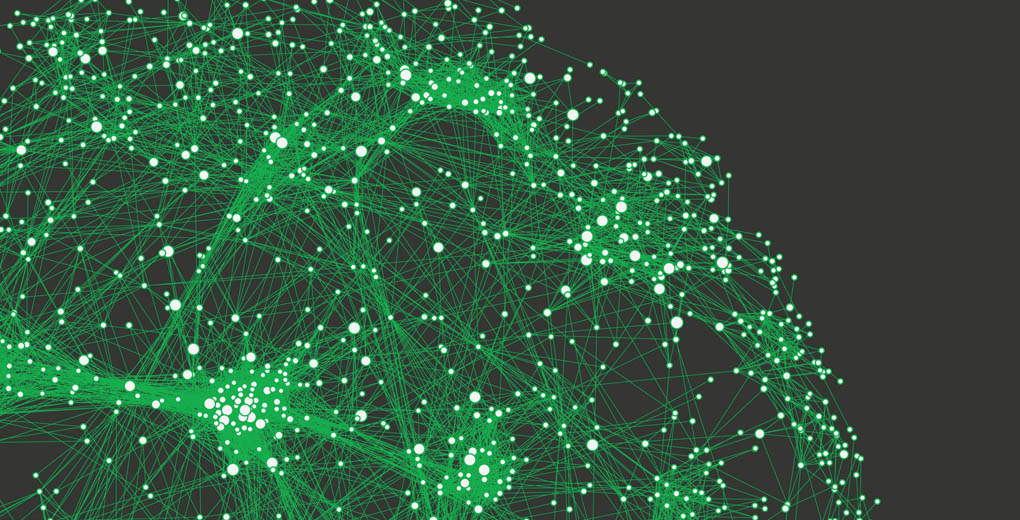
Imagine standing before a vast landscape of scattered data points, each representing a unique story, a hidden connection waiting to be understood. As a data science professional, you‘re not just an analyst – you‘re a pattern detective, armed with the powerful technique of clustering.
My journey into the world of clustering began unexpectedly. Years ago, while working on a complex customer behavior project, I realized that traditional analysis methods were like trying to understand an intricate painting by examining individual brushstrokes. Clustering offered something revolutionary: the ability to see the entire canvas, revealing connections invisible to the naked eye.
The Philosophical Roots of Pattern Recognition
Clustering isn‘t merely a mathematical technique; it‘s a profound method of understanding complexity. Throughout human history, our brains have naturally clustered information – recognizing similar objects, categorizing experiences, and making sense of the world around us. What machine learning does is formalize this innate human capability.
The Mathematical Symphony of Clustering
At its core, clustering represents an elegant mathematical dance. Imagine data points as dancers moving across a multidimensional stage, gradually finding their natural groups and rhythms. The clustering algorithm acts as a choreographer, guiding these points into harmonious formations.
Computational Complexity: Beyond Simple Grouping
The mathematical foundations of clustering are far more sophisticated than simple categorization. Consider the [O(n^2)] computational complexity of traditional clustering algorithms. Modern techniques have evolved to handle exponentially larger datasets with remarkable efficiency.
Advanced Distance Metrics
Traditional Euclidean distance represents just the beginning. Modern clustering techniques leverage:
- Mahalanobis distance
- Cosine similarity
- Manhattan distance
- Probabilistic distance measurements
These advanced metrics allow for nuanced understanding beyond basic spatial relationships.
Evolutionary Perspectives in Clustering Techniques
From Biological Inspiration to Computational Brilliance
Nature has always been the ultimate clustering expert. Biological systems continuously categorize and group information for survival. Machine learning clustering algorithms draw profound inspiration from these natural mechanisms.
Consider how ant colonies efficiently organize complex networks or how neural networks in biological systems categorize sensory information. These natural clustering mechanisms have directly influenced computational approaches.
Real-World Clustering Transformations
Healthcare Revolution
In medical research, clustering has become a game-changing diagnostic tool. By analyzing patient data across multiple dimensions, researchers can:
- Identify rare disease patterns
- Predict potential health risks
- Develop personalized treatment strategies
A remarkable case study involved clustering genetic data to understand complex inherited conditions, demonstrating how mathematical patterns translate into life-saving insights.
The Psychological Dimension of Pattern Discovery
Clustering isn‘t just a technical process – it‘s a cognitive exploration. Our brains are naturally wired to seek patterns, to understand complexity through simplification. Machine learning clustering algorithms mirror this fundamental human cognitive process.
Cognitive Load and Information Processing
When we cluster data, we‘re essentially reducing cognitive complexity. By grouping similar elements, we make vast amounts of information more digestible and comprehensible.
Advanced Clustering Methodologies
Probabilistic Clustering Approaches
Modern clustering techniques extend beyond traditional deterministic methods. Probabilistic models like Gaussian Mixture Models introduce sophisticated uncertainty measurements, allowing for more nuanced pattern recognition.
Bayesian Clustering Techniques
Bayesian approaches provide a probabilistic framework for understanding cluster formations, introducing:
- Prior knowledge integration
- Uncertainty quantification
- Dynamic model adaptation
Ethical Considerations in Pattern Discovery
As clustering techniques become more powerful, ethical considerations become paramount. How do we ensure that our pattern recognition doesn‘t inadvertently introduce bias or perpetuate existing societal inequalities?
Responsible data science demands:
- Transparent methodology
- Continuous bias evaluation
- Ethical framework development
Future Horizons: AI-Driven Clustering
The future of clustering lies at the intersection of artificial intelligence, cognitive science, and advanced computational techniques. Emerging approaches like deep clustering and neural network-based clustering promise unprecedented insights.
Quantum Computing and Clustering
Quantum computational approaches might revolutionize clustering, potentially solving complex optimization problems exponentially faster than classical computing methods.
Practical Implementation Strategies
While theoretical understanding is crucial, practical implementation defines true expertise. When approaching a clustering challenge, consider:
- Comprehensive data preprocessing
- Appropriate algorithm selection
- Rigorous performance evaluation
- Continuous model refinement
A Personal Reflection
Clustering represents more than a technical procedure – it‘s a profound method of understanding complexity. Each dataset tells a story, and clustering helps us listen carefully.
As you embark on your clustering journey, remember: you‘re not just analyzing data. You‘re uncovering hidden narratives, revealing connections that transform raw information into meaningful insights.
Closing Thoughts
The world of clustering is an endless frontier of discovery. Stay curious, remain technically rigorous, and never lose sight of the human stories hidden within your data.
Your journey as a data science professional is just beginning.