Unveiling the Magic of Monte Carlo: A Journey Through Reinforcement Learning‘s Most Fascinating Technique
The Genesis of a Computational Revolution
Imagine standing at the crossroads of mathematics, computer science, and artificial intelligence. Here, a remarkable technique emerges – Monte Carlo methods in reinforcement learning – a computational approach that transforms how machines learn and make decisions.
A Tale of Probabilistic Brilliance
The story of Monte Carlo methods begins not in the gleaming laboratories of Silicon Valley, but in the minds of brilliant mathematicians and physicists during World War II. Named after the famous casino in Monaco, these methods embody the essence of randomness and probability, much like a gambler‘s intuitive understanding of chance.
Stanislaw Ulam, a Polish-American mathematician, pioneered these techniques while working on the Manhattan Project. He realized that complex mathematical problems could be solved through statistical sampling and simulation, rather than traditional analytical approaches.
Decoding the Monte Carlo Mystery in Reinforcement Learning
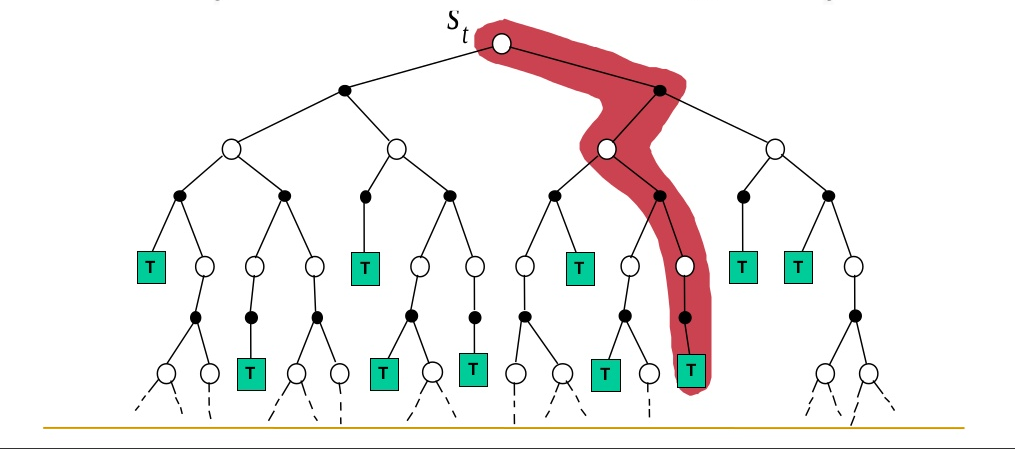
Reinforcement learning represents a paradigm where intelligent agents learn by interacting with environments, much like a curious child exploring the world. Monte Carlo methods provide a powerful framework for this exploration, allowing agents to learn from experience without requiring complete environmental knowledge.
The Mathematical Symphony of Learning
At its core, Monte Carlo reinforcement learning is a statistical dance of probabilities. Consider the fundamental equation that drives this learning:
[V(s) = \frac{1}{N} \sum_{i=1}^{N} G_i(s)]This elegant formula represents how an agent estimates the value of a state by averaging returns across multiple episodes. It‘s like a musician perfecting a melody through repeated practice, gradually understanding the nuances of each note.
Navigating Uncertainty: The Monte Carlo Approach
Traditional computational methods often stumble when faced with complex, unpredictable environments. Monte Carlo methods shine precisely in these scenarios, offering a robust approach to learning under uncertainty.
The Exploration-Exploitation Dilemma
Imagine a curious explorer navigating an uncharted territory. Should they stick to familiar paths or venture into unknown regions? This is the classic exploration-exploitation trade-off that Monte Carlo methods elegantly address.
By implementing strategies like [\epsilon]-soft policies, agents can balance between exploring new possibilities and exploiting known successful strategies. It‘s a delicate balance, much like a seasoned chess player who knows when to follow established strategies and when to take calculated risks.
Real-World Transformations: Monte Carlo in Action
Robotics and Autonomous Systems
In the realm of robotics, Monte Carlo methods have revolutionized how machines perceive and interact with their environment. Autonomous robots now use these techniques to navigate complex terrains, make split-second decisions, and adapt to changing conditions.
Consider a search and rescue robot exploring a disaster-stricken area. Traditional programming would fail, but Monte Carlo reinforcement learning allows the robot to learn from each mission, continuously improving its decision-making capabilities.
The Computational Landscape: Challenges and Innovations
While Monte Carlo methods offer tremendous potential, they are not without challenges. The computational complexity can be significant, especially in high-dimensional state spaces.
Variance Reduction Techniques
Researchers have developed sophisticated techniques to mitigate the high variance inherent in Monte Carlo estimations. Methods like importance sampling and baseline reduction help create more stable and reliable learning algorithms.
Emerging Frontiers: Where Monte Carlo Meets Advanced Technologies
Hybrid Approaches and Deep Learning
The convergence of Monte Carlo methods with deep learning represents an exciting frontier. Neural networks can now approximate complex value functions, while Monte Carlo sampling provides robust exploration strategies.
Imagine AI systems that can learn from minimal data, adapting quickly to new scenarios – this is the promise of advanced Monte Carlo reinforcement learning.
The Human Element: Beyond Pure Computation
While we discuss complex algorithms and mathematical frameworks, it‘s crucial to remember that Monte Carlo methods are fundamentally about understanding learning itself.
These techniques mirror human learning processes – trial and error, experience accumulation, and adaptive strategy formation. They remind us that intelligence is not just about processing power, but about meaningful interaction with the environment.
Looking Ahead: The Future of Intelligent Learning
As we stand on the cusp of technological transformation, Monte Carlo methods in reinforcement learning offer a glimpse into a future where machines can learn, adapt, and make decisions with unprecedented sophistication.
The journey of computational learning is far from over. Each breakthrough, each refined algorithm, brings us closer to creating truly intelligent systems that can navigate the complexities of our world.
A Personal Reflection
As someone who has dedicated years to understanding these intricate computational techniques, I am continuously amazed by the elegance and potential of Monte Carlo methods. They represent more than just an algorithm – they are a testament to human creativity and our relentless pursuit of understanding intelligence.
Conclusion: An Ongoing Mathematical Symphony
Monte Carlo reinforcement learning is not just a technique – it‘s a philosophical approach to understanding learning, decision-making, and the intricate dance between randomness and strategy.
As you reflect on this journey through probabilistic learning, remember that every complex system, every intelligent decision, begins with a simple principle: the willingness to explore, learn, and adapt.
The magic of Monte Carlo methods lies not in their complexity, but in their profound simplicity.