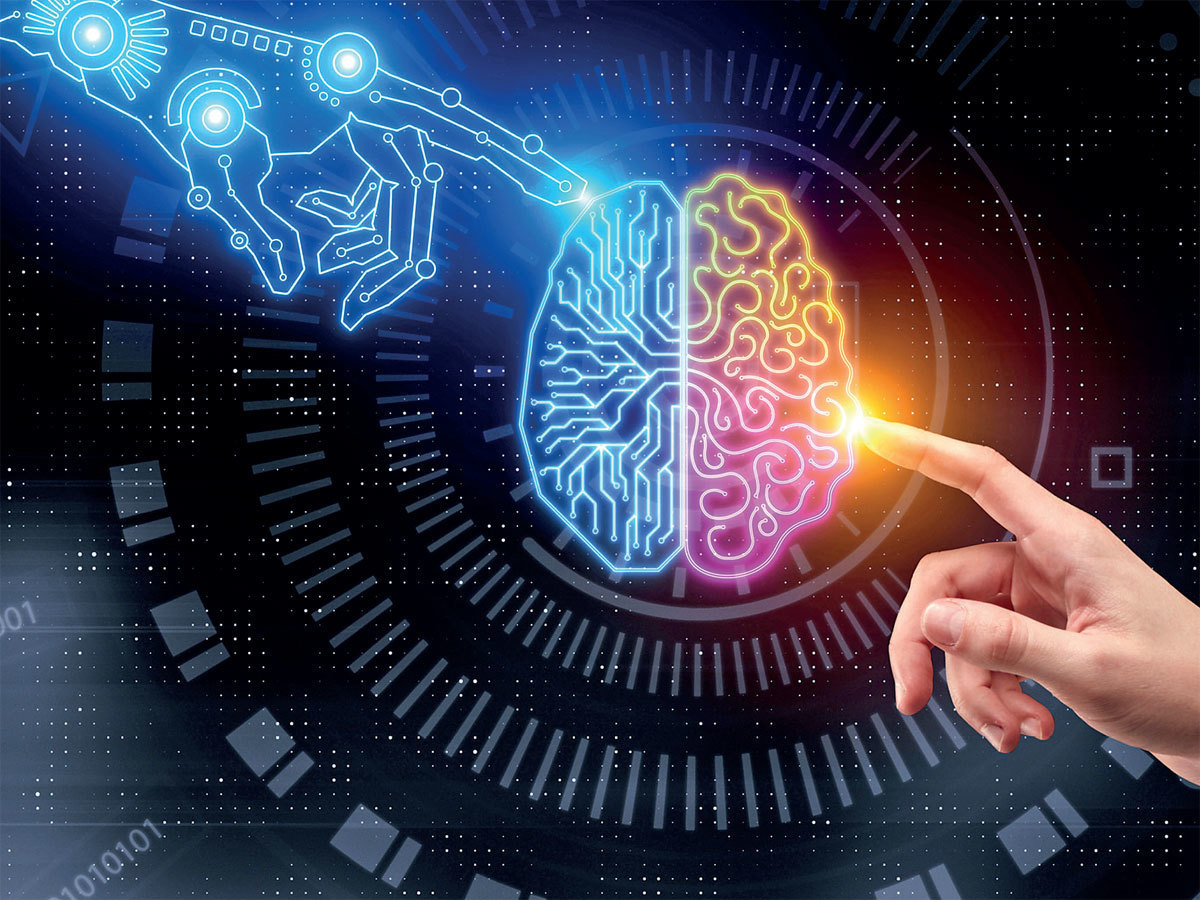
Unveiling the Soul of Artificial Intelligence: A Journey into Explainable Models
The Mysterious Black Box: When Algorithms Speak in Riddles
Imagine standing before an intricate antique mechanism, its gears spinning silently, producing remarkable results without revealing its inner workings. This is precisely how modern artificial intelligence operates – a complex symphony of calculations generating predictions while keeping its reasoning shrouded in mystery.
As an AI researcher who has spent decades unraveling computational puzzles, I‘ve witnessed the transformation of machine learning from an obscure academic pursuit to a technology reshaping human civilization. Yet, with great power comes an equally significant responsibility: understanding how these intelligent systems reach their conclusions.
The Origin of Opacity: A Historical Perspective
Machine learning‘s evolution mirrors humanity‘s quest to create intelligent systems. Early neural networks resembled intricate labyrinths where input transformed into output through inscrutable pathways. Researchers celebrated accuracy without questioning the underlying logic – a dangerous precedent in high-stakes domains like healthcare, finance, and criminal justice.
Consider a loan approval algorithm rejecting an applicant. Traditional models would simply output "denied" without explaining why. Was it income, credit history, or some nuanced combination of factors? This opacity breeds distrust and potentially perpetuates systemic biases.
Explainable AI: Illuminating the Computational Darkness
Explainable AI (XAI) emerges as a revolutionary approach to demystifying algorithmic decision-making. It‘s not merely a technical solution but a philosophical framework demanding transparency, accountability, and ethical consideration.
The SHAP Revolution: Decoding Algorithmic Reasoning
SHapley Additive exPlanations (SHAP) represents a breakthrough in model interpretability. Rooted in game theory, SHAP provides a mathematical lens to understand feature contributions, transforming opaque predictions into comprehensible narratives.
Mathematical Foundations
At its core, SHAP calculates each feature‘s marginal contribution to a prediction. Imagine distributing credit among team members for a successful project – SHAP does precisely this for machine learning features.
[SHAP(fi) = \sum{S \subseteq F \setminus {i}} \frac{|S|!(|F|-|S|-1)!}{|F|!} [f(S \cup {i}) – f(S)]]Where:
- [f_i] represents individual feature contribution
- [S] is a subset of features
- [F] represents the complete feature set
This mathematical elegance transforms complex predictions into interpretable insights.
Real-World Applications: Beyond Academic Abstractions
Healthcare Diagnostics
In medical imaging, SHAP helps radiologists understand why an algorithm flags a potential tumor. By highlighting specific pixel regions contributing to the diagnosis, it transforms AI from a black box into a collaborative diagnostic tool.
Financial Risk Assessment
Lending institutions can now comprehend exactly why a loan application was approved or rejected. Is it the debt-to-income ratio? Employment stability? SHAP provides granular insights, promoting fairness and transparency.
Criminal Justice Predictive Models
Controversial risk assessment algorithms can be scrutinized, ensuring decisions aren‘t based on hidden biases but on transparent, explainable factors.
The Psychological Dimension of Trustworthy AI
Humans inherently seek understanding. When technology operates like an inscrutable oracle, it triggers psychological resistance. By making AI‘s reasoning transparent, we bridge the trust gap between human intuition and computational logic.
Cognitive Trust-Building Mechanisms
- Contextual Explanation
- Probabilistic Reasoning Visualization
- Feature Importance Ranking
- Counterfactual Scenario Generation
Technical Implementation: A Practical Guide
Python Implementation Strategy
import shap
import xgboost as xgb

# Initialize SHAP explainer
explainer = shap.TreeExplainer(model)
shap_values = explainer.shap_values(X_test)

# Generate comprehensive visualizations
shap.summary_plot(shap_values, X_test)
Emerging Challenges and Future Directions
While SHAP represents a significant advancement, challenges remain:
- Computational complexity
- Scalability across diverse model architectures
- Balancing model complexity with interpretability
Research Frontiers
Researchers are exploring:
- Quantum-inspired explanation techniques
- Neuromorphic computing approaches
- Federated learning with inherent transparency
Ethical Considerations: The Moral Imperative
Explainable AI isn‘t just a technical achievement – it‘s a moral responsibility. As algorithms increasingly mediate human experiences, understanding their reasoning becomes paramount.
Regulatory Landscape
Governments worldwide are developing frameworks mandating algorithmic transparency. The European Union‘s AI Act represents a pioneering effort to codify explainability as a fundamental technological right.
Conclusion: A Transparent Technological Future
The journey toward fully transparent AI is ongoing. Each breakthrough brings us closer to a world where intelligent systems don‘t just perform tasks but communicate their reasoning, building trust through understanding.
As an AI researcher, I‘m optimistic. The future of artificial intelligence isn‘t about creating more powerful black boxes but developing collaborative, communicative computational partners.
Recommended Resources
- "Interpretable Machine Learning" by Christoph Molnar
- SHAP Documentation: https://shap.readthedocs.io/
- arXiv research papers on XAI
Ready to demystify AI? The journey of understanding begins now.