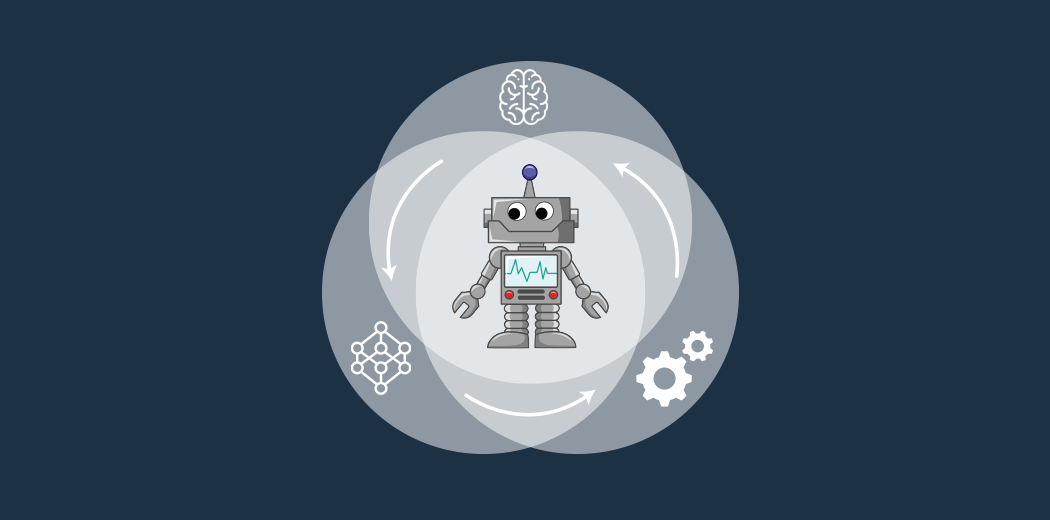
What is Reinforcement Learning? Fundamentals & Implementation: A Deep Dive into Intelligent Learning Systems
The Fascinating World of Machine Learning‘s Most Dynamic Discipline
Imagine a world where machines learn not through predefined instructions, but by experiencing, adapting, and improving—just like humans do. Welcome to the captivating realm of Reinforcement Learning (RL), a computational approach that transforms how intelligent systems understand and interact with complex environments.
A Journey Through Learning: From Biological Inspiration to Computational Brilliance
Reinforcement Learning isn‘t just a technological concept; it‘s a profound reflection of how living organisms learn and survive. Consider how a child learns to ride a bicycle—through countless attempts, falls, adjustments, and eventual mastery. Similarly, RL algorithms navigate intricate decision-making landscapes, refining strategies through continuous interaction and feedback.
The Philosophical Underpinnings of Intelligent Adaptation
At its essence, Reinforcement Learning represents more than a mere computational technique. It embodies a fundamental learning philosophy where intelligence emerges through exploration, experimentation, and incremental improvement. This approach mirrors evolutionary processes, where survival depends on adaptability and strategic decision-making.
Mathematical Foundations: Decoding the Learning Mechanism
The mathematical framework of Reinforcement Learning is elegantly complex. At its core lies the Markov Decision Process (MDP), a mathematical model that captures sequential decision-making scenarios.
[V{\pi}(s) = \mathbb{E}{\pi} \left[ \sum_{t=0}^{\infty} \gamma^t R_t | S_0 = s \right]]This equation represents the expected cumulative reward under a specific policy [\pi], where:
- [V_{\pi}(s)] denotes the value of a state
- [\gamma] represents the discount factor
- [R_t] indicates rewards at different time steps
Algorithmic Landscape: Beyond Simple Learning
Q-Learning: The Computational Strategist
Q-Learning stands as a cornerstone algorithm in Reinforcement Learning. Unlike traditional approaches, it doesn‘t require a predefined model of the environment. Instead, it learns optimal action-selection strategies through direct interaction.
The quintessential Q-Learning update rule captures this adaptive learning:
[Q(s,a) \leftarrow Q(s,a) + \alpha \left[ R + \gamma \max_{a‘} Q(s‘,a‘) – Q(s,a) \right]]Deep Q-Networks: Neural Learning Revolutionized
Deep Q-Networks (DQN) represent a revolutionary fusion of deep learning and Reinforcement Learning. By integrating neural networks, DQNs can handle high-dimensional, complex state spaces that traditional methods struggle with.
Real-World Transformation: Beyond Academic Boundaries
Reinforcement Learning isn‘t confined to academic research—it‘s reshaping industries:
Autonomous Vehicles: Navigating Unpredictability
Self-driving cars represent a quintessential RL application. These vehicles continuously learn from traffic patterns, road conditions, and potential hazards, making split-second decisions that could mean the difference between safety and catastrophe.
Healthcare: Personalized Treatment Strategies
In medical domains, RL algorithms assist in developing personalized treatment plans. By analyzing vast patient datasets, these systems can recommend nuanced interventions tailored to individual physiological responses.
Financial Trading: Adaptive Market Strategies
Quantitative trading platforms leverage RL to develop sophisticated trading algorithms that adapt to rapidly changing market dynamics, potentially outperforming traditional rule-based systems.
Computational Challenges: The Complexity of Learning
Despite its promise, Reinforcement Learning confronts significant challenges:
-
Exploration vs Exploitation Dilemma
Balancing between exploring new strategies and exploiting known successful approaches remains a fundamental challenge. -
Reward Function Design
Crafting meaningful reward signals that genuinely guide learning represents a nuanced art form requiring deep domain expertise. -
Computational Intensity
Training sophisticated RL models demands substantial computational resources and intricate algorithmic design.
Emerging Frontiers: The Future of Intelligent Systems
The horizon of Reinforcement Learning extends far beyond current capabilities. Researchers are exploring:
- Sample-efficient learning techniques
- Cross-domain knowledge transfer
- Ethical and interpretable machine learning frameworks
Practical Implementation: A Glimpse into RL Development
import gym
import numpy as np
from stable_baselines3 import DQN

class ReinforcementLearningExplorer:
    def __init__(self, environment_name):
        self.env = gym.make(environment_name)
        self.model = DQN(‘MlpPolicy‘, self.env, verbose=1)

    def train(self, timesteps=10000):
        self.model.learn(total_timesteps=timesteps)

    def evaluate_performance(self, episodes=100):
        mean_reward, _ = evaluate_policy(self.model, self.env, n_eval_episodes=episodes)
        return mean_reward

# Example Usage
explorer = ReinforcementLearningExplorer(‘CartPole-v1‘)
explorer.train()
performance = explorer.evaluate_performance()
Conclusion: A Paradigm of Continuous Learning
Reinforcement Learning transcends traditional computational boundaries, offering a glimpse into adaptive, intelligent systems that learn, grow, and evolve. As we stand on the cusp of a technological revolution, RL represents not just a method of machine learning, but a profound approach to understanding intelligence itself.
Recommended Learning Pathways
- "Reinforcement Learning: An Introduction" by Sutton & Barto
- OpenAI Gym Documentation
- Online courses from leading AI research institutions
Frequently Pondered Questions
Q1: How different is Reinforcement Learning from traditional machine learning?
Reinforcement Learning fundamentally differs by learning through interaction and feedback, unlike supervised learning‘s reliance on labeled datasets.
Q2: What programming background is ideal for RL?
Strong Python skills, understanding of linear algebra, and basic machine learning concepts provide an excellent foundation.