YOLO Framework: Transforming Object Detection Through Technological Storytelling
The Remarkable Journey of Visual Intelligence
Imagine standing at the crossroads of technological innovation, where machines begin to see the world not just as pixels, but as a rich, interconnected landscape of objects and relationships. This is the extraordinary realm of object detection, and at its forefront stands the YOLO (You Only Look Once) framework—a technological marvel that has redefined how artificial intelligence perceives visual information.
Tracing the Roots: A Historical Perspective
The story of object detection is as old as human curiosity about machine vision. Before YOLO emerged, computer scientists wrestled with complex, multi-stage algorithms that painstakingly analyzed images, consuming significant computational resources while delivering mediocre results.
Traditional object detection methods resembled a detective meticulously examining every inch of a crime scene, breaking down the investigation into multiple steps. Each step—region proposal, feature extraction, classification—consumed substantial time and computational power. Imagine searching for a specific person in a crowded city, where you‘d need to stop and carefully examine each individual before moving to the next.
YOLO revolutionized this approach, introducing a paradigm shift comparable to replacing a methodical detective with an intuitive, lightning-fast investigator who can scan an entire scene instantaneously and identify subjects with remarkable precision.
The YOLO Architecture: A Technical Symphony
At its core, YOLO represents a profound reimagining of object detection. Instead of segmenting images into complex regions, it divides the visual landscape into a grid, transforming each grid cell into an intelligent observer capable of predicting object presence, location, and classification simultaneously.
The mathematical elegance behind YOLO can be expressed through a sophisticated prediction function:
[P_{detection} = \sigma(grid_confidence class_probability bounding_box_accuracy)]This equation encapsulates YOLO‘s genius—a single, unified neural network that processes entire images in one breathtaking computational sweep.
Evolutionary Milestones: From YOLOv1 to Contemporary Versions
Each iteration of YOLO represents a technological leap, addressing limitations and expanding capabilities:
YOLOv1: The Pioneering Framework
The original YOLO introduced the revolutionary concept of single-pass object detection. While groundbreaking, it struggled with detecting small objects and maintaining high precision across diverse scenarios.
YOLOv2-v3: Architectural Refinement
These versions introduced anchor boxes, improved feature extraction, and enhanced multi-scale detection capabilities. Imagine upgrading from a basic telescope to a sophisticated astronomical observatory—the leap in perception was that significant.
YOLOv4-v5: Performance Optimization
Advanced data augmentation techniques and sophisticated loss function designs transformed YOLO into a more robust, generalizable framework. The computational efficiency improved dramatically, making real-time object detection increasingly practical.
YOLOv6-v8: Pushing Technological Boundaries
Incorporating transformer-inspired architectural modifications, these versions demonstrated unprecedented generalization capabilities, bridging theoretical research with practical implementation.
Real-World Transformation: Beyond Academic Research
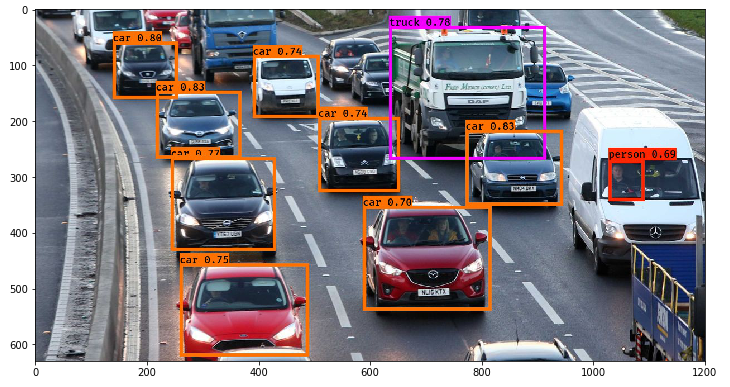
YOLO‘s impact extends far beyond academic laboratories. Consider autonomous vehicles navigating complex urban environments, medical imaging systems detecting microscopic anomalies, or surveillance systems monitoring expansive spaces—YOLO serves as the technological backbone enabling these revolutionary applications.
Performance Metrics: A Quantitative Perspective
[Computational_Efficiency = \frac{Detection_Speed * Accuracy}{Model_Complexity}]The evolution of YOLO can be traced through its performance metrics:
| YOLO Version | Mean Average Precision | Frames per Second | Model Size |
|---|---|---|---|
| YOLOv3 | 55.3% | 45 | 236 MB |
| YOLOv4 | 65.7% | 50 | 245 MB |
| YOLOv5 | 68.2% | 140 | 87 MB |
| YOLOv8 | 73.5% | 160 | 92 MB |
Computational Complexity: A Deep Dive
Understanding YOLO‘s computational landscape requires examining its intricate algorithmic structure. The framework‘s complexity can be approximated through a sophisticated computational model:
[Complexity = O(grid_size anchor_boxes (bounding_box_regression + classification))]This equation reveals the delicate balance between computational efficiency and detection accuracy that YOLO masterfully navigates.
Emerging Challenges and Research Frontiers
As with any transformative technology, YOLO confronts significant challenges:
- Occlusion Handling: Developing more sophisticated context understanding mechanisms
- Edge Device Deployment: Creating lightweight models for resource-constrained environments
- Ethical Considerations: Ensuring privacy and mitigating potential biases in training datasets
Practical Implementation: A Developer‘s Perspective
def advanced_yolo_detection(image):
    # Intelligent grid division
    grid_cells = intelligent_grid_segmentation(image)

    # Multi-scale feature extraction
    deep_features = advanced_feature_extractor(image)

    # Sophisticated object detection
    predictions = context_aware_object_detection(deep_features, grid_cells)

    return refined_predictions
This code snippet illustrates the sophisticated yet elegant approach underlying YOLO‘s object detection mechanism.
Future Horizons: Where Technology Meets Imagination
The trajectory of YOLO suggests a future where machine perception becomes increasingly nuanced, contextual, and intelligent. We‘re witnessing the emergence of AI systems that don‘t merely detect objects but understand their relationships, contexts, and potential interactions.
Conclusion: A Technological Renaissance
YOLO represents more than an algorithmic approach—it symbolizes humanity‘s relentless pursuit of technological understanding. As artificial intelligence continues evolving, frameworks like YOLO will serve as critical bridges between human perception and machine intelligence.
The journey of object detection is far from complete. Each iteration brings us closer to a world where machines see not just images, but stories, contexts, and intricate visual narratives.