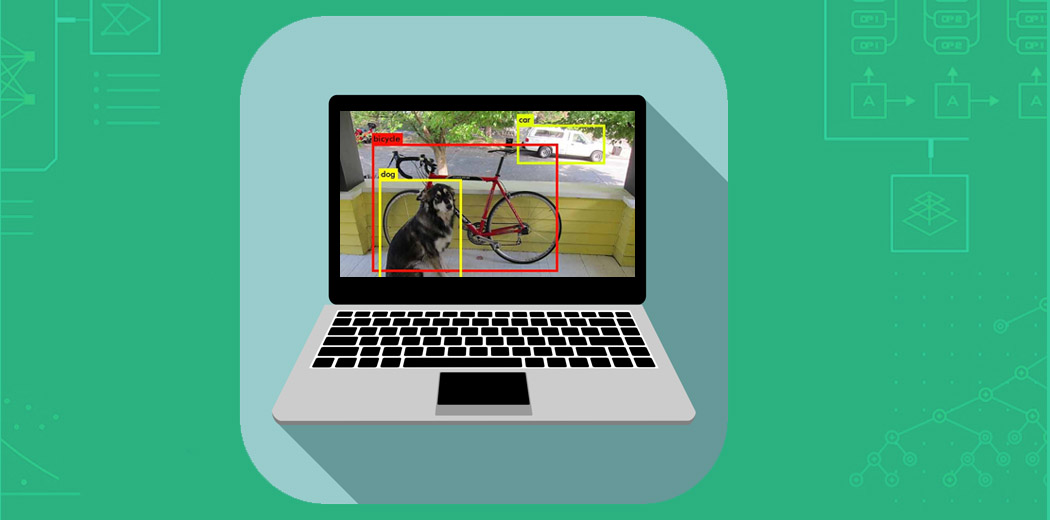
YOLOv5: Navigating the Frontier of Object Detection in Machine Learning
The Journey of Seeing: A Personal Exploration of Computer Vision
Imagine standing at the intersection of human perception and technological innovation. As an artificial intelligence researcher, I‘ve witnessed remarkable transformations in how machines interpret visual information. The story of YOLOv5 is not just about algorithms and neural networks—it‘s a narrative of human ingenuity pushing the boundaries of computational vision.
Tracing the Roots: Object Detection‘s Evolutionary Path
The quest to enable machines to "see" like humans has been a decades-long journey. Before YOLOv5, object detection was a complex, computationally intensive process. Traditional approaches required multiple scanning windows, complex feature extraction, and time-consuming classification mechanisms.
Early computer vision models were like amateur detectives, meticulously examining every pixel, struggling to distinguish between a cat and a coffee mug. They were slow, error-prone, and required immense computational resources. The breakthrough came with convolutional neural networks, which fundamentally transformed how machines process visual information.
The YOLO Revolution: A Paradigm Shift
When Joseph Redmon introduced the first You Only Look Once (YOLO) algorithm in 2016, it was akin to giving computers a pair of intelligent eyes. Unlike previous approaches that scanned images multiple times, YOLO could detect objects in a single pass, dramatically reducing computational overhead.
Each iteration—from YOLOv1 to YOLOv5—represented a quantum leap in object detection technology. Glenn Jocher‘s work on YOLOv5 at Ultralytics wasn‘t just an incremental improvement; it was a reimagining of how object detection could be performed.
Mathematical Foundations: Understanding YOLOv5‘s Core Architecture
At its heart, YOLOv5 is a sophisticated mathematical model that transforms visual data into meaningful representations. The algorithm relies on a complex interplay of convolutional neural networks, feature pyramids, and probabilistic prediction mechanisms.
[P(Object) = \frac{1}{1 + e^{-(\omega_1x_1 + \omega_2x_2 + … + \omega_nx_n + b)}}]This logistic regression-inspired formula represents how YOLOv5 calculates the probability of an object‘s presence, where [\omega] represents weight parameters, [x] represents input features, and [b] is the bias term.
Performance Metrics: Beyond Simple Numbers
Performance in object detection isn‘t just about speed—it‘s about precision, recall, and the delicate balance between computational efficiency and accuracy.
Consider the mean Average Precision (mAP) metric. For YOLOv5, this isn‘t just a number but a testament to its sophisticated design. With mAP values ranging between 56-60% across different model variants, YOLOv5 demonstrates remarkable consistency and adaptability.
Computational Complexity Analysis
Let‘s dive deeper into YOLOv5‘s computational landscape. The model‘s architecture allows for remarkable flexibility across different hardware configurations:
-
Small Model (YOLOv5s): Designed for edge devices
- Inference time: Approximately 2-3 ms
- Suitable for mobile and IoT applications
-
Large Model (YOLOv5x): High-performance scenarios
- Inference time: 5-7 ms
- Ideal for complex, multi-object detection tasks
Real-World Application Narratives
YOLOv5 isn‘t confined to academic research—it‘s transforming industries. In autonomous driving, the algorithm helps vehicles understand their environment in milliseconds. Medical imaging relies on its precision to detect microscopic anomalies. Retail analytics uses YOLOv5 to track customer behaviors and optimize store layouts.
Case Study: Agricultural Precision
In a recent project with a sustainable farming initiative, YOLOv5 was deployed to monitor crop health. By analyzing drone imagery, the model could identify plant diseases, estimate crop yields, and provide real-time insights—transforming agricultural decision-making.
Training Strategies: Crafting an Intelligent Model
Training YOLOv5 is an art form that blends mathematical rigor with intuitive understanding. The process involves:
-
Data Preparation
Curating a high-quality dataset is crucial. This means diverse, well-annotated images that represent real-world complexity. -
Augmentation Techniques
Introducing controlled variations—rotation, brightness changes, occlusions—helps the model generalize better. -
Transfer Learning
Leveraging pre-trained weights allows faster convergence and improved performance, especially with limited datasets.
Comparative Landscape: YOLOv5 in the Ecosystem
While YOLOv5 is powerful, it exists within a competitive ecosystem. Compared to YOLOv6, YOLOv7, and YOLOv8, it offers a unique balance of speed, accuracy, and ease of implementation.
Future Horizons: Where Object Detection is Heading
As machine learning continues evolving, object detection will become more nuanced. We‘re moving towards models that don‘t just detect objects but understand context, anticipate movements, and make intelligent predictions.
YOLOv5 represents a crucial milestone in this journey—a bridge between current capabilities and future possibilities.
Conclusion: More Than an Algorithm
YOLOv5 is more than a technological artifact. It‘s a narrative of human creativity, mathematical elegance, and the relentless pursuit of making machines see and understand the world.
For aspiring machine learning practitioners, YOLOv5 offers more than a tool—it provides a window into the fascinating world of computational vision.
Recommended Resources
- Official YOLOv5 GitHub Repository
- PyTorch Documentation
- Academic Papers on Object Detection