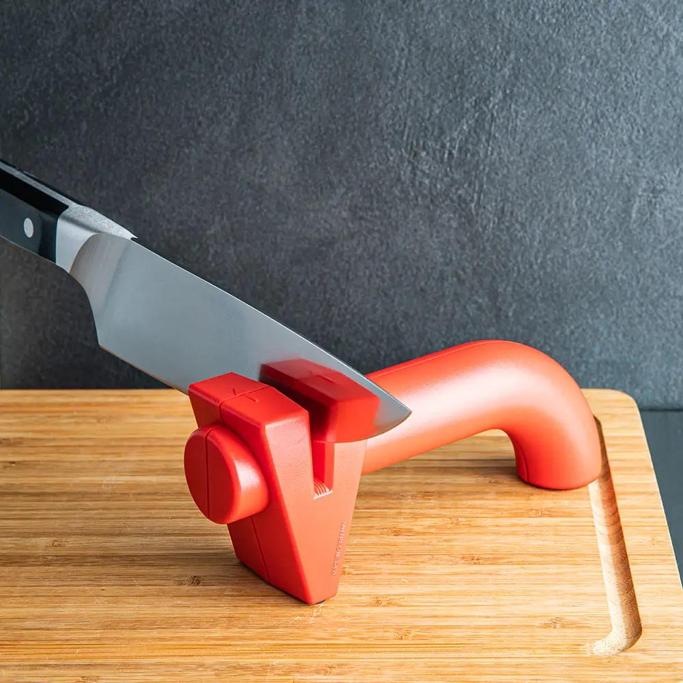
Zwilling Knife Sharpener Review: Keeping Your Blades on Point
Hey there, fellow knife enthusiast! If you‘re anything like me, you know that a sharp knife is a chef‘s best friend. And when it comes to keeping your blades in tip-top shape, there‘s no brand I trust more than Zwilling. With nearly three centuries of knifemaking expertise under their belt, Zwilling offers a range of top-notch sharpening solutions for every skill level and budget.
In this ultimate Zwilling Knife Sharpener review, I‘ll be sharing my firsthand experience with their products and diving deep into the features, benefits, and potential drawbacks of each type. Whether you‘re a beginner looking for a foolproof way to maintain your knives or a seasoned pro in search of the perfect edge, I‘ve got you covered. So, let‘s get those blades razor-sharp and ready for action!
Why Sharp Knives Matter
Before we jump into the nitty-gritty of Zwilling‘s sharpener lineup, let‘s talk about why keeping your knives sharp is so crucial. Not only does a sharp blade make meal prep faster and more enjoyable, but it‘s actually safer than using a dull knife. When you have to apply extra force to make a cut, you‘re more likely to lose control and accidentally nick yourself. Ouch!
Plus, sharp knives are better for your ingredients. Clean, precise cuts help preserve the texture, flavor, and appearance of your fruits, veggies, and proteins. And let‘s be real – there‘s nothing more satisfying than slicing through a ripe tomato with ease.
Zwilling‘s Sharpener Selection: An Overview
Now that we‘re on the same page about the importance of sharp knives, let‘s explore the different types of sharpeners Zwilling has to offer. Their lineup can be divided into three main categories:
-
Pull-Through/Handheld Sharpeners: These user-friendly devices feature pre-set angles and multiple slots for a quick and easy sharpening experience.
-
Sharpening Stones (Whetstones): The traditional choice for knife aficionados, whetstones offer a more hands-on, customizable approach to sharpening.
-
Honing Steels: Not quite sharpeners in the traditional sense, honing steels help realign your blade‘s edge between full sharpening sessions to maintain peak performance.
I‘ve personally tried and tested products from each category, so I can give you an honest, in-depth look at their strengths and weaknesses. Let‘s dive in!
Pull-Through/Handheld Sharpeners
If you‘re new to the world of knife sharpening, a pull-through or handheld device is a great place to start. These compact, portable sharpeners typically feature two or more slots with pre-set angles, allowing you to quickly restore your blade‘s edge with just a few swipes.
Pros:
- Easy to use, even for beginners
- Sharpens knives quickly
- Often accommodates multiple blade angles
- Compact and easy to store
Cons:
- May remove more blade material than necessary with frequent use
- Fixed angles may not suit all knife types
- Results may not be as precise as traditional methods
Top Pick: Zwilling V-Edge Knife Sharpener
One of Zwilling‘s bestselling pull-through models is the V-Edge Knife Sharpener. This sleek, all-in-one device features two stages: a coarse slot for reshaping dull blades and a fine slot for finishing and polishing. The V-Edge can handle both European (20°) and Asian-style (15°) knives thanks to its adjustable sharpening guides.
I‘ve been using the V-Edge for several months now, and I‘m consistently impressed by how quickly and easily it brings my knives back to life. The rubber base provides excellent stability during use, and the results rival what I‘d get from a professional sharpening service. It‘s become an indispensable tool in my kitchen!
Customer Reviews:
Don‘t just take my word for it – the V-Edge has an impressive 4.7-star rating on zwilling.com, with over 400 customer reviews. One satisfied user writes:
"I‘ve had this sharpener for over 5 years, and it still works like a charm! It‘s so easy to use – just a few passes through the slots, and my knives are back to being razor-sharp. I love that it can handle both my German and Japanese blades."
Sharpening Stones (Whetstones)
For knife enthusiasts and professionals seeking the ultimate edge, sharpening stones (also called whetstones) are the way to go. These rectangular blocks, typically made from natural or synthetic materials, offer a more traditional and precise method of sharpening compared to pull-through devices.
Pros:
- Allows for greater control and customization of blade angles
- Produces a finer, more polished edge
- Suitable for a wide range of knife types and sizes
- Long-lasting and durable with proper care
Cons:
- Steeper learning curve compared to pull-through sharpeners
- Sharpening process is more time-consuming
- Requires regular flattening and maintenance of the stone itself
Top Pick: Zwilling 1000/3000 Grit Combination Whetstone
When I‘m looking to give my knives a spa day, I reach for my trusty Zwilling Combination Whetstone. This dual-sided stone features a 1000-grit side for initial sharpening and a finer 3000-grit side for finishing and polishing. Made from durable, high-quality aluminum oxide, this whetstone is built to last with proper care.
I love the versatility of this stone – it works wonders on everything from my hefty German chef‘s knife to my delicate Japanese paring blade. And while it definitely takes some practice and patience to master the technique, the results are absolutely worth it. There‘s nothing quite like the satisfaction of creating a razor-sharp edge with your own two hands!
Customer Reviews:
The Zwilling 1000/3000 Grit Combination Whetstone has a stellar 4.8-star rating on zwilling.com, with customers praising its effectiveness and durability. One experienced sharpener shares:
"I‘ve tried countless whetstones over the years, and this Zwilling combo stone is by far my favorite. The two grits offer the perfect balance of efficiency and refinement, and the stone itself is holding up beautifully after months of regular use. Worth every penny!"
Honing Steels
While not a sharpener in the traditional sense, a honing steel is an essential tool for maintaining your knives between full sharpening sessions. By gently realigning the microscopic teeth along the blade‘s edge, honing steels help keep your knives cutting smoothly and efficiently.
Pros:
- Helps prolong the time between full sharpenings
- Quick and easy to use
- Suitable for most knife types and sizes
- Compact and easy to store
Cons:
- Does not actually remove material or sharpen dull blades
- Improper technique can damage knife edges
Top Pick: Zwilling J.A. Henckels 9" Stainless Steel Sharpening Steel
My go-to honing steel is the Zwilling J.A. Henckels 9" Stainless Steel Sharpening Steel. Crafted from durable stainless steel with a slip-resistant polymer handle, this tool is built for both performance and comfort. I love how the grooved surface grips the blade, making it easy to maintain the proper angle as I slide the knife along the steel.
I use this honing steel on my Zwilling knives every few days, and it makes a noticeable difference in keeping them sharp and slicing smoothly. It‘s a quick and easy step that really extends the life of my blades – and it looks pretty darn professional, too!
Customer Reviews:
The Zwilling J.A. Henckels 9" Stainless Steel Sharpening Steel has an impressive 4.6-star rating on Amazon, with over 1,000 customer reviews. One home chef raves:
"I‘ve been using this sharpening steel for over a year, and it‘s held up beautifully. The weight and balance feel great in my hand, and it does a fantastic job of keeping my knives aligned between sharpenings. I love that it comes with a safety guard for storage, too."
Choosing the Right Zwilling Knife Sharpener for You
With so many excellent options available, selecting the perfect Zwilling knife sharpener for your needs can feel overwhelming. Here are a few key factors to consider when making your decision:
- Your skill level and experience with sharpening
- The types of knives you own (European, Asian, serrated, etc.)
- How often you sharpen your knives
- Your available storage space
- Your budget
If you‘re new to knife sharpening and primarily own European-style blades, a user-friendly pull-through model like the Zwilling V-Edge is a great starting point. More experienced users or those with a diverse collection of knives may prefer the precision and versatility of a whetstone set.
Regardless of which type you choose, investing in a quality sharpener from a trusted brand like Zwilling is sure to elevate your cooking experience and help you maintain your knives for years to come.
Zwilling Knife Sharpener Alternatives
While Zwilling is undoubtedly a top choice for knife sharpeners, it‘s always a good idea to explore other reputable brands for comparison. Some notable alternatives include:
-
Wüsthof: Known for their high-quality German knives, Wüsthof also offers a range of sharpeners, including handheld models and honing steels.
-
Misen: This newer direct-to-consumer brand has gained a following for their affordable, high-performance knives and accessories. Their whetstone set is a budget-friendly option for those looking to try traditional sharpening methods.
-
Chef‘s Choice: With a focus on electric and manual sharpeners, Chef‘s Choice offers a variety of models suitable for different knife types and skill levels.
Frequently Asked Questions
-
How often should I sharpen my knives?
The frequency of sharpening depends on factors such as how often you use your knives and what types of cutting tasks you perform. As a general rule, aim to sharpen your knives every 2-6 months, and hone them weekly to maintain their edge. -
Can I use a Zwilling pull-through sharpener on serrated knives?
Most pull-through sharpeners, including Zwilling models, are not suitable for serrated blades. To maintain your serrated knives, use a ceramic sharpening rod or have them professionally sharpened. -
How do I know when it‘s time to sharpen my knives?
A simple paper test can help you determine if your knives need sharpening. Hold a sheet of printer paper vertically and slice through it with your knife. If the blade struggles to cut or tears the paper, it‘s time for a sharpening session. -
Can sharpening damage my knives?
When done correctly with a quality sharpener, sharpening will not damage your knives. However, improper technique or using a low-quality sharpener can potentially harm your blades. Always follow the manufacturer‘s instructions and take your time to ensure the best results.
The Bottom Line
After thoroughly testing and researching Zwilling‘s knife sharpener lineup, I can confidently say that investing in one of their products is a game-changer for any home cook or knife enthusiast. With options ranging from beginner-friendly pull-through models to professional-grade whetstones, Zwilling offers a sharpening solution for every skill level and budget.
What sets Zwilling apart is their commitment to quality, durability, and performance. As a company with nearly 300 years of knifemaking expertise, they understand the importance of proper blade maintenance and have designed their sharpeners to deliver exceptional results.
Whether you‘re tired of struggling with dull knives or looking to take your culinary skills to the next level, I highly recommend giving Zwilling knife sharpeners a try. Trust me – your taste buds (and your fingers!) will thank you.
So, my fellow knife lovers, go forth and sharpen! With a little practice and the right tools, you‘ll be slicing, dicing, and chopping like a pro in no time. And remember, a sharp knife is a happy knife – and a happy chef, too.