6 Surprising Science-Backed Truths About Decision Making That Will Transform Your Sales Approach
As salespeople, we‘re in the business of influencing decisions. But how well do we really understand the inner workings of the buyer‘s mind as they weigh their options?
Over the past few decades, psychologists and behavioral economists have uncovered a wealth of insights about how humans make choices – and it turns out we‘re far less rational than we‘d like to believe.
We‘re slaves to cognitive biases, easily overwhelmed by choice, and more likely to make a purchase because it "feels right" than because of how it pencils out on paper.
But by understanding a few key principles of the psychology of decision making, we can tailor our sales approach to work with the buyer‘s brain instead of against it.
In this post, we‘ll dive into six surprising, science-backed truths about how people make decisions and explore concrete ways to apply these insights as a salesperson.
Fair warning: some of these may challenge your assumptions about "best practices." But if you‘re willing to adapt, they can be game-changers for your close rates.
Let‘s dive in.
Decision Making Truth #1: Emotions Trump Logic Every Time
We‘ve all heard the adage, "people buy on emotion and justify with logic." But you may be surprised by just how big a role emotions play in decision making.
In one famous study, neuroscientist Antonio Damasio worked with individuals who had suffered brain damage that impaired their ability to feel emotions. Though they could still think logically, they found themselves paralyzed by even the simplest decisions, like what to eat for lunch.
Why? Because emotions are what ultimately drive action. Without that emotional spark, all the logical pros and cons in the world won‘t get someone to pull the trigger on a decision.
Consider these statistics:
- fMRI studies show that when evaluating brands, consumers primarily use emotions rather than factual information (source)
- Advertising research reveals that emotional response to an ad has far greater influence on a consumer‘s intent to buy a product than the ad‘s content itself (source)
- A study by the CEB found that B2B customers who had an emotional connection to a supplier were 12.6 times more likely to purchase from them (source)
The takeaway for salespeople? Facts and features alone aren‘t enough to close the deal. To really sway a buyer‘s decision, you need to appeal to their emotional drivers:
- Tap into their desires. What does the buyer secretly want to be true? Position your product as the key to achieving their aspirations.
- Ease their fears. What keeps them up at night? Demonstrate how you can solve their biggest problems and calm their anxieties.
- Paint the "after" picture. Help them envision how great life will be once they have your product. Make the status quo seem unappealing by comparison.
Of course, you still need facts to back up your claims. But lead with the emotional hook and then support it with logic, not the other way around.
Decision Making Truth #2: More Choice is Not Always Better
Ever buy a jar of jam? Turns out, you‘re actually less likely to make a purchase when you‘re presented with 24 options than with only six.
That‘s the surprising finding from a famous study by psychologist Sheena Iyengar. She set up a jam-tasting booth in a grocery store on two different Saturdays. On one day, there were 24 flavors of jam available to try. On the other, only six.
The result? While more shoppers stopped by the 24-flavor booth, they were actually six times less likely to make a purchase compared to the six-flavor booth.
Too many choices, it seems, can be paralyzing. It‘s a phenomenon psychologists call "analysis paralysis" or the "paradox of choice."
In one analysis of over 50 studies on choice overload, researchers found that this effect kicks in when people are faced with more than 7-10 options at a time (source). Beyond that, choice quality goes down, decision time goes up, and people become more likely to defer their choice altogether.

As salespeople, our instinct is often to dazzle prospects with all the bells and whistles our product has to offer. But the science suggests a different approach:
- Curate ruthlessly. Resist the urge to info-dump every feature on your prospect. Focus on the 3-4 benefits or use cases that are most relevant to their specific needs.
- Progressive disclosure. Reveal options gradually rather than all at once. Guide your buyer through baby steps, from basic decisions (e.g. product type) to more complex ones (e.g. add-ons and customizations).
- Provide default options. Analysis paralysis is often caused by a lack of clear preference. By suggesting a default package or configuration, you give your buyer an easy starting point to say "yes" to.
Remember, more options = more friction. Your job is to make the decision feel easy, not overwhelming.
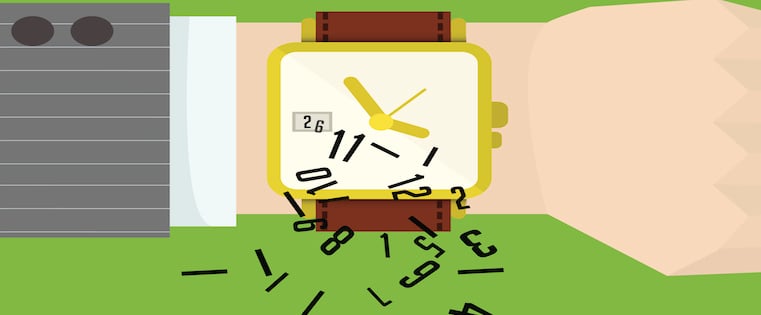
Decision Making Truth #3: The Clock is Ticking on Decision Quality
It‘s 4:55pm. Do you a) negotiate a high-stakes deal or b) review a legal contract?
If you‘re like most people, your mental acuity is probably starting to wane by that time of day. And you‘re not alone.
A fascinating study of parole board decisions found that prisoners who appeared before the board in the morning received parole about 70% of the time, while those who appeared in the afternoon were paroled less than 10% of the time.
The reason? Decision fatigue. As the day wears on and the parole board makes more and more decisions, their mental energy gets depleted, leading them to fall back on the "safe" default option of denying parole.
This effect has been replicated in numerous domains, from doctors prescribing unnecessary antibiotics to shoppers making poorer purchasing decisions as they go through the supermarket (source).

As a salesperson, decision fatigue is your enemy. When possible, try to stack the deck in your favor by:
- Scheduling high-stakes meetings in the morning. Your odds of getting a "yes" are significantly higher when your buyer is fresh.
- Shortening your sales cycle. The longer a deal drags on, the more mental fatigue sets in. Keep things moving briskly.
- Streamlining your contracts. Decision fatigue is exacerbated by having to wade through dense legalese. Work with your legal team to create simplified agreements.
Also beware decision fatigue in yourself. As a salesperson, you‘re making high-stakes choices all day long. Build in breaks to recharge, and automate mundane decisions where possible to conserve your mental energy for where it matters most.
Decision Making Truth #4: Complexity Is Okay…If You Ease Into It
So if too much choice is bad, does that mean we should always keep things dead simple? Not necessarily.
It turns out that humans are actually quite good at making complex decisions – if the choices are presented in the right order.
Consider buying a car. You might start with a simple choice between sedan, SUV, or truck. Then choose a make and model. Then exterior color. Then interior trim. And so on.
If the salesperson threw all of those choices at you simultaneously, you‘d probably walk out overwhelmed. But by easing you in from simple to complex, they make the decision process feel manageable.
This "choice bracketing" approach is backed by research. One study found that consumers were 40% more likely to buy a custom suit when they started with basic decisions (number of buttons, lapel shape) and gradually worked up to more complex ones (pocket style, button stance) vs. being hit with all the choices at once (source).

As a salesperson, you can use a similar technique to walk your buyers through complicated decisions:
- Start broad, then narrow. Begin with high-level choices (e.g. product type, general price range) before drilling down into specifics.
- Categorize options. Group related choices together to create a sense of structure and progression.
- Use conditional logic. When possible, show only the options that are relevant based on previous choices. This avoids unnecessary overwhelm.
- Provide context. Don‘t just throw a list of options at your buyer. Explain the implications and trade-offs of each choice so they can make an informed decision.
Remember, the key is to reveal complexity gradually. By easing your buyer in one choice at a time, you can guide them confidently through even the most multifaceted decision.
Decision Making Truth #5: Information Overload Is the Enemy of Action
Conventional sales wisdom says that an educated buyer is the best buyer. The more information we give them, the better equipped they‘ll be to make a decision, right?
Wrong. It turns out that more information does not necessarily lead to better choices – in fact, it can have the opposite effect.
Psychologists call it information overload, and it‘s a growing problem in our data-rich but attention-poor world. Consider these statistics:
- The average American is exposed to over 5,000 advertisements and brand exposures per day (source)
- 73% of buyers say they use more sources to research and evaluate purchases than they did a few years ago (source)
- 53% of B2B buyers say the buying process takes longer than it used to because of the abundance of trustworthy information to consider (source)
So what does information overload actually do to decision making? Nothing good:
- Diminishing returns. Past a certain point, additional information leads to minimal gains in decision accuracy (source)
- Decision avoidance. Being presented with too much data makes people more likely to procrastinate or not choose at all (source)
- Choice deferral. When there‘s a deluge of information to sort through, many people put off deciding to a later time rather than wading through it (source)

For salespeople, the implications are clear: more is not always more when it comes to swaying a decision. In fact, a "less is more" approach is often the way to go:
- Adopt a curator‘s mindset. Be ruthless about including only the most pertinent, compelling information. Everything else is a distraction.
- Personalize your pitch. Not all data is equally relevant to every buyer. Tailor your talking points to what matters most to the individual.
- Organize for easy digestion. Use clear headlines and page breaks to make dense information more visually scannable. Call out key takeaways.
- Leverage content marketing. Let your marketing collateral do the heavy lifting of explaining features and benefits. Your job is to connect the dots to your buyer‘s unique situation.
Remember, your role as a salesperson is not to dump data on your buyer, but to translate it into meaningful insights. Be a filter, not a fire hose.
Decision Making Truth #6: Two (or Three or Four) Heads Are Better Than One…Up to a Point
If you‘ve ever been part of a group decision making process, you know it can be a double-edged sword. On the one hand, different perspectives can lead to more creative solutions. On the other, "decision by committee" can turn into an endless cycle of meetings with no resolution.
So what does the science say about the ideal group size for decision making? The answer may surprise you.
According to one study, the optimal number of people for making complex decisions is between 5 and 20 (source). Less than that, and the group doesn‘t have enough diversity of thought. More than that, and communication starts to break down.
Why? With more than 20 people, groups tend to splinter into competing factions. Information gets lost in the shuffle. And individuals feel less accountable for the final outcome.

As a salesperson, you may not have much control over the size of your prospect‘s buying committee. But you can use this knowledge to streamline the decision process:
- Map out the decision makers. Early in the sales cycle, figure out exactly who needs to be involved and what their priorities are. Don‘t let new stakeholders derail the deal at the 11th hour.
- Keep meetings lean. Encourage your champion to limit group discussions to the core buying team. Offer to provide supporting materials for them to circulate to a wider audience.
- Facilitate effective group dynamics. If the buyer group is struggling to reach consensus, suggest techniques like assigning a Devil‘s Advocate or using anonymous voting to surface unspoken concerns.
- Negotiate one-on-one. If a group is deadlocked, propose taking the conversation offline with individual stakeholders. You may be able to find compromises that wouldn‘t emerge in a larger setting.
At the end of the day, the goal is not to boil the ocean by including every possible decision maker, but to efficiently build consensus among the critical few.
Putting the Psychology of Decision Making to Work
We‘ve covered a lot of ground in this post, but the unifying theme is this:
The way people actually make decisions is often very different from how we think they make decisions.
By understanding the hidden psychology that drives choice, we can craft our sales approach to be more brain-friendly:
- Lead with emotion, and support with logic
- Curate options to avoid choice overload
- Capitalize on peak decision making times
- Gradually ease into complex choices
- Act as a filter against information overload
- Keep buying groups lean and efficient
Putting these principles into practice requires a mindset shift. It means letting go of some long-held sales dogmas and trusting what the science tells us about the decision making process.
But if you can learn to embrace these counterintuitive truths, you‘ll be in prime position to guide your buyers toward the choices you want them to make – naturally and effectively.
Now if you‘ll excuse me, I have some jam to buy. But not too many options, please.
![How to Send a Follow-Up Email After No Response [+ 11 Examples]](https://greenlitcontent.com/wp-content/uploads/2026/04/20260423093705-69e9e8415b2a6.jpg)
![How to Write the Perfect Follow-Up Email After an Interview [Templates + Expert Tips]](https://greenlitcontent.com/wp-content/uploads/2026/04/20260423084601-69e9dc49efe96.png)