
Demystifying Sales Win Rate: Your Ultimate Guide to Tracking and Improving This Crucial Sales Metric
Sales win rate is one of the most closely scrutinized metrics for any sales organization. This powerful KPI provides a pulse on the health of your sales pipeline and offers insight into how effective your team is at converting opportunities into closed deals.
But what exactly is win rate? How do you calculate it? And most importantly, what steps can you take to improve it over time? In this comprehensive guide, we‘ll dive deep into the concept of sales win rate and share proven strategies from HubSpot‘s own sales team to help you optimize your sales process and close more deals.
What is Sales Win Rate and Why Should You Care?
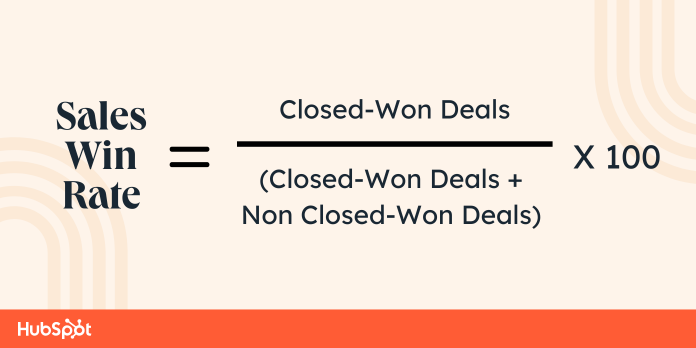
At its core, sales win rate measures the percentage of final stage opportunities that ultimately become closed-won deals. It‘s calculated by taking your total number of won deals and dividing that by the total number of deals that reached a final stage (either closed-won or closed-lost) over a given time period.
Here‘s the formula:
So why should sales leaders and reps care about win rate? This metric provides crucial insight into:
• The quality of your leads and opportunities
• The effectiveness of your sales process
• Individual and team sales performance
• Trends over time that can help with forecasting
Essentially, win rate acts as a compass – pointing out what‘s working, what‘s not, and where to focus your efforts for improvement. A low or declining win rate signals issues in your pipeline that need attention. On the flip side, a high or increasing win rate indicates your process is dialed in and producing results.
Calculating Your Win Rate: Formula, Examples, and Best Practices
Now that you know the "what" and "why" behind win rate, let‘s talk about the "how." As mentioned above, calculating win rate is fairly straightforward:
Win Rate = Number of Closed-Won Deals / Total Number of Deals that Reached Decision Stage
For example, let‘s say last quarter your sales team had 50 opportunities reach a final decision. 35 of those became customers and 15 decided not to buy. Your win rate for that quarter would be:
35 Closed-Won Deals / 50 Total Deals = 0.70 or 70%
While the calculation itself is simple, there are a few best practices to keep in mind to ensure you‘re tracking win rate accurately and consistently:
1. Clearly define your win/loss stages and reasons.
What counts as a "won" deal? At what point do you consider an opportunity truly "lost?" It‘s crucial that your entire sales org is on the same page about these definitions.
Many companies only count deals as lost if the prospect explicitly goes with a competitor. Others include a "closed-lost / no decision" category for deals that simply fizzle out.
There‘s no universally right or wrong approach here. What matters is picking clear criteria and sticking to it.
2. Determine your tracking time frame.
Are you looking at win rates monthly, quarterly, annually? Again, consistency is key. Decide on a cadence for calculating and reporting on win rate. This allows you to monitor trends over time and keeps everyone aligned.
3. Use a win rate calculator or dashboard.
Plugging your raw data into a purpose-built win rate calculator (like HubSpot‘s free template) can help you track win rate quickly and easily while minimizing errors.
Even better, using a real-time dashboard that automatically calculates win rate and other metrics ensures you always have the latest data at your fingertips.
6 Proven Strategies to Improve Your Sales Win Rate
You‘re tracking your win rate consistently – great! But now it‘s time for the million-dollar question: How can you improve it and start closing more deals? Here are some tried-and-true tips straight from HubSpot‘s top performers:
1. Dig into your win/loss data.
"A common theme across the team was the lack of concrete next steps, resulting in deals fizzling out or going dark," says Sarina Kowaguchi, Account Executive at HubSpot.
Her team started conducting monthly reviews of their closed-lost deals to identify patterns and implement fixes. For example, they began scheduling short follow-up calls after sending contracts to keep deals progressing.
Analyzing your win rate data at a granular level – by sales rep, deal stage, loss reason etc. – can uncover insights like:
• Which reps need more coaching or training
• Common objections or obstacles in your sales cycle
• Specific competitors that are consistently beating you out
Armed with this info, you can make targeted improvements instead of stabbing in the dark.
2. Set clear next steps at every stage.
To Sarina‘s point above, one of the easiest ways to see an quick uptick in your win rate is to obsess over your next steps.
Never let a prospect leave a meeting or hang up the phone without locking in a concrete next action. Whether it‘s a demo, a proposal review, or simply signing the contract – make sure both parties are aligned on exactly what should happen next and by when.
3. Bring decision-makers to the table early.
How many times have you gotten to the final hour of a deal, only to have a mystery decision-maker swoop in and dash it to pieces? If this sounds painfully familiar, you need to get better at identifying and engaging with the real decision-makers from the get-go.
"We learned to always ask: What does your evaluation process look like internally? Who else is involved? Getting these stakeholders brought in early prevents surprise roadblocks at the 11th hour," says Sarina.
4. Don‘t shy away from potential objections.
Top-performing reps know that objections are inevitable – it‘s how you handle them that matters. Rather than gloss over potential red flags or sticking points, address them head-on.
"Call out obstacles immediately and have a plan for overcoming them," advises Tori Rotermund, Senior Account Executive. "This prevents you from wasting cycles on deals that aren‘t a good fit while proactively removing barriers for the right opportunities."
5. Ask questions instead of assuming.
Deals often go sideways because of misaligned assumptions on either side. Don‘t be afraid to ask clarifying questions to make sure everyone is on the same page.
Ian Byrne, who manages an enterprise sales team at HubSpot, coaches his reps to dig for key details like:
• The prospect‘s personal and professional goals
• What success looks like for their business
• The potential impact of making a change (or not)
"If you have knowledge gaps, try to identify and close them as soon as possible," Ian advises.
6. Create mutual success criteria.
Finally, it‘s important that both rep and customer are aligned on what needs to happen for the deal to be considered a success. These "exit criteria" shouldn‘t just be a checklist for the rep – they should focus on what the buyer needs to see value as well.
"We always seek to understand their current challenges, determine if our solution can realistically solve those challenges, and tie everything back to concrete ROI for their business," says Mintis Hankerson, Senior Sales Manager. "This shifts the dynamic from feeling like a pushy transaction to a collaborative partnership."
The Power of Tracking Win Rate Over Time
Improving your sales win rate isn‘t a one-and-done endeavor. It requires ongoing measurement, experimentation, and iteration. Tracking your win rate over time allows you to:
• Catch red flags and course correct early
• Test the impact of process tweaks and new strategies
• Forecast more accurately based on historical data
• Celebrate wins and build momentum with your team
Using a tool like HubSpot‘s Sales Calculator or CRM dashboard makes this monitoring easy and automatic. You can customize your reports, visualize trends at a glance, and get alerted to major changes as they happen.
Ready, Set, Win More Deals!
We covered a lot of ground in this guide – but don‘t let that overwhelm you. Start by getting clear on what win rate means for your organization and set up a consistent tracking method.
Then, choose one or two improvement strategies from the list above and commit to implementing them for a full quarter. Measure your results, share your successes, and iterate as needed.
Over time, these marginal gains will start to compound, leading to a significantly higher win rate and healthier pipeline overall.
Remember, tracking and improving win rate is a team sport. It requires alignment from leadership on down to each individual contributor. So share this guide with your colleagues, get buy-in on your plan, and start moving the needle together. Here‘s to closing more deals and crushing your targets this year!