The Rise of Frictionless Payments: Creating a Seamless Customer Experience
The way we pay for things is changing rapidly. Gone are the days of fumbling for cash or swiping a credit card. Today‘s consumers expect to be able to pay quickly, easily and securely with just a tap, click or scan. This demand for convenience has given rise to a new era of "frictionless payments."
Frictionless payments refer to any method of payment that is fast, easy and embedded seamlessly into the customer experience. The goal is to remove as much "friction" from the payment process as possible, eliminating the need for customers to manually enter information, wait in long lines, or jump through hoops to complete a transaction.
The growth of ecommerce and mobile commerce has been a major catalyst for the shift to frictionless payments. As more and more consumers shop and make purchases on their phones and devices, there is increasing pressure on businesses to provide a checkout experience that is optimized for speed and convenience. In fact, cart abandonment rates continue to climb, with nearly 70% of online shoppers bailing on a purchase because the checkout process was too long or complicated.
At the same time, advancements in financial technology have introduced a wave of new payment solutions that are faster and more secure than traditional methods. From digital wallets to contactless cards to biometric authentication, the options for frictionless payments continue to expand.
Types of Frictionless Payments
So what exactly do frictionless payments look like in practice? Here are a few of the most common types:
Digital Wallets
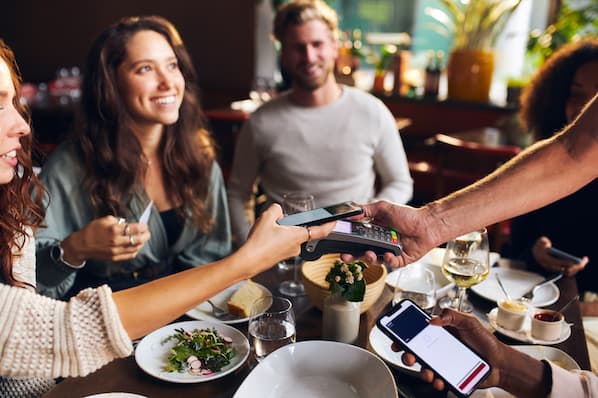
Digital wallets like Apple Pay, Google Pay and Samsung Pay allow users to store their payment information in a secure app and make purchases with their phone or device. Instead of physically swiping a card, users can simply hold their device near a payment terminal to complete a transaction. Many digital wallets also enable one-click payments within apps and on websites.
Contactless Cards
Contactless credit and debit cards use near-field communication (NFC) technology to allow users to tap to pay at compatible payment terminals. This eliminates the need to swipe or insert a card into a reader. Most new credit and debit cards now come equipped with contactless technology, and adoption is quickly ramping up.
Mobile Apps
Many retailers, restaurants and service providers now offer their own mobile apps with built-in payment functionality. These apps often include features like order ahead, in-app purchases and loyalty rewards. By centralizing the entire customer journey within a dedicated app, businesses can create a more seamless payment experience.
Biometric Payments
Biometric authentication uses physical characteristics like fingerprints or facial recognition to verify a payment. This adds an extra layer of security to frictionless transactions, ensuring that only the authorized user can complete a payment. As biometric technology becomes more advanced and reliable, expect to see it become more deeply embedded into the payment experience.
Invisible Payments
Invisible payments take frictionless commerce to the next level, making transactions feel almost magical to the customer. With invisible payments, charges are triggered automatically based on customer identification or behavior. Examples include Amazon Go stores, where customers can simply walk in, grab what they need and walk out, with charges processed automatically after they leave. With advances in computer vision, sensor fusion and AI, invisible payments may soon become a more common part of the retail experience.
The Benefits of Frictionless Payments
For customers, the advantages of frictionless payments are clear. Transactions are faster, easier and more convenient. No more waiting in long lines or fussing with cash and coins. Digital receipts and real-time transaction alerts also give customers more visibility and control over their spending.
But frictionless payments are a win for businesses as well. When the payment process is simple and seamless, customers are more likely to complete a purchase. In the first quarter of 2022 alone, ecommerce sales soared to over $250 billion, but retailers still lost out on nearly $125 billion in revenues as a result of cart abandonment. By reducing friction at the point of sale, businesses can boost conversion rates and drive more revenue.
Frictionless payments also give businesses access to valuable customer data and insights. Digital transactions leave a data trail that can help inform personalized offers, loyalty programs and targeted marketing efforts. Many frictionless payment platforms also include business-friendly features like recurring billing, instant payouts and advanced fraud protection.
Addressing the Challenges
While the benefits are significant, frictionless payments are not without their challenges and potential downsides. One of the biggest concerns is data privacy. As payments become more tightly integrated into the overall customer experience, businesses gain access to an unprecedented amount of shopper data. This data can be a powerful asset, but it also introduces new risks and responsibilities. To build trust, businesses must invest in robust security and be fully transparent about their data practices.
Integration and implementation can also pose difficulties, especially for businesses with legacy point-of-sale systems. Adding contactless readers, migrating to cloud-based software, and creating new mobile experiences will require upfront investments and ongoing support. Businesses must carefully map the customer journey and work closely with payment and technology partners to design frictionless experiences that work.
There‘s also the issue of fraud and chargebacks. When transactions are too easy, the risk of unauthorized purchases goes up. Businesses rolling out frictionless payments must be extra vigilant in monitoring for fraud and responding quickly to disputes. Advanced biometric authentication, risk-based decisioning and machine learning tools are helping to mitigate these threats.
The Road Ahead
Despite the challenges, the momentum behind frictionless payments shows no signs of slowing. According to a recent report from Juniper Research, the total number of contactless payment users will exceed 760 million globally by 2025, up from 440 million in 2020. And digital wallets are poised to become the dominant payment method globally within the next five years.
We‘re also seeing a convergence of frictionless payment methods with other emerging technologies like IoT, connected cars, smart speakers and AR/VR. Before long, almost every interaction with the physical and digital world will be a potential payment opportunity. Businesses must rethink every touchpoint and look for new ways to use frictionless payments to surprise, delight and serve customers.
Tips for Implementing Frictionless Payments
Ready to start building more frictionless payment experiences? Here are a few tips to help get you started:
- Provide a variety of payment options. Not everyone prefers to pay the same way. Consider the demographic and behaviors of your customer base and offer frictionless options that align with their preferences.
- Optimize for mobile. Make sure your payment experience is designed with a mobile-first mindset. This means large buttons, limited text entry, auto-fill for forms and other optimizations for small screens and on-the-go users.
- Use tokenization to protect data. Tokenization lets customer data be replaced with a unique identifier that can be used to process a transaction without exposing sensitive information. This adds a layer of protection and can help reduce your PCI burden.
- Let customers choose their level of friction. While removing barriers is good, some customers actually prefer more validation at the point of payment—especially for high-value transactions. Give customers the option to opt in to added security measures if it makes them feel more comfortable.
- Test and solicit feedback regularly. Frictionless is often in the eye of the beholder. To optimize your payment experience, consider testing new approaches with small groups of users and continuously gathering feedback. Let real customer input guide your efforts.
Conclusion
Frictionless payments aren‘t just a trend, they‘re the new standard for 21st century commerce. Consumers have grown accustomed to one-click ordering, tap-to-pay checkout and instant gratification. Businesses that cling to clunky, cumbersome payment experiences will soon find themselves at a severe disadvantage.
The good news is that building frictionless payment experiences is getting easier every day. With the right strategy, partners and mindset, any business can begin to introduce more seamless transactions at scale. The key is to always keep the customer at the center and relentlessly remove barriers and frustrations. In a world of frictionless payments, the businesses that deliver the fastest, easiest and most secure experiences will rise to the top.