The Sobering Truth: Why You Can‘t Sell to C-Suite Executives
The COO glared at me from across the conference room table. His jaw clenched. His brow furrowed. I was only two questions into my discovery call script when he cut me off.
"Just stop," he said sharply. "I don‘t have time for this generic line of questioning. You clearly haven‘t done your homework on our business. This meeting is over."
With that, he stood up abruptly and walked out, leaving me and the ops manager who had arranged the call sitting in stunned silence.
I was two years into my first tech sales job, thinking I was doing everything by the book. Open-ended discovery questions to uncover pain points, just like my onboarding training and the dozens of sales gurus had drilled into me.
Yet this COO had just kicked my teeth in. What had gone so wrong?
"I‘m as confused as you," the ops manager said sheepishly. "We teach our own reps to ask the exact same types of questions."
If you‘re in B2B sales, this story probably sounds painfully familiar. Getting shot down by a busy, no-nonsense executive is a rite of passage. But why does it keep happening? And what should we be doing differently?
As it turns out, those discovery questions we‘ve all been trained to ask are actually killing our chances of selling to the C-suite. New data proves it.
The Data: Discovery Questions Damage Win Rates
My team at Gong.io recently analyzed anonymized data from over 39,000 recorded B2B sales meetings via web conferencing. We transcribed the calls and used AI to isolate patterns of successful and unsuccessful selling behaviors.
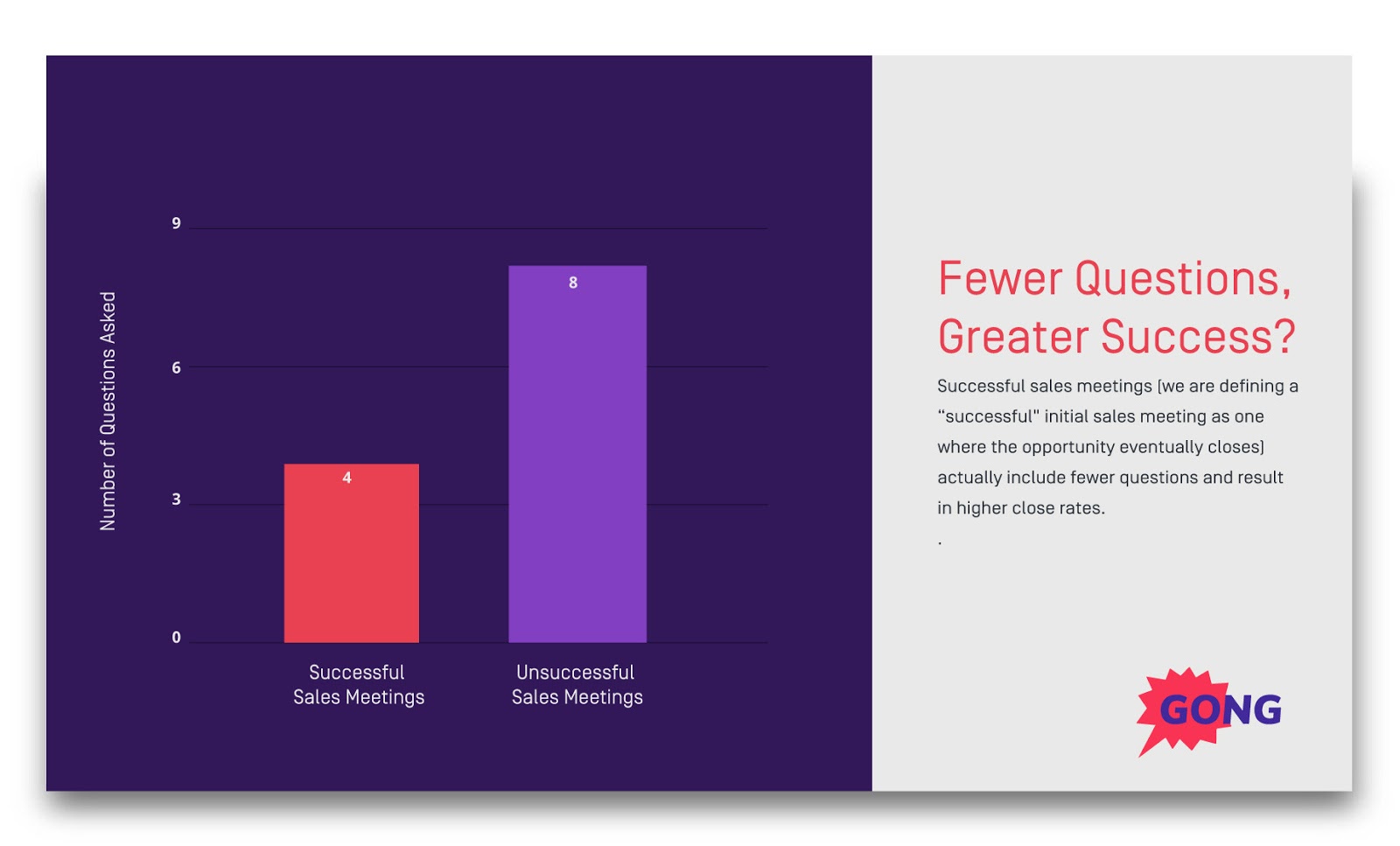
One finding stood out as both counterintuitive and crucial: There is a strong negative correlation between asking discovery questions and win rates, especially when selling to senior executives.
Take a look at this chart:

The data shows that after the first few discovery questions, each additional question decreases your likelihood of closing the deal. In fact, sales meetings with VPs and C-level execs that ended in a win had an average of just 4 discovery questions. Ones that ended in a loss averaged 8 discovery questions.
What‘s more, this pattern held true across all stages of the sales cycle, not just initial meetings:
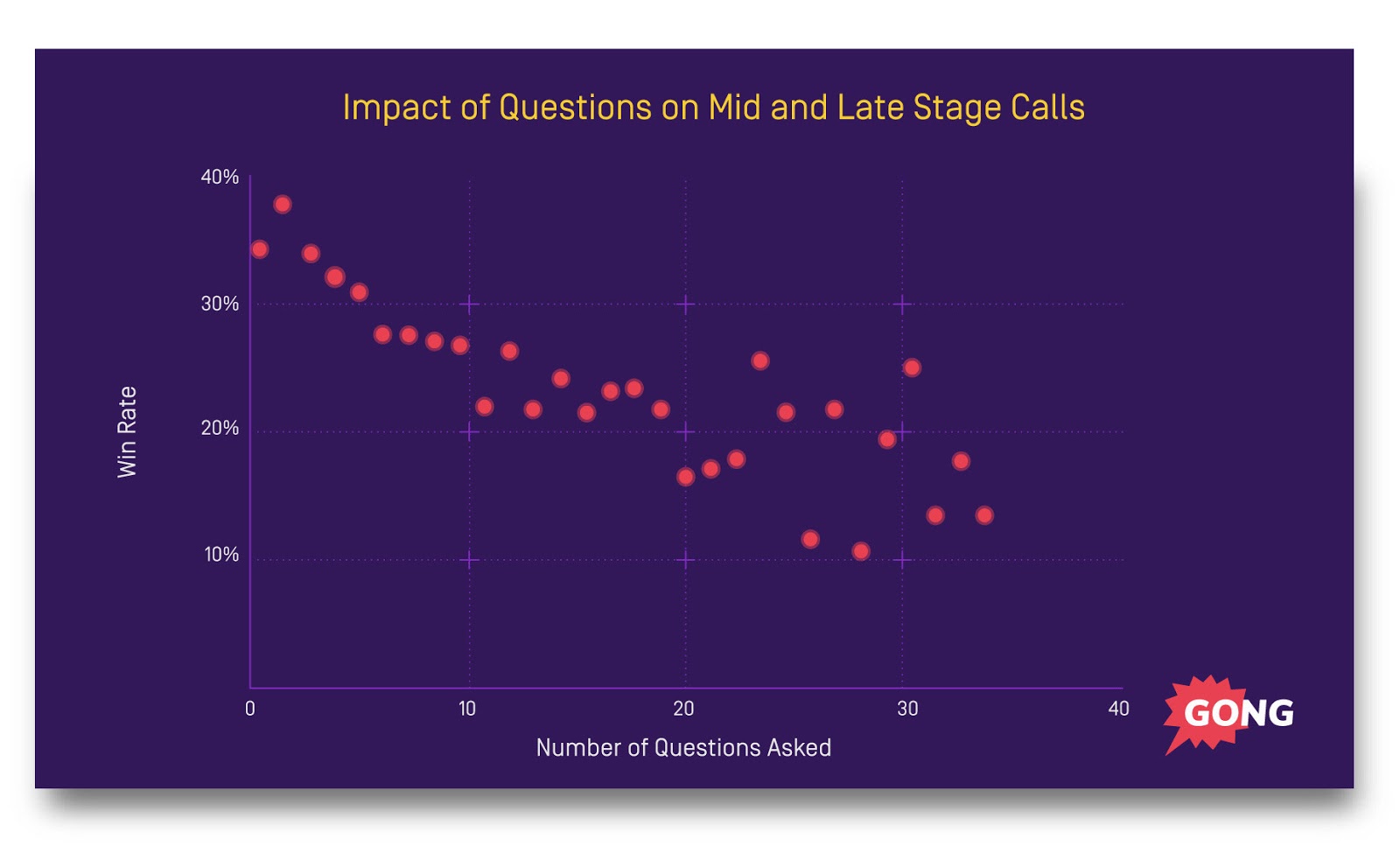
No matter how far along the deal, the more questions reps asked senior decision makers, the less likely they were to ultimately sign the contract. Our discovery call tactics are backfiring with the people who hold the purse strings.
So what‘s going on here? Why do discovery questions, a pillar of modern sales training, seem to repel executives? The answer lies in a phenomenon we call "discovery fatigue."
C-Suite Execs Are Tired of Being Interrogated
Put yourself in a busy VP‘s shoes for a moment. You‘re putting in 60+ hour weeks, working weekends, traveling constantly. You have hundreds of unread emails and dozens of fires to put out.
Then here comes the fourth sales rep this month, asking to "learn about your top challenges" and "understand your goals." You know the drill. It starts to feel like an interrogation, not a meaningful discussion.
Here‘s the problem: Most discovery questions selfishly serve the seller‘s needs, not the buyer‘s. Think about it. When a rep asks you about your decision process, budget, or pain points, who benefits from that information? The rep. It helps them qualify the deal and plan their pitch.
But it requires you, the executive, to take precious time out of your day to educate a vendor about your business. Again. And again. And again with each new rep jockeying for your attention.
Stephen Covey‘s classic "7 Habits" framework explains the impact this has over time. Covey argues that you have an "emotional bank account" with each person you interact with. When you listen empathetically and seek to understand their needs, you make a deposit. When you interrogate them for your own purposes, you make a withdrawal.
Most discovery questions make withdrawals from busy executives‘ emotional bank accounts. The more vendors they meet with, the more overdrawn that account gets. They develop discovery fatigue.
You can observe this happening in real time on sales calls:

The more questions the rep asks, the shorter and more curt the executive‘s responses become. They mentally check out and start glancing at their watch or phone, wondering how to end this time suck of a meeting.
Death by a thousand cuts. Or in this case, questions.
Making Deposits, Not Withdrawals
This data begs the question: If we can‘t rely on discovery calls to sell to the C-suite, what should we do instead? How can we make deposits in senior decision makers‘ emotional bank accounts, not withdrawals?
I love how one CRO put it: "Your job isn‘t to ask me what‘s keeping me up at night. It‘s to tell me what should be."
Bingo. Executives don‘t want to be grilled about their business. They want sales reps to point out risks and opportunities they haven‘t fully appreciated. Do that, and you‘ll have their undivided attention.
The key is to lead with genuine insights, not self-serving questions. Use your pre-call research to identify a looming threat or unrealized possibility in the executive‘s world. Then educate them on it at the start of the meeting.
This approach is so powerful because it leverages a hardwired quirk in human psychology – loss aversion. Research shows that people are twice as motivated to avoid a loss as they are to achieve an equivalent gain. A 10% chance of losing $100 feels scarier than a 10% chance of winning $100 feels exciting.
When you alert an executive to an imminent danger they‘re underestimating, their brain kicks into high gear. They become hellbent on mitigating that threat ASAP. Suddenly you‘re not just another sales rep – you‘re a critical advisor helping them avert disaster.
Here‘s an example. Let‘s say you sell marketing analytics software and you‘re meeting with a retail CMO for the first time. The typical discovery call would include questions like:
- "What are your top marketing priorities this year?"
- "How are you currently measuring the ROI of your campaigns?"
- "What tools is your team using for attribution today? What do you like or dislike about them?"
Perfectly reasonable questions. But still withdrawals. Now contrast that with how you could open the meeting by leading with an insight:
"CMO Karen, I‘ve been analyzing the retail space and see two troubling trends putting marketing teams like yours at serious risk: the phaseout of third-party cookies and the runaway growth of walled gardens like Amazon. Traditional performance marketing is getting more expensive and less effective, while companies are losing access to customer data and margin to the big platforms. How are you planning to adapt your acquisition strategy in light of this?"
See the difference? You‘ve done your homework and connected the dots to an existential threat facing retail marketers. One the CMO has surely heard about but may be underestimating.
Now you have their full attention. You made a major deposit in the relationship bank account. No generic discovery questions needed.
Of course, reading about this and actually executing it are two different things. Here are a few pointers for getting it right:
4 Strategies for Selling to the C-Suite
-
Do your research: Scour the executive‘s industry for disruptive trends, regulatory changes, emerging competitors, shifting consumer habits, or new technologies that could materially impact their business. The more specific to their situation, the better.
-
Lead with the insight: Don‘t bury the lead. Open the meeting by concisely articulating the risk or opportunity you‘ve identified. Then pause and let it sink in. Give the exec a chance to react before launching into your pitch.
-
Ask guiding questions: You‘ll still need to ask questions, but make them targeted and purposeful. Steer the conversation toward how the insight applies to their world and what they can do about it. Don‘t put the onus on them to connect the dots.
-
Focus on risk mitigation: Even if your product promises amazing upside, anchor the discussion in avoiding potential downsides. Executives will move mountains to prevent losing ground. Achieving gains is a secondary priority.
To illustrate, here‘s how a rep selling sales enablement software could put this into practice with a CRO:
"CRO Mike, I noticed your company recently shifted to a remote-first workplace policy. I‘ve been studying how this is affecting software sales orgs and the data is concerning. Win rates are dropping 15-20% as reps struggle to build rapport and credibly demo products over Zoom. Cycle times are increasing 30%+ as deals get stuck or fizzle out. How are you thinking about enabling your team to be productive in this new virtual selling environment? What‘s your plan to prevent pipeline from stagnating?"
Then let the CRO respond and use follow ups to dig deeper:
- "Have you observed these challenges with your own team? What‘s working and what‘s not?"
- "How are your top reps adapting? What are they doing differently?"
- "What tools have you considered for virtual selling? What capabilities do you think are most critical?"
The key is that every question serves a clear purpose. You‘re not interrogating, you‘re facilitating a valuable discussion. One the CRO is eager to have because you‘ve framed it around an issue keeping them up at night.
This approach takes practice to perfect. You need to get comfortable doing pre-call research, distilling insights, and delivering them confidently.
That‘s why I‘m hosting a live webinar (now on-demand) to break it down step-by-step. I‘ll walk through real examples of selling to the C-suite, including the exact talk tracks to use and pitfalls to avoid. You‘ll learn a repeatable process for getting in the door with execs and holding their attention.
Here‘s my offer to you:
-
Reserve your spot for the webinar. In 60 minutes, you‘ll walk away with a completely new approach for selling to the C-suite.
-
I‘ll personally review the sales deck and messaging of the two best LinkedIn comments on this post. Let me know how you plan to apply these concepts in your own selling!
The inconvenient truth is that what worked for selling to the C-suite 10 or even 5 years ago no longer cuts it. Decision makers are busier and more bombarded than ever. Showing up with an armful of discovery questions is a fast track to getting tuned out or delegated down.
It‘s time to flip the script. Differentiate yourself by making deposits, not withdrawals. Lead with insights tailored to the executive‘s world. Deploy loss aversion to capture their attention and create urgency.
Selling to the C-suite isn‘t about grilling them. It‘s about educating them on what they don‘t know but need to. Master that and you just might become their trusted advisor, not a generic sales rep.
Your win rates will thank you for it.