Why Sales Letters Need to Be Part of Your 2024 Prospecting Strategy
It‘s no secret that our inboxes are more cluttered than ever. The average office worker receives 121 emails per day, making it increasingly difficult for sales reps to break through the noise and get a response.
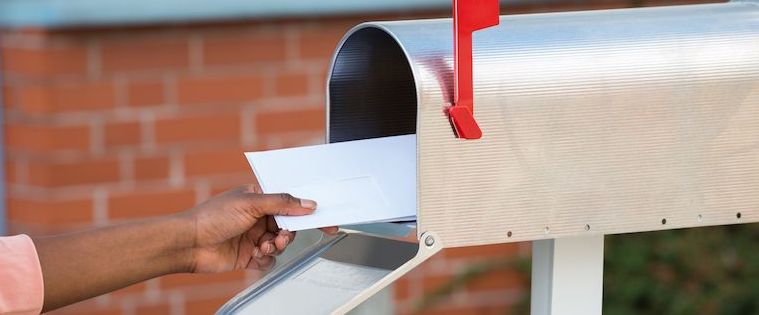
Meanwhile, the old-school sales letter is having a renaissance. Prospects may ignore your emails, but a piece of physical mail is harder to overlook. Direct mail open rates can reach up to 90%, and response rates average 9x higher compared to email according to the Data & Marketing Association.
At HubSpot, our sales team has seen the power of sales letters firsthand. Adding a letter to an integrated prospecting campaign with email and phone touches has increased our response rates by an average of 27%.
But not all sales letters are created equal. To get the best results, you need a strategic approach to everything from your list and offer to your copy and creative. Here‘s how HubSpot‘s own sales team writes sales letters that prospects can‘t ignore.
Planning Your Sales Letter Campaign
Before you start writing, take time to map out the key elements of your campaign:
Define Your Target Audience
The more targeted and relevant your letter is, the higher your response rates will be. Think beyond basic title/industry criteria and dig into the goals, challenges, and triggers that would get your ideal customer to engage.
At HubSpot, we create detailed buyer personas for each solution we sell. Our reps use these to select hyper-targeted segments of our database to mail. For instance, a letter promoting our CRM to VPs of Sales at mid-market B2B companies would focus on their needs around pipeline visibility and coaching reps, while a letter to ecommerce CMOs would speak to abandoned cart recovery and omnichannel personalization.
Clarify Your Goal
What action do you ultimately want the prospect to take? Your call-to-action (CTA) needs to be crystal clear and easy to say yes to.
We‘ve found the most effective sales letter CTAs are low-commitment, such as registering for a free demo, tool, or piece of content. The goal at this stage is to start a conversation, not close a deal on the first touch.
Choose Your Format
Sales letters can take many forms, from a classic typed letter in a #10 envelope to oversized mailers, postcards, or lumpy packages. Get creative with formats that will stand out in the mailbox and tie into your message.
One of our most successful campaigns was a sales letter presenting HubSpot as "the missing piece in your tech stack." The mailer included a jigsaw puzzle that pictured HubSpot‘s platform when assembled, along with a letter on how we help companies grow better.
Set Your Budget
The cost per piece of a direct mail campaign is significantly higher than email, so you‘ll need to weigh your investment against expected returns. Factors like your average deal size, target market, and sales cycle will determine if the ROI justifies the spend.
In general, the higher value each new customer is to your business, the more you can invest to convert them. We prioritize sending sales letters to high-potential prospects that match our ideal customer profile and have previously engaged with our marketing.
Create a Follow-Up Plan
Sending your sales letter is just the first step. To maximize responses, pair it with a structured cadence of email and phone touches. Your sales letter should tee up your outreach and give you a reason to connect again.
Here‘s the follow-up schedule we use for contacts who receive a sales letter but don‘t respond within 3 days:
- Day 4: Email referencing letter and reiterating offer
- Day 6: Call to discuss letter and offer
- Day 8: Email with additional value-add content
- Day 11: Final follow up call
Persistence pays off. Often it‘s the 3rd or 4th touch that ultimately gets the prospect to engage.
Writing Your Sales Letter
With your campaign strategy in place, it‘s time to craft a sales letter that will get prospects excited to respond. Here are the key components we‘ve found most effective:
1. Hook Their Attention
You have one shot to get a prospect to pause and read your letter instead of tossing it in the recycling bin. Lead with a headline or opening line that immediately sparks curiosity and makes a connection.
Some of our best performing subject lines include:
- "{FirstName}, want to see how {!Company} stacks up?"
- "I couldn‘t help but notice {!Company}‘s {!RecentAnnouncement}"
- "Have you considered {!Benefit} for {!Company}‘s {!Challenge}?"
Personalize your hook with details from your research on the prospect and their business. Showing you‘ve done your homework builds trust and rapport from the start.
2. Show You Understand Their World
Too many sales letters launch straight into a pitch without taking time to empathize with the prospect‘s situation. To win their attention, paint a picture of how well you understand their goals and pain points.
One way we do this is by telling a story of a similar company‘s challenges before they found our solution. For instance:
"{FirstName}, last month I spoke with John Smith, the VP of Sales at {!SimilarCompany}. He told me how frustrating it was to forecast revenue with no insight into his team‘s pipeline. Deals were slipping through the cracks, and he couldn‘t coach reps on where they were getting stuck…"
This storytelling approach helps prospects envision their own problems and how you could help. It also name drops a known brand to build credibility.
3. Focus on Value, Not Features
It‘s tempting to rattle off a laundry list of everything your product does. But prospects only care about what‘s in it for them. Emphasize the real-world outcomes and impact you deliver, not just your capabilities.
We like to structure this section around a few key value pillars. For example, a sales letter for our Sales Hub might focus on how it helps teams:
- Automate data entry so reps can spend more time selling
- Track buyer engagement to know who‘s ready to buy
- Optimize their pipeline with AI-powered insights
Quantify your value with specific stats and proof points whenever possible. "Increase productivity by 27%" is more compelling than "increase productivity."
4. Differentiate from the Status Quo
Prospects aren‘t just evaluating you against competitors. They‘re weighing whether it‘s worth it to change at all. Your letter needs to build a case for why the current way of doing things is costing them, and what they stand to gain by taking action.
This is where our deep knowledge of common triggers and barriers from our persona research comes in. We speak to the risks of not changing in terms our target buyer will care about.
For instance, a line targeted at a sales leader might say:
"The average sales team spends over 60% of their week on non-selling tasks. Without automation, you‘re asking reps to do more with less every quarter. Meanwhile, your competitors are enabling their teams with tools to work smarter and faster. Can you afford to be left behind?"
5. Back Up Your Claims
It‘s not enough to say you‘re great. You need to prove it with hard evidence from customers, analysts, and results. Weave in 2-3 proof points to show prospects you can deliver on your promises:
- Customer quotes and case studies – "ABCCo doubled its closed deals within 2 weeks of implementing HubSpot"
- Usage and loyalty stats – "Over 100,000 sales teams rely on HubSpot every day"
- Awards and rankings – "Named a Leader in the Gartner Magic Quadrant for CRM"
Choose testimonials and stats that speak to your target audience‘s top priorities. A Customer Success leader will be compelled by retention and NPS figures, while a Marketing VP will want to see demand and pipeline impact.
6. Make It Easy to Act
Don‘t expect prospects to figure out next steps on their own. End your letter with a clear, specific CTA that tells them exactly what to do and why it‘s worth their time.
Our most effective CTAs offer something of immediate value for free, such as:
- "Schedule your free 30-minute pipeline assessment today at {!PersonalizedLandingPage}"
- "See how your sales performance compares to the {!IndustryName} average in the {!ResearchReport} on {!PersonalizedLandingPage}"
- "Get your copy of the {!eBook} our reps rely on to {!BenefitStatement} at {!PersonalizedLandingPage}
The easier your ask is, the more likely prospects are to comply. Include multiple response options like a calendar link, phone number, email, and landing page URL to let them choose their preferred format.
We always include a digital component to our direct mail CTAs to connect the physical and online experience. Directing prospects to a landing page tied to your marketing automation system lets you track engagement and trigger relevant follow-ups.
Measuring Your Results
The only way to know if your sales letters are working is to diligently track your results. Add unique UTM codes to your landing page URLs to see which prospects respond. Log direct mail sends in your CRM to report on key metrics like:
- Delivery rate (total mailed – returns / total mailed)
- Response rate (responses / total delivered)
- Conversion rate (converted / total delivered)
- Pipeline generated (total value of all open opportunities from campaign)
- Revenue generated (total value of all won opportunities from campaign)
- ROI (revenue generated / total cost)
Compare results across different segments, offers, and creative to see what resonates best. For instance, we found that oversized mailers with physical gifts generate 42% higher response rates than standard envelopes for our target persona.
Use these insights to optimize your approach and double down on your highest performing assets. Successful sales letters are an iterative process of analyzing, adjusting, and improving with each send.
Putting It All Together
Sales letters may seem old-school, but they are a highly effective way to engage busy, distracted buyers. Writing personal, relevant outreach and orchestrating it with digital channels leads to the kind of multitouch, multi-channel experience that today‘s prospects expect.
But a sales letter is still only as good as the planning and execution behind it. By laying the right strategic foundation, crafting value-focused copy, and diligently measuring results, you‘ll be well on your way to better conversions and pipeline from direct mail.
The key is to make your letter feel like the start of a conversation, not a mass-blast. Do your research, personalize your approach, and add value at every interaction. When you invest in building 1:1 rapport, you‘ll win the kind of trusted relationships that lead to long-term revenue.