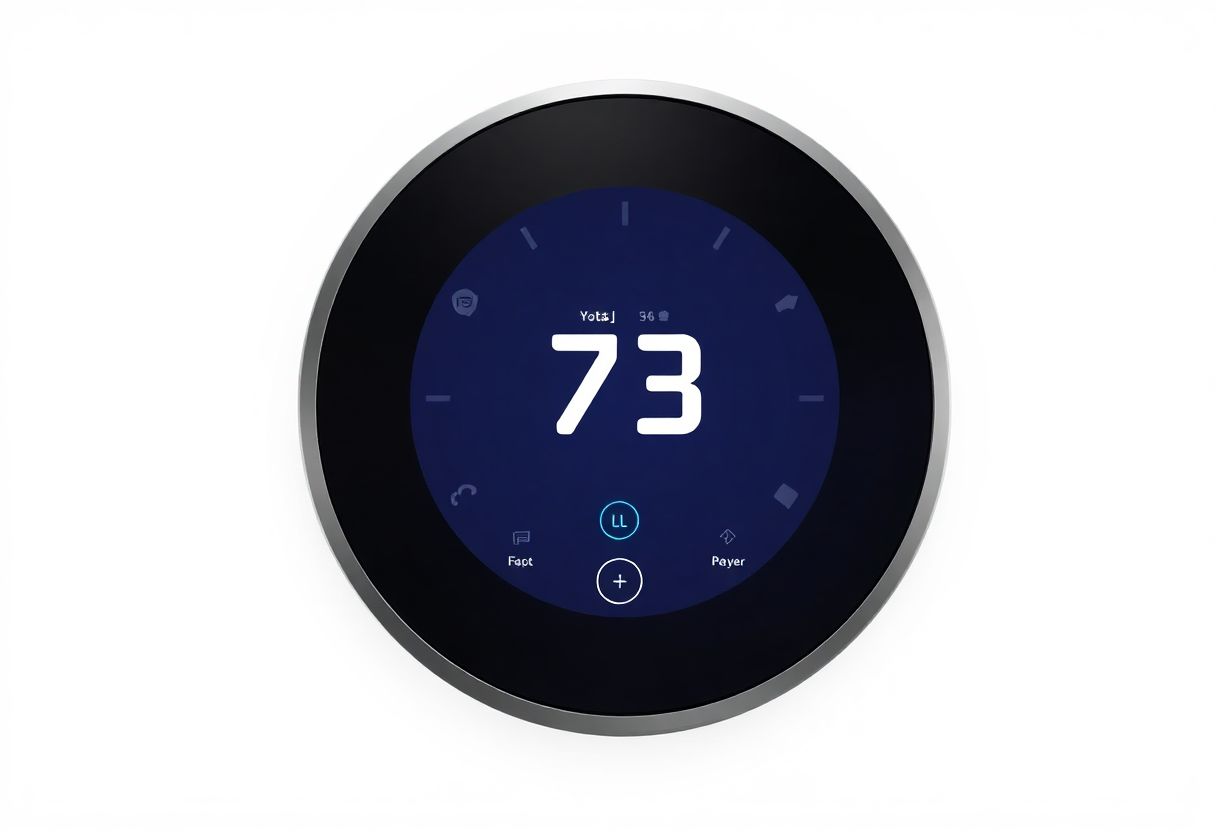
The Fascinating World of Thermostats: How They Work and Why They Matter
In the grand orchestra of our modern homes, thermostats play the role of unsung conductors, quietly orchestrating our comfort by maintaining the perfect temperature. But have you ever wondered about the intricate mechanisms behind these seemingly simple devices? Let's embark on a journey into the fascinating world of thermostats, unraveling their inner workings and exploring their evolution from simple mechanical devices to smart, AI-powered climate control systems.
The Essence of a Thermostat
At its core, a thermostat is a temperature-sensitive switch that controls heating and cooling systems. The term "thermostat" itself is derived from the Greek words "thermo" (heat) and "statos" (standing or stationary), essentially meaning a device that keeps heat at a constant level. Unlike a thermometer that merely measures temperature, a thermostat actively regulates it, serving as the brain of your home's climate control system.
The Basic Principle: Thermal Expansion
The fundamental principle behind most thermostats is thermal expansion – the tendency of materials to change in size or shape as their temperature changes. This simple yet ingenious concept has been the backbone of thermostat technology for over a century.
Types of Thermostats and How They Work
Bimetallic Strip Thermostats
One of the oldest and most common types of thermostats, the bimetallic strip thermostat, relies on the different expansion rates of two metals bonded together. As the temperature changes, one metal expands or contracts more than the other, causing the strip to bend. This bending action is used to open or close an electrical circuit, turning the heating or cooling system on or off.
To put this into perspective, imagine a bridge that raises and lowers based on temperature. When it's down, electricity flows, activating your heating system. When it rises, the circuit breaks, and the system turns off. This simple mechanism has been keeping homes comfortable for generations.
Gas-Filled Bellows Thermostats
For a quicker response to temperature changes, some thermostats use gas-filled bellows. These contain a small chamber filled with a gas or volatile liquid that expands or contracts with temperature fluctuations. As the gas expands, it pushes against flexible metal discs, triggering a switch that controls the HVAC system.
Think of it as a tiny balloon inside your thermostat, inflating and deflating with temperature changes, pushing buttons as it does so. This design offers faster response times compared to bimetallic strips, providing more precise temperature control.
Electronic Thermostats
Modern thermostats often employ electronic sensors for even more accurate temperature control. These devices use thermistors – resistors whose resistance changes with temperature – or digital temperature sensors to measure room temperature. A microprocessor then compares this reading to the set temperature and sends signals to control the HVAC system accordingly.
This electronic brain allows for more sophisticated programming and integration with other smart home systems. It's like having a tiny computer constantly doing complex calculations to keep your home at the perfect temperature.
The Thermostat Cycle: A Closer Look
To truly appreciate how a thermostat maintains your desired temperature, let's walk through a typical heating cycle:
- You set your desired temperature, say to a cozy 70°F (21°C).
- The thermostat senses that the current room temperature is 65°F (18°C).
- It closes the circuit, signaling your heating system to turn on.
- As warm air circulates and the room temperature rises, the thermostat continuously monitors the temperature.
- When the room reaches 70°F, the thermostat opens the circuit, turning off the heat.
- As the room naturally cools over time, the cycle repeats.
This process creates a small range around your set temperature, typically ±1-2°F, known as the "deadband" or "temperature swing." This prevents the system from turning on and off too frequently, which could lead to wear and tear on your HVAC equipment.
Advanced Features in Modern Thermostats
Programmable Thermostats
The introduction of programmable thermostats marked a significant leap forward in both comfort and energy efficiency. These devices allow you to set different temperatures for different times of the day or week, automatically adjusting your home's climate to match your schedule.
For instance, you might program lower temperatures while you're asleep or away at work, and have the system warm things up just before you wake or return home. The U.S. Department of Energy estimates that proper use of a programmable thermostat can save up to 10% a year on heating and cooling costs.
Smart Thermostats
The latest evolution in thermostat technology, smart thermostats, takes comfort and efficiency to new heights. These devices incorporate learning algorithms that adapt to your schedule, WiFi connectivity for remote control via smartphone apps, and integration with broader smart home ecosystems.
Imagine a thermostat that learns your habits, adjusts to your schedule, and can be controlled from anywhere in the world! Some models even use geofencing to detect when you're nearing home and adjust the temperature accordingly. They can provide detailed energy usage reports and optimization suggestions, helping you to further reduce your energy consumption and carbon footprint.
The Science Behind Thermostat Accuracy
Thermostat accuracy is crucial for both comfort and energy efficiency. Modern electronic thermostats can typically maintain temperature within ±0.5°F of the set point, a significant improvement over older mechanical models.
This precision is achieved through a combination of sensitive temperature sensors and sophisticated control algorithms. Many smart thermostats use multiple sensors distributed throughout your home to create a more accurate picture of overall temperature conditions, compensating for localized hot or cold spots.
The Role of Thermostats in HVAC Systems
Thermostats are more than just on/off switches for your heating and cooling systems. They play a crucial role in managing the entire HVAC (Heating, Ventilation, and Air Conditioning) system. In addition to controlling when systems turn on and off, they also influence:
- Fan operation: Determining when and how long the fan runs to circulate air
- Humidity control: Some advanced models can measure and control humidity levels
- Mode switching: Automatically changing between heating and cooling modes as needed
- Multi-zone control: In systems with multiple thermostats, they work together to maintain different temperatures in different areas of a building
Thermostat Placement: A Critical Factor
The effectiveness of a thermostat is highly dependent on its location within your home. Ideal placement should:
- Be on an interior wall to avoid external temperature influences
- Avoid direct sunlight, which can cause false readings
- Be away from air vents, doors, and windows to prevent drafts from affecting readings
- Be at average room height (about 5 feet from the floor) where most occupants experience the temperature
Poor placement can lead to "ghost readings," where the thermostat thinks the room is warmer or cooler than it actually is, resulting in discomfort and energy waste.
Energy Efficiency and Thermostats
Proper use of your thermostat can lead to significant energy savings. The Department of Energy recommends setting your thermostat to 78°F (26°C) in summer and 68°F (20°C) in winter when you're awake and at home. They suggest setting it about 7°-10°F higher in summer and lower in winter when you're asleep or away.
Smart thermostats take this a step further by learning your schedule and automatically adjusting temperatures. Some can even take into account local weather forecasts and your home's thermal characteristics to optimize heating and cooling cycles.
The Future of Thermostats
As we move towards more connected and energy-efficient homes, thermostats are evolving rapidly. Future trends include:
- Deeper integration with smart home ecosystems, allowing for seamless voice control and coordination with other devices
- More sophisticated machine learning algorithms that can predict your comfort needs
- Improved energy usage analytics, providing actionable insights to reduce consumption
- Integration with renewable energy systems, optimizing usage based on solar panel output or time-of-use electricity rates
We may soon see thermostats that can adjust based on the number of occupants in a room, their activity levels, or even their individual temperature preferences. The possibilities are truly exciting!
Conclusion: The Humble Yet Crucial Thermostat
From simple bimetallic strips to AI-powered smart devices, thermostats have come a long way. They play a pivotal role in our comfort, energy efficiency, and even our efforts to combat climate change by reducing energy waste.
Understanding how your thermostat works can help you use it more effectively, save money on energy bills, and maintain a more comfortable home environment. Whether you're using an old-school dial or the latest smart thermostat, the basic principle remains the same: keeping your home's temperature "just right" through the marvels of modern technology and some clever engineering.
So the next time you adjust your thermostat, take a moment to appreciate the complex symphony of mechanics, electronics, and physics working behind the scenes to keep you comfortable. It's a small device with a big job, and it's been quietly revolutionizing our indoor comfort for over a century. As we look to the future, thermostats will undoubtedly continue to play a crucial role in creating more comfortable, efficient, and sustainable living spaces.