The Internet Unveiled: A Deep Dive into How Our Digital World Functions
The internet has become the backbone of modern society, transforming how we communicate, work, and access information. But for many, the inner workings of this global network remain shrouded in mystery. In this comprehensive guide, we'll pull back the curtain and explore the fascinating technologies and systems that power our digital world.
The Internet: A Network of Networks
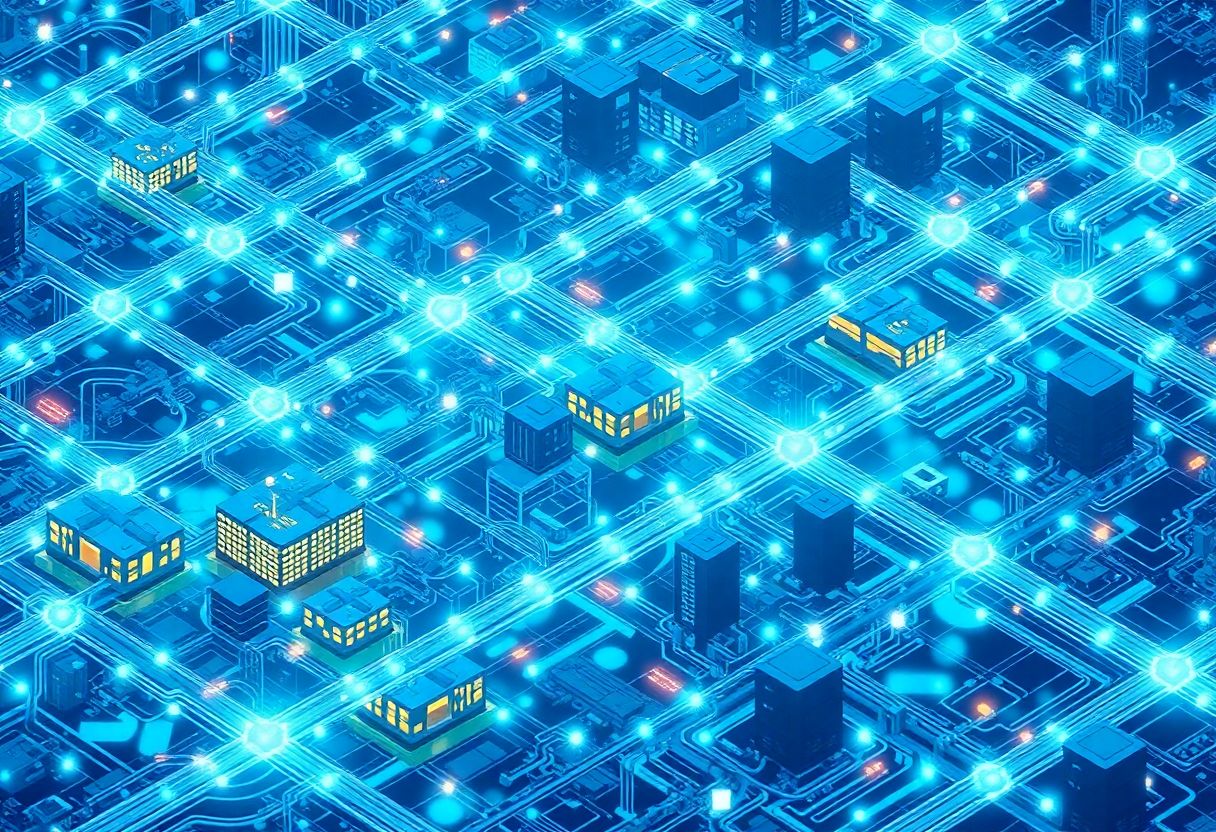
At its core, the internet is a vast interconnected system of computer networks spanning the globe. This "network of networks" allows data to flow between devices anywhere on Earth, from the smartphone in your pocket to servers on the other side of the planet.
The internet's decentralized nature is key to its resilience and scalability. Rather than being controlled by a single entity, it's a collaborative effort involving millions of networks operated by companies, governments, academic institutions, and other organizations. These disparate networks communicate using standardized protocols, allowing seamless data exchange regardless of the underlying hardware or software.
The Physical Foundation: Internet Infrastructure
While we often think of the internet as wireless or existing in "the cloud," its backbone is a tangible, physical infrastructure:
Fiber Optic Cables: The Internet's Highways
Fiber optic cables form the long-distance, high-capacity links of the internet. These cables, often buried underground or laid across ocean floors, use pulses of light to transmit data at incredibly high speeds. A single modern fiber optic cable can carry terabits of data per second – equivalent to transmitting thousands of high-definition movies simultaneously.
The vast majority of intercontinental internet traffic travels through submarine cables. As of 2023, there are over 400 active submarine cables spanning nearly 1.3 million kilometers, forming a complex web beneath the world's oceans.
Data Centers: The Internet's Nerve Centers
Massive data centers house the servers that store and process much of the internet's data. These facilities, some covering millions of square feet, are filled with racks of powerful computers, cooling systems, and redundant power supplies. Major tech companies like Google, Amazon, and Microsoft operate networks of data centers around the world to support their services.
Internet Exchange Points: The Meeting Places
Internet Exchange Points (IXPs) are physical locations where different networks connect to exchange traffic. These facilities allow internet service providers, content delivery networks, and other organizations to efficiently route data between their networks, reducing costs and improving performance.
How Data Travels: The Journey of a Packet
To understand how information flows across the internet, let's follow the journey of a single piece of data – perhaps an email you're sending or a website you're loading.
1. Breaking Down the Message
When you take an action online, your device breaks the data into smaller units called packets. Each packet contains:
- A portion of the original data
- The sender's IP address
- The recipient's IP address
- Sequencing information to reassemble the data
- Other metadata for routing and error checking
2. Packet Switching: The Internet's Traffic System
The internet uses a method called packet switching to transmit data efficiently. Unlike old circuit-switched networks (like traditional telephone systems), packet switching doesn't require a dedicated end-to-end connection. Instead:
- Packets are sent out onto the network independently.
- They may take different routes to reach their destination.
- Routers along the way examine each packet and forward it towards its destination.
- The receiving device reassembles the packets into the original data.
This approach offers several advantages:
- Efficient use of network resources, as multiple communications can share the same paths
- Improved reliability, as traffic can be rerouted if a particular path is congested or fails
- Scalability, allowing the network to grow organically
3. Routing: Finding the Best Path
As packets traverse the internet, they encounter numerous routers. These devices examine the destination IP address of each packet and determine the best next step in its journey. Routers use complex algorithms and routing tables to make these decisions, considering factors like network congestion, connection speeds, and geographic distance.
The TCP/IP Protocol Suite: The Internet's Common Language
For the internet to function, all connected devices need to speak the same digital language. This is where the TCP/IP protocol suite comes in. TCP/IP (Transmission Control Protocol/Internet Protocol) is a set of standardized rules that govern how data is packaged, addressed, transmitted, routed, and received across the internet.
IP (Internet Protocol): Addressing and Routing
IP is responsible for addressing and routing packets to their correct destination. Every device connected to the internet is assigned at least one IP address, which serves as its unique identifier. There are two versions of IP in use today:
- IPv4: The older standard, using 32-bit addresses (e.g., 192.168.1.1)
- IPv6: The newer standard, using 128-bit addresses to accommodate the growing number of internet-connected devices
TCP (Transmission Control Protocol): Reliable Data Transmission
TCP works on top of IP to ensure reliable, ordered delivery of data. It handles:
- Breaking data into packets
- Establishing and maintaining connections between devices
- Ensuring packets are delivered in the correct order
- Checking for errors and requesting retransmission of lost packets
- Flow control to prevent overwhelming the receiver
DNS: The Internet's Phone Book
While IP addresses are great for machines, they're not very human-friendly. That's where the Domain Name System (DNS) comes in. DNS acts like a phone book for the internet, translating human-readable domain names (like www.example.com) into their corresponding IP addresses.
When you enter a URL in your browser, a series of DNS queries occur:
- Your device checks its local DNS cache for the IP address.
- If not found, it queries your ISP's DNS server.
- If the ISP doesn't have the information, it queries root DNS servers.
- The root servers direct the query to the appropriate Top-Level Domain (TLD) servers (.com, .org, etc.).
- The TLD servers provide the IP address of the authoritative DNS server for the domain.
- Finally, the authoritative DNS server provides the IP address for the requested domain.
This process typically happens in milliseconds, allowing for seamless browsing.
The Client-Server Model: How Web Services Work
Much of the internet operates on the client-server model:
- Clients: Your devices (computers, smartphones, etc.) that request information or services
- Servers: Powerful computers that store data and provide services
When you visit a website, your browser (the client) sends a request to the web server hosting that site. The server processes the request and sends back the appropriate web pages, images, and other resources.
This model extends beyond web browsing to many other internet services, including email, file sharing, and online gaming.
From Dial-up to 5G: The Evolution of Internet Connectivity
The ways we connect to the internet have evolved dramatically over the years:
- Dial-up (up to 56 Kbps): Used phone lines, tying up voice calls
- DSL (Digital Subscriber Line): Faster speeds over phone lines, up to several Mbps
- Cable: High-speed internet through cable TV infrastructure, typically 10-1000 Mbps
- Fiber optic: Extremely fast, using pulses of light, can reach speeds of 1 Gbps or more
- Satellite: Provides access in remote areas, historically slow but improving with new technologies
- Mobile broadband: From 3G to 5G, offering increasingly fast mobile connectivity
The latest 5G networks promise speeds up to 20 Gbps, ultra-low latency, and the ability to connect many more devices in a given area. This opens up possibilities for new applications in areas like autonomous vehicles, augmented reality, and the Internet of Things.
Internet Security: Protecting the Digital Realm
As the internet has grown in importance, so too have concerns about security. Several key technologies help keep our online activities safe:
Encryption: Scrambling Data
Encryption converts data into a coded form that can only be read with the correct decryption key. This protects sensitive information as it travels across the internet. Common encryption protocols include:
- SSL/TLS: Secures website connections (look for HTTPS in your browser)
- End-to-end encryption: Used in messaging apps to prevent anyone, even the service provider, from reading messages
Firewalls: Digital Gatekeepers
Firewalls monitor and control network traffic based on predetermined security rules. They can be implemented as hardware devices or software programs, acting as a barrier between trusted internal networks and potentially hostile external networks.
Virtual Private Networks (VPNs): Secure Tunnels
VPNs create encrypted connections over less secure networks, allowing users to access resources securely or mask their location and identity online.
The Future of the Internet: Emerging Technologies and Trends
The internet continues to evolve at a rapid pace. Some exciting developments on the horizon include:
Edge Computing: Bringing Processing Closer to Users
Edge computing moves data processing closer to where it's needed, reducing latency and bandwidth usage. This is crucial for applications like autonomous vehicles and augmented reality that require real-time processing.
Quantum Internet: Unlocking New Possibilities
Researchers are exploring the potential of quantum communication technologies to create an ultra-secure "quantum internet." This could revolutionize fields like cryptography and distributed computing.
Artificial Intelligence and Machine Learning
AI and ML are being integrated into various aspects of internet infrastructure, from optimizing network traffic to improving security through anomaly detection.
Internet of Things (IoT): Connecting the Physical World
The proliferation of internet-connected devices is expanding the internet's reach into the physical world, enabling smart homes, industrial automation, and more.
Conclusion: The Ever-Evolving Digital Frontier
The internet is a testament to human ingenuity and collaboration, connecting billions of devices and people worldwide. From the physical infrastructure of fiber optic cables and data centers to the intricate protocols that govern data transmission, it's a complex system that continues to evolve and shape our world.
As we look to the future, the internet will undoubtedly bring new opportunities and challenges. By understanding its fundamental principles and staying informed about emerging technologies, we can better navigate and contribute to this digital landscape that has become so integral to modern life.
Whether you're a casual user or a tech enthusiast, appreciating the intricacies of how the internet works can deepen your understanding of the digital world we inhabit. As the network grows and changes, it will continue to be a driving force in innovation, communication, and human progress.