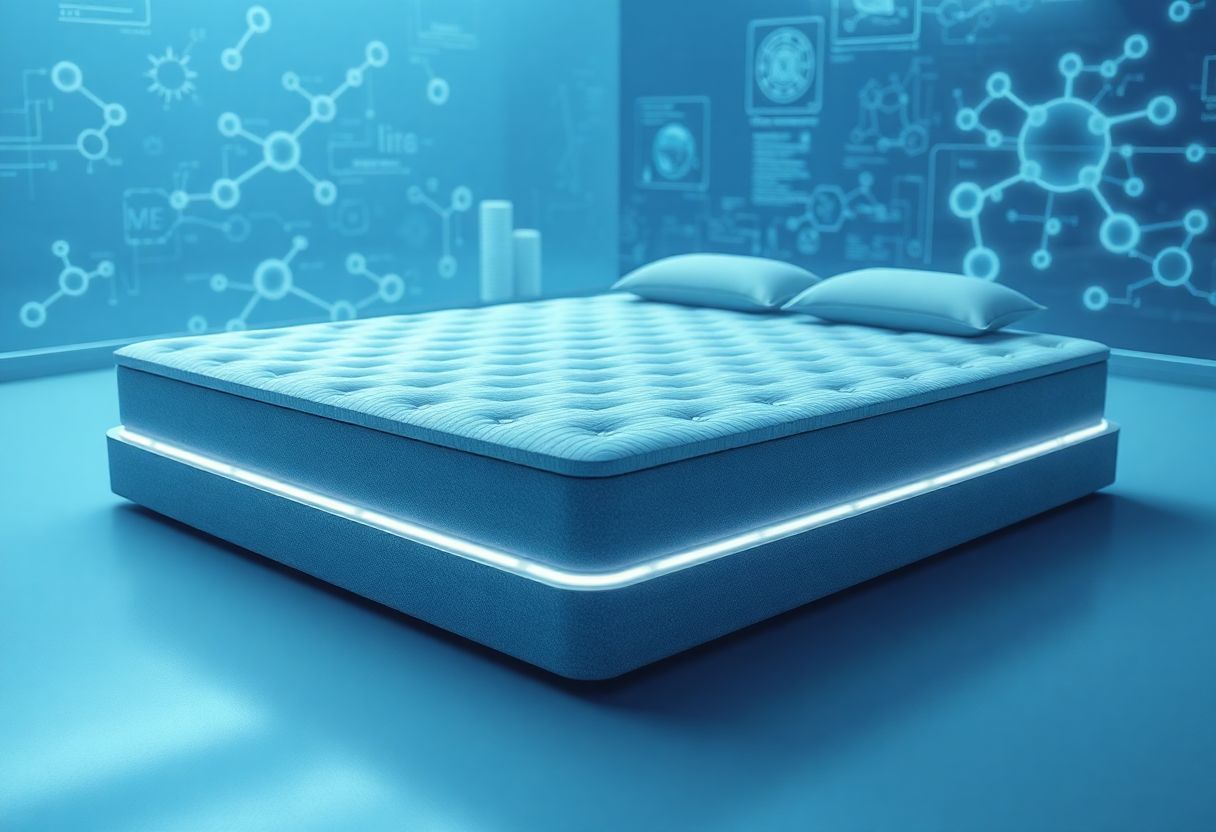
The Science of Comfort: Unveiling the Secrets of Memory Foam Mattresses
Memory foam mattresses have revolutionized the way we sleep, offering a unique blend of comfort and support that adapts to our individual bodies. But what exactly is this magical material, and how does it work its wonders? Let's dive deep into the fascinating world of memory foam and uncover the science that makes it so special.
The Origins of Memory Foam: From Space to Your Bedroom
Memory foam's journey began far from the bedroom – in fact, it started in space. In the 1960s, NASA engineers were tasked with developing a material that could improve seat cushioning and crash protection for airline pilots and passengers. The result was a viscoelastic polyurethane foam that would later become known as memory foam.
This groundbreaking material quickly found its way into various applications, from medical equipment to sports gear. However, it wasn't until the 1990s that memory foam made its debut in the mattress industry, forever changing the landscape of sleep technology.
Understanding the Composition of Memory Foam
At its core, memory foam is a synthetic material primarily composed of polyurethane. However, it's the additional chemicals and manufacturing processes that give memory foam its distinctive properties. The basic recipe typically includes:
- Polyurethane
- Water
- Blowing agents (to create the foam structure)
- Additives (for properties like fire resistance)
The exact composition varies between manufacturers, leading to differences in density, firmness, and overall performance. Some companies have even developed plant-based memory foams, replacing a portion of the petroleum-based ingredients with plant-derived alternatives.
The Science of Viscoelasticity: The Key to Memory Foam's Magic
The secret to memory foam's unique behavior lies in its viscoelastic properties. But what does "viscoelastic" really mean? To understand this, we need to break down the term:
- Visco- refers to viscosity, which is a material's resistance to flow.
- Elastic refers to elasticity, the ability to return to its original shape after deformation.
Memory foam exhibits both these properties simultaneously, which is what sets it apart from other materials. When you apply pressure to memory foam, it slowly deforms (viscous behavior) and then gradually returns to its original shape when the pressure is removed (elastic behavior).
The Four Key Properties of Viscoelastic Materials
To truly appreciate how memory foam works, it's essential to understand the four key properties of viscoelastic materials:
- Creep: When a constant force is applied, the material continues to deform slowly over time.
- Relaxation: The force needed to maintain a deformation decreases over time.
- Force-dependency: The material's response varies based on how quickly force is applied.
- Hysteresis: There's a time lag between deformation and recovery, during which energy is absorbed.
These properties work together to create the unique feel and performance of memory foam mattresses.
How Memory Foam Responds to Your Body: A Step-by-Step Process
When you lie down on a memory foam mattress, a complex series of events unfolds:
-
Initial Compression: As soon as you lie down, your body weight causes the foam to compress.
-
Heat Absorption: Your body heat begins to warm the foam. Memory foam is temperature-sensitive, becoming more pliable as it warms up.
-
Softening: As the foam absorbs your body heat, it becomes more malleable.
-
Molding: The softened foam begins to conform to your body shape, creating a custom-fit sleeping surface.
-
Pressure Distribution: As the foam molds to your body, it distributes your weight evenly across the surface. This reduces pressure points, which can lead to improved comfort and better sleep.
-
Slow Recovery: When you move or get up, the foam slowly returns to its original shape. This slow recovery is what gives memory foam its name – it "remembers" your shape for a short time before fully recovering.
This entire process happens within minutes of lying down, creating a personalized sleeping surface that adapts to your unique body shape and sleeping position.
The Density Factor: Not All Memory Foams Are Created Equal
One of the most important characteristics of memory foam is its density. Density is measured in pounds per cubic foot (PCF) and typically ranges from 1.5 PCF to 8 PCF for mattresses. Higher density foams are generally more supportive, durable, and expensive.
- Low-density memory foam (1.5-3 PCF): Softer, less expensive, but less durable.
- Medium-density memory foam (3-5 PCF): Balances comfort, support, and durability.
- High-density memory foam (5-8 PCF): Firmer, more supportive, and most durable.
It's important to note that density doesn't necessarily equate to firmness. A high-density memory foam can still feel soft if it's designed that way.
Temperature Sensitivity: The Double-Edged Sword of Memory Foam
One of memory foam's most distinctive features is its temperature sensitivity. This property allows the foam to soften and mold in response to body heat, creating that characteristic "sinking in" feeling. However, this same feature can also lead to one of memory foam's most common complaints: heat retention.
Traditional memory foam can trap body heat, leading to an uncomfortably warm sleep surface for some people. To address this issue, manufacturers have developed several variations of memory foam:
- Gel Memory Foam: Infused with gel particles or beads to help dissipate heat.
- Open-Cell Memory Foam: Features a structure that allows better airflow.
- Plant-Based Memory Foam: Often sleeps cooler due to its composition.
These innovations have helped broaden the appeal of memory foam, making it a viable option for those who tend to sleep hot.
The Chemistry of Comfort: How Memory Foam is Made
The production of memory foam is a complex process that involves carefully controlled chemical reactions. Here's a simplified overview:
- Mixing: Polyols and diisocyanates are mixed with water and other additives.
- Reaction: The mixture begins to react, creating carbon dioxide bubbles.
- Expansion: The bubbles cause the mixture to expand, creating the foam structure.
- Curing: The foam is allowed to cure, during which it develops its final properties.
- Cutting and Shaping: The cured foam is cut and shaped into the desired form.
The exact process and ingredients can vary significantly between manufacturers, leading to differences in the final product's properties.
Types of Memory Foam: A Closer Look
As memory foam technology has evolved, several distinct types have emerged, each with its own set of characteristics:
Traditional Memory Foam
This is the original type of memory foam, known for its excellent contouring abilities. It's made from petroleum-based polyurethane and additional compounds that increase its viscosity and density. Traditional memory foam offers superior pressure relief and motion isolation but can retain heat and have a slow response time.
Gel Memory Foam
Gel memory foam is infused with gel particles or beads, designed to help dissipate heat and create a cooler sleeping surface. The gel can be swirled through the foam or added as a layer on top. While gel foam can indeed feel cooler to the touch initially, its long-term cooling effects are still debated among sleep experts.
Plant-Based Memory Foam
Also known as eco-friendly or green memory foam, this type replaces some of the petroleum-based ingredients with plant-derived ones, often from soy or corn oil. Plant-based memory foams are typically more environmentally friendly and often sleep cooler than traditional memory foam. They also tend to have a quicker response time.
Open-Cell Memory Foam
Open-cell memory foam features a structure where the tiny bubbles within the foam are interconnected, allowing for better airflow. This design helps to dissipate heat more effectively than traditional closed-cell memory foam. While it may be slightly less dense than closed-cell foam, it still provides excellent contouring and pressure relief.
Copper-Infused Memory Foam
A more recent innovation, copper-infused memory foam incorporates copper particles into the foam. Proponents claim that this can help with temperature regulation, as copper is an excellent heat conductor. Some also suggest that copper may have antimicrobial properties, although more research is needed to confirm these benefits.
Memory Foam vs. Other Mattress Types: A Comparative Analysis
To truly appreciate the unique properties of memory foam, it's helpful to compare it to other popular mattress types:
Memory Foam vs. Innerspring
Innerspring mattresses, the traditional standard, use a system of metal coils for support. Compared to memory foam:
- Support: Both can provide good support, but memory foam offers more personalized contouring.
- Pressure Relief: Memory foam excels at reducing pressure points, while innerspring mattresses may create more pressure, especially in heavier areas of the body.
- Motion Transfer: Memory foam significantly reduces motion transfer, while innerspring mattresses tend to have more bounce and thus more motion transfer.
- Temperature: Innerspring mattresses generally sleep cooler due to better airflow between the coils.
- Durability: High-quality memory foam often outlasts innerspring mattresses.
Memory Foam vs. Latex
Latex, another popular foam option, is made either synthetically or from natural rubber tree sap. Compared to memory foam:
- Responsiveness: Latex has a faster response time and more bounce.
- Contouring: Memory foam provides deeper contouring, while latex offers more general compression.
- Temperature: Latex typically sleeps cooler than traditional memory foam.
- Durability: Both can be very durable, with latex often having a slight edge.
- Eco-friendliness: Natural latex is generally considered more eco-friendly than traditional memory foam.
Memory Foam vs. Hybrid
Hybrid mattresses combine an innerspring core with foam layers (often including memory foam) on top. Compared to pure memory foam mattresses:
- Support: Hybrids often provide more robust support, especially for heavier individuals.
- Contouring: While hybrids offer some contouring from the foam layers, all-foam mattresses typically provide deeper contouring.
- Temperature: Hybrids often sleep cooler due to better airflow through the coil layer.
- Motion Isolation: Both can isolate motion well, but all-foam mattresses typically perform better in this regard.
The Benefits of Sleeping on Memory Foam: More Than Just Comfort
The unique properties of memory foam translate into several potential benefits for sleepers:
-
Pressure Relief: By conforming to the body's shape, memory foam redistributes weight evenly, reducing pressure on joints and muscles. This can be particularly beneficial for those with chronic pain conditions.
-
Spinal Alignment: The contouring nature of memory foam helps maintain proper spine alignment during sleep, potentially reducing back pain and stiffness.
-
Motion Isolation: Memory foam absorbs movement, making it an excellent choice for couples, as one partner's movements are less likely to disturb the other.
-
Customized Support: Memory foam adapts to each person's unique body shape and sleeping position, providing personalized support.
-
Durability: High-quality memory foam mattresses can last 8-10 years or more, making them a long-term investment in sleep quality.
-
Hypoallergenic Properties: The dense structure of memory foam can resist dust mites and other allergens, making it a good choice for allergy sufferers.
Addressing the Drawbacks: The Other Side of Memory Foam
While memory foam offers many benefits, it's important to acknowledge its potential drawbacks:
-
Heat Retention: Traditional memory foam can retain body heat, leading to an uncomfortably warm sleep surface for some people. While newer technologies have addressed this issue to some extent, it remains a concern for "hot sleepers."
-
Off-Gassing: New memory foam mattresses can emit a chemical smell, known as off-gassing. This odor is generally harmless and dissipates over time, but it can be unpleasant for some users.
-
Difficulty Moving: The deep contouring of memory foam can make changing positions challenging for some sleepers, particularly those with mobility issues.
-
Initial Firmness: Memory foam can feel quite firm when new or in a cool room, as it needs body heat to soften and conform.
-
Cost: High-quality memory foam mattresses can be more expensive than traditional innerspring options.
-
Weight: Memory foam mattresses, especially those of higher density, can be quite heavy, making them difficult to move or rotate.
The Impact of Memory Foam on Sleep Quality: What the Research Says
Numerous studies have explored the effects of memory foam on sleep quality. While individual experiences may vary, research generally supports the benefits of memory foam:
-
A study published in the Journal of Chiropractic Medicine found that participants who switched to memory foam mattresses experienced significant improvements in sleep quality and pain reduction.
-
Research in the journal Applied Ergonomics demonstrated that memory foam mattresses distributed body pressure more evenly compared to other mattress types, potentially leading to improved comfort and reduced tossing and turning.
-
A study in the Journal of Sleep Research showed that memory foam mattresses could help reduce motion transfer between sleep partners, potentially leading to fewer sleep disturbances.
However, it's important to note that sleep preferences are highly individual, and what works for one person may not work for another. Factors such as body weight, sleeping position, and personal comfort preferences all play a role in determining the ideal mattress.
Caring for Your Memory Foam Mattress: Maximizing Longevity and Performance
To ensure your memory foam mattress lasts as long as possible and continues to provide optimal comfort, consider these care tips:
-
Use a mattress protector to guard against spills, stains, and allergens.
-
Rotate the mattress every 3-6 months to ensure even wear. Note that most memory foam mattresses should not be flipped unless specifically designed for this.
-
Avoid jumping or standing on the mattress, as this can damage the foam structure.
-
Clean spills immediately with mild soap and water. Avoid harsh chemicals that could break down the foam.
-
Allow the mattress to air out occasionally to prevent moisture buildup.
-
Use a supportive bed frame or foundation to prevent sagging.
-
Vacuum the mattress surface periodically to remove dust and allergens.
The Future of Memory Foam: Innovations on the Horizon
As technology continues to advance, we're seeing exciting developments in memory foam technology:
-
Smart Memory Foam: Some companies are developing mattresses that can adjust firmness and temperature based on sleep data collected by embedded sensors.
-
Eco-Friendly Foams: There's a growing focus on developing more sustainable production methods and materials, including fully biodegradable memory foams.
-
Enhanced Cooling Technologies: Advanced solutions to combat heat retention issues are continually emerging, including phase-change materials and improved airflow designs.
-
Customizable Comfort: Some manufacturers are exploring mattresses with adjustable layers, allowing users to personalize their sleep surface.
-
Antimicrobial Treatments: In response to growing health concerns, some memory foams are being treated with antimicrobial agents to resist bacteria and other microorganisms.
Conclusion: Is Memory Foam Right for You?
Memory foam has undoubtedly revolutionized the mattress industry, offering a unique combination of comfort and support that many sleepers find ideal. Its ability to conform to your body shape and reduce pressure points can lead to improved sleep quality for many individuals.
However, like any mattress type, memory foam isn't a one-size-fits-all solution. Some may find it too warm or struggle with the feeling of sinking into the mattress. Others may prefer the bouncier feel of innerspring or latex mattresses.
The best way to determine if memory foam is right for you is to try it out, taking advantage of sleep trials offered by many mattress companies. Remember, good sleep is crucial for overall health and well-being. Whether you choose memory foam or another mattress type, the most important thing is finding a sleep surface that allows you to wake up feeling refreshed and pain-free.
By understanding the science behind memory foam, you're now equipped to make an informed decision about whether it's the right choice for your sleep needs. Sweet dreams, and may your nights be filled with the comfort that only science can provide!