Unlocking the Power Within: The Fascinating World of Lithium-Ion Batteries
In an age where portable electronics and electric vehicles are revolutionizing our daily lives, one technology stands at the forefront of this transformation: the lithium-ion battery. These compact powerhouses have become the unsung heroes of our modern world, silently fueling our smartphones, laptops, and even cars. But have you ever wondered about the intricate dance of ions and electrons that occurs within these devices? Let's embark on a journey into the heart of lithium-ion batteries, unraveling their mysteries and exploring the science that makes them tick.
The Building Blocks: Anatomy of a Lithium-Ion Battery
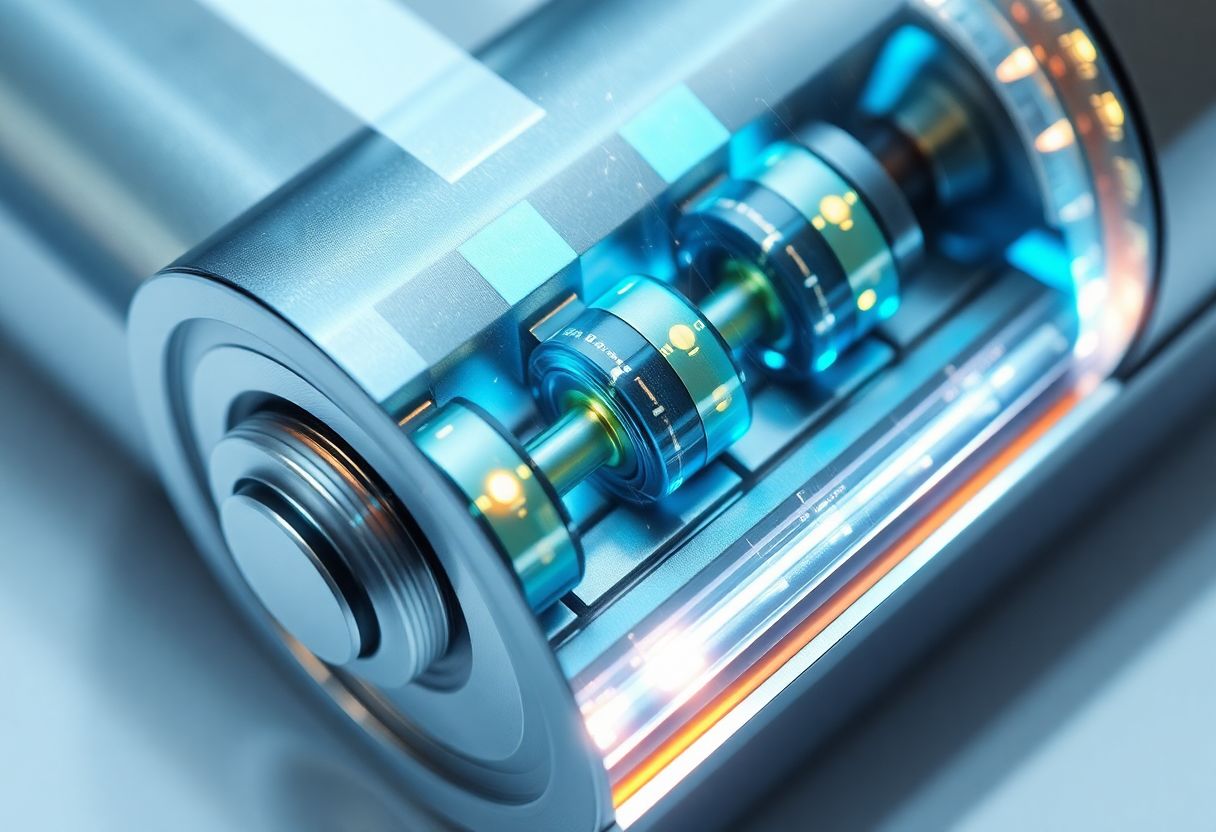
To understand how lithium-ion batteries work, we must first familiarize ourselves with their components. At its core, a lithium-ion battery consists of four main parts: the positive electrode (cathode), the negative electrode (anode), the electrolyte, and the separator.
The Electrodes: Where the Magic Happens
The positive electrode, or cathode, is typically made from a lithium-containing compound. Common materials include lithium cobalt oxide (LiCoO2), lithium iron phosphate (LiFePO4), and lithium manganese oxide (LiMn2O4). Each of these materials has its own set of properties that influence the battery's performance, such as energy density, safety, and cost.
On the other side, we have the negative electrode, or anode. This is usually constructed from graphite, a form of carbon with a layered structure. This layered arrangement is crucial, as it allows lithium ions to be stored between the layers during the charging process.
The Electrolyte: The Ion Highway
Between the electrodes lies the electrolyte, a crucial component that facilitates the movement of lithium ions. Typically, it's a liquid solution of lithium salts dissolved in organic solvents. The electrolyte must strike a delicate balance: it needs to be electrically insulating to prevent short circuits, yet ionically conductive to allow the flow of lithium ions. Additionally, it must remain stable at high voltages to ensure the battery's longevity.
The Separator: Keeping the Peace
Lastly, we have the separator, a thin, porous membrane that physically keeps the positive and negative electrodes apart. This unassuming component plays a vital role in the battery's function and safety. It allows lithium ions to pass through while blocking electrons, forcing them to flow through the external circuit and do useful work.
The Dance of Ions: How Lithium-Ion Batteries Work
Now that we've met the players, let's see how they work together in the grand performance of energy storage and release.
Charging: Storing Energy for Later Use
When you plug in your device to charge, an external electrical current is applied to the battery. This initiates a fascinating process:
- The electrical current forces lithium ions to move from the positive electrode (cathode) to the negative electrode (anode).
- As the ions arrive at the negative electrode, they undergo a process called intercalation, where they're inserted between the layers of graphite.
- Meanwhile, electrons also flow from the positive to the negative electrode through the external circuit.
- The battery stores energy in this chemical state, with lithium ions and electrons concentrated in the negative electrode.
Discharging: Powering Your Devices
When you unplug your device and start using it, the process reverses:
- Lithium ions naturally want to return to the positive electrode due to the chemical potential difference.
- As they make this journey, they release the electrons that were bound to them.
- These electrons flow through your device, providing the electrical energy that powers its functions.
- The ions continue to flow through the electrolyte back to the positive electrode.
This cycle of charging and discharging can be repeated hundreds or even thousands of times, depending on the battery's quality and how it's used.
The Chemistry Behind the Magic
To truly appreciate the ingenuity of lithium-ion batteries, we need to delve into the chemistry that makes them work. Let's consider a typical lithium-ion battery using lithium cobalt oxide (LiCoO2) as the cathode material and graphite as the anode.
During discharge, the following reactions occur:
At the positive electrode (cathode): LiCoO2 → Li1-xCoO2 + xLi+ + xe-
At the negative electrode (anode): LixC6 → xLi+ + xe- + C6
The overall reaction can be written as:
LiCoO2 + C6 ⇌ Li1-xCoO2 + LixC6
The double arrow (⇌) indicates that the reaction is reversible, which is the key to the battery's rechargeable nature. During charging, these reactions are reversed, allowing the battery to store energy for later use.
Energy Density: The Key to Portable Power
One of the most significant advantages of lithium-ion batteries is their high energy density. Energy density refers to the amount of energy a battery can store relative to its weight or volume. This property is crucial for portable devices and electric vehicles, where minimizing weight and size is essential.
Lithium-ion batteries typically have an energy density of 100-265 Wh/kg, significantly higher than other rechargeable battery technologies like nickel-metal hydride (60-120 Wh/kg) or lead-acid batteries (30-50 Wh/kg). This high energy density is why your smartphone can run for a full day on a single charge, despite its small size.
Voltage: More Power in a Smaller Package
Another advantage of lithium-ion batteries is their high voltage. A single lithium-ion cell typically operates at around 3.7 volts, which is higher than many other battery chemistries. For comparison, a nickel-metal hydride cell operates at about 1.2 volts, while a lead-acid cell provides about 2 volts.
This higher voltage means fewer cells are needed to achieve a given voltage, contributing to the compact nature of lithium-ion batteries. For instance, a 12-volt lithium-ion battery pack might only need three or four cells in series, while a 12-volt lead-acid battery requires six cells.
The Lithium-Ion Advantage: Why They've Become Ubiquitous
Lithium-ion batteries have several advantages that have led to their widespread adoption:
-
High energy density: As mentioned earlier, they can store more energy per unit weight and volume than most other battery types.
-
Low self-discharge: When not in use, lithium-ion batteries lose their charge much more slowly than other rechargeable batteries. They typically lose only about 5% of their charge per month, compared to 20% for nickel-metal hydride batteries.
-
No memory effect: Unlike some other rechargeable batteries, lithium-ion batteries don't need to be fully discharged before recharging. You can top up the charge whenever convenient without reducing the battery's capacity.
-
Long cycle life: High-quality lithium-ion batteries can undergo 500-1500 charge-discharge cycles before their capacity drops to 80% of the original.
-
Versatility: They can be made in various shapes and sizes to fit different devices, from tiny hearing aids to massive grid storage systems.
Challenges and Limitations: The Other Side of the Coin
Despite their many advantages, lithium-ion batteries do face some challenges:
-
Safety concerns: If damaged or improperly used, lithium-ion batteries can overheat and potentially catch fire or explode. This is due to the flammable electrolyte and the high energy density of the battery.
-
Aging: Even when not in use, lithium-ion batteries degrade over time. This aging process accelerates at higher temperatures and when the battery is kept at high charge levels.
-
Temperature sensitivity: Extreme temperatures can significantly affect the performance and lifespan of lithium-ion batteries. They perform best between 20°C and 40°C (68°F to 104°F).
-
Cost: While prices have been dropping, lithium-ion batteries are still generally more expensive to produce than some other battery types.
Pushing the Boundaries: Current Research and Future Developments
The world of lithium-ion battery research is buzzing with activity as scientists and engineers work to overcome these challenges and push the technology even further. Some exciting areas of research include:
-
Solid-state electrolytes: Researchers are working on replacing the liquid electrolyte with a solid material. This could significantly improve safety by eliminating the flammable liquid electrolyte and potentially increase energy density.
-
Silicon anodes: Silicon can theoretically store up to 10 times more lithium ions than graphite. However, silicon expands significantly when charged, leading to structural problems. Researchers are working on nanostructured silicon anodes to overcome this issue.
-
Lithium-sulfur batteries: These could potentially offer even higher energy densities than current lithium-ion batteries, but they face challenges with cycle life and stability.
-
Extreme fast charging: Researchers are working on ways to charge batteries in minutes without degrading their performance or lifespan.
-
Self-healing batteries: Some scientists are developing battery materials that can repair themselves, potentially extending battery life and improving safety.
Applications: Powering Our World
The versatility and high performance of lithium-ion batteries have led to their adoption in a wide range of applications:
-
Consumer electronics: From smartphones and laptops to digital cameras and portable speakers, lithium-ion batteries power most of our personal electronic devices.
-
Electric vehicles: The high energy density of lithium-ion batteries has been crucial in making electric vehicles practical. A Tesla Model S Long Range, for example, uses a 100 kWh lithium-ion battery pack to achieve a range of over 400 miles.
-
Renewable energy storage: Lithium-ion batteries are increasingly being used to store energy from solar panels and wind turbines, helping to balance the intermittent nature of these renewable sources.
-
Medical devices: Implantable medical devices like pacemakers and cochlear implants often use specialized lithium-ion batteries due to their long life and high energy density.
-
Aerospace: Lithium-ion batteries are used in satellites and even in some aircraft. The Boeing 787 Dreamliner, for instance, uses large lithium-ion batteries for many of its electrical systems.
Environmental Considerations: The Full Picture
While lithium-ion batteries offer many benefits, it's important to consider their environmental impact. The production and disposal of these batteries raise several concerns:
-
Mining: The extraction of lithium and other materials used in the batteries, such as cobalt, can have significant environmental impacts. For example, lithium extraction can require large amounts of water, potentially affecting local ecosystems.
-
Manufacturing: The production of lithium-ion batteries is energy-intensive, contributing to carbon emissions if the energy isn't from renewable sources.
-
Recycling: While lithium-ion batteries can be recycled, the process is complex and not always economically viable. Improving recycling technologies and infrastructure is crucial for the sustainable future of this technology.
-
End-of-life disposal: Improper disposal of lithium-ion batteries can lead to environmental contamination and safety hazards.
Efforts are being made to address these concerns. For instance, companies are developing more efficient recycling processes, and there's a growing push for more sustainable and ethical sourcing of battery materials.
Conclusion: The Future is Charged
As we've explored, lithium-ion batteries are remarkable devices that have revolutionized our world. From the intricate dance of ions between electrodes to the complex chemistry that stores and releases energy, these batteries are a testament to human ingenuity and scientific progress.
Looking ahead, the future of lithium-ion technology is bright. As research continues, we can expect to see even more powerful, efficient, and sustainable batteries. These advancements will not only improve our personal devices but also play a crucial role in the transition to renewable energy and electric transportation.
Whether you're reading this on a smartphone, considering an electric vehicle, or thinking about adding battery storage to your solar panel system, you're part of the lithium-ion revolution. As we continue to push the boundaries of this technology, we're not just improving batteries – we're shaping the future of energy storage and use.
The next time you charge your phone or start your electric car, take a moment to appreciate the incredible science at work. Inside that seemingly simple battery is a world of ions and electrons, of chemical reactions and electrical currents, all working in harmony to power our modern world. The story of lithium-ion batteries is far from over – in fact, it feels like we're just getting started.