7 Customer Retention Tools You Need in 2024 (And Why CRM Is Central to Them All)
Customer retention is the lifeblood of any successful business. While acquiring new customers is important, keeping the ones you already have is far more cost-effective and profitable in the long run.
Consider these eye-opening statistics:
- Acquiring a new customer costs 5-25X more than retaining an existing one (Harvard Business Review)
- Increasing customer retention by just 5% boosts profits by 25-95% (Bain & Company)
- Loyal customers are 5x as likely to repurchase, 5x as likely to forgive, 4x as likely to refer, and 7x as likely to try a new offering (Temkin Group)
The message is clear: if you want your business to thrive in the long term, you need to focus on customer retention. But with so many strategies and tools available, where should you start?
As a sales and marketing expert who has helped countless businesses improve their retention rates, I‘ve identified 7 essential tools for keeping customers coming back in 2024 and beyond. And while each serves a different purpose, they all rely on one central system to reach their full potential: your CRM.
1. Customer Relationship Management (CRM) Systems
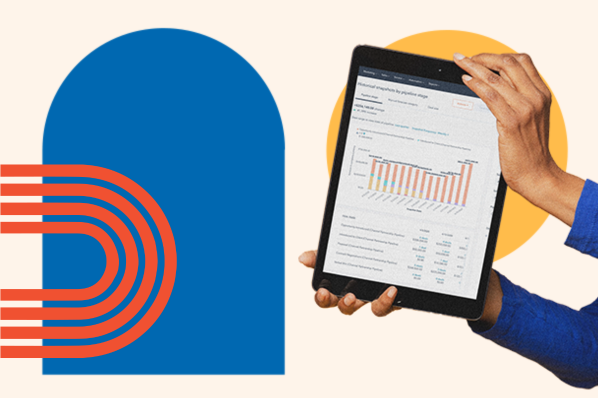
Your CRM is the foundation of your entire customer retention strategy. It serves as the central hub where all customer data and interactions are stored, analyzed, and acted upon. A robust CRM system empowers your team to build strong, personalized relationships with every customer by providing a complete 360-degree view of their history, preferences, and behavior.
With a CRM like HubSpot, you can:
- Capture and centralize data from every customer touchpoint
- Segment customers based on demographics, behavior, and value
- Personalize marketing, sales, and service interactions at scale
- Set up automated workflows to deliver timely, relevant communications
- Track customer health and sentiment to proactively prevent churn
- Analyze performance and optimize your retention strategies over time
For example, moving company Bellhops used HubSpot‘s CRM to gain a unified view of their customer journey across multiple channels and teams. By leveraging this data to personalize their communications and improve the customer experience, they increased retention by 13% while reducing churn by 50%.
| Feature | Benefit |
|---|---|
| Contact Management | Store and organize all customer data in one place |
| Company Insights | Get a unified view of each customer‘s interactions and history |
| Deals | Track every sales opportunity from lead to close |
| Tasks & Activities | Manage customer-facing activities and communications |
| Custom Properties | Add unique fields to tailor your CRM to your business |
| Integrations | Connect your CRM with marketing, sales, service, and analytics tools |
Key CRM Strategies for Retention:
- Capture data from every customer interaction to build rich profiles
- Segment customers based on key attributes and behaviors
- Use customer data to personalize outreach and offerings
- Set up automated nurture campaigns to keep customers engaged
- Monitor customer health and intervene proactively to prevent churn
2. Customer Loyalty Programs
A well-designed loyalty program is one of the most effective tools for improving retention and driving repeat business. By rewarding customers for their continued patronage, you give them a compelling reason to choose your brand over competitors.
According to Bond‘s 2022 Loyalty Report, 78% of consumers are more likely to continue doing business with a brand that offers a loyalty program. The report also found that loyalty program members spend 57% more than non-members on average.
Some common types of loyalty programs include:
- Points-based programs that award points for every purchase, which can be redeemed for discounts, free products, or other perks (e.g. Sephora‘s Beauty Insider)
- Tiered programs that offer increasingly valuable benefits as customers reach higher spending thresholds (e.g. Starbucks Rewards)
- Paid programs that provide immediate benefits in exchange for an annual fee (e.g. Amazon Prime)
- Value-based programs that donate a portion of sales to a charitable cause chosen by the customer (e.g. TOMS One for One)
The key is to choose a program structure that aligns with your customers‘ preferences and your business model. Loyalty platform Yotpo makes it easy to launch and manage a customized program without technical expertise.
Key Loyalty Program Strategies for Retention:
- Choose rewards that are valuable and relevant to your customers
- Make your program easy to understand and participate in
- Offer a mix of transactional and experiential benefits
- Encourage members to move up tiers with bigger rewards
- Continuously promote your program to drive enrollment and engagement
3. Gamification
Gamification is the process of applying game-like elements to non-game contexts, such as customer retention. By tapping into people‘s natural desire for achievement, competition, and reward, gamification makes the customer experience more engaging and motivating.
Some common gamification mechanics used in retention programs include:
- Points and badges awarded for completing specific actions or milestones
- Leaderboards that rank customers based on their level of engagement or spend
- Challenges and quests that encourage customers to try new features or products
- Progress bars that visualize a customer‘s advancement toward a goal or reward
When implemented effectively, gamification can have a significant impact on retention metrics. For instance, M&M‘s pretzel launch campaign used a gamified mobile app to engage customers and drive repeat purchases, resulting in a 6.8% increase in sales and a 5.3% lift in household penetration.
Key Gamification Strategies for Retention:
- Set clear goals and rewards that align with desired customer behaviors
- Use a variety of game mechanics to sustain interest over time
- Provide instant feedback and gratification for completed actions
- Leverage social proof and competition to drive participation
- Continuously optimize and refresh your gamification strategy based on data
4. Personalization
In today‘s hyper-competitive landscape, personalization has evolved from a nice-to-have to an absolute necessity. Customers expect brands to understand their unique needs and preferences, and to tailor their experiences accordingly.
Research by Epsilon found that 80% of consumers are more likely to do business with a company that offers personalized experiences, and 90% find personalization appealing.
Personalization can be applied across the entire customer journey, from initial acquisition to post-purchase support. Some examples include:
- Personalized product recommendations based on browsing and purchase history
- Tailored content and offers delivered via email, mobile app, or website
- Dynamic pricing that adjusts based on customer segment or behavior
- Customized onboarding and support that adapts to each customer‘s needs
Tools like HubSpot‘s Marketing Hub make it easy to personalize at scale by leveraging your CRM data and behavioral insights. You can create dynamic content blocks, triggered emails, and adaptive page layouts without coding.
Key Personalization Strategies for Retention:
- Collect and unify customer data across all touchpoints
- Segment customers based on demographics, behavior, and value
- Use machine learning to deliver personalized recommendations
- Create dynamic content that adapts to each customer‘s context
- Continuously test and optimize your personalization efforts
5. Customer Feedback and Voice of the Customer (VOC) Programs
You can‘t improve customer retention if you don‘t understand why customers churn in the first place. That‘s where customer feedback and Voice of the Customer (VOC) programs come in.
By proactively seeking out customer insights and opinions, you can identify areas for improvement, address pain points, and demonstrate that you value their input. According to Microsoft, 77% of consumers view brands more favorably if they proactively invite and accept customer feedback.
Some common feedback collection methods include:
- Net Promoter Score (NPS) surveys that measure customer loyalty and likelihood to recommend
- Customer Satisfaction (CSAT) surveys that gauge satisfaction with specific interactions or offerings
- Customer Effort Score (CES) surveys that assess the ease of completing key tasks
- Social media listening that monitors brand mentions and sentiment across channels
- User testing and focus groups that gather qualitative feedback on products and features
Tools like Qualtrics CustomerXM allow you to collect, analyze, and act on customer feedback at scale. You can create and distribute surveys across multiple channels, track key metrics over time, and automatically route feedback to the right teams for follow-up.
Key Customer Feedback Strategies for Retention:
- Collect feedback at key moments throughout the customer journey
- Use a mix of quantitative and qualitative feedback methods
- Share feedback broadly across the organization to drive alignment and action
- Follow up with customers who provide feedback to close the loop
- Continuously monitor and act on feedback to improve the customer experience
6. Customer Education and Onboarding Programs
One of the most common reasons for churn is that customers don‘t fully understand or appreciate the value of your product or service. They may struggle to get started, hit roadblocks along the way, or simply not take advantage of key features that could benefit them.
That‘s why investing in customer education and onboarding programs is so critical for retention. By proactively helping customers achieve their goals and get the most out of your offering, you set them up for long-term success and satisfaction.
According to Wyzowl, 86% of customers say they‘d be more likely to stay loyal to a business that invests in onboarding content that welcomes and educates them after they‘ve bought.
Some common types of customer education and onboarding content include:
- Welcome emails and videos that orient new customers and set expectations
- Product tutorials and guides that walk customers through key features and use cases
- Webinars and workshops that provide live training and Q&A opportunities
- Online courses and certifications that help customers develop skills and expertise
- In-app tooltips and walkthroughs that guide customers through key workflows
Tools like Appcues make it easy to create and deliver personalized onboarding experiences without coding. You can create in-app flows, checklists, and product tours that adapt to each customer‘s needs and behavior.
Key Customer Education Strategies for Retention:
- Develop a comprehensive onboarding program that covers key features and benefits
- Use a variety of content formats to accommodate different learning styles
- Personalize education based on customer segment, use case, and behavior
- Provide ongoing education and support beyond the initial onboarding period
- Continuously gather feedback and optimize your education programs
7. Customer Service and Support Systems
Great customer service is the backbone of any successful retention strategy. When customers know they can count on you to quickly and effectively resolve their issues, they‘re far more likely to stick around for the long haul.
According to Zendesk, 78% of customers say a company‘s customer service reputation is a key factor in their decision to buy, and 69% say they would spend more with a company that provides excellent service.
Some key components of a modern customer service and support system include:
- Ticketing and case management to track and resolve customer inquiries
- Knowledge base and self-service portal to enable customers to find answers on their own
- Live chat and messaging to provide real-time support across channels
- Customer communities and forums to facilitate peer-to-peer support and engagement
- AI-powered chatbots and virtual assistants to automate routine tasks and inquiries
Tools like Zendesk provide an all-in-one customer service platform that integrates with your CRM and other key systems. With Zendesk, you can manage all your support channels and interactions in one place, automate workflows, and gain visibility into key service metrics.
Key Customer Service Strategies for Retention:
- Provide fast, friendly, and effective issue resolution across all channels
- Empower customers to self-serve with a comprehensive knowledge base
- Use AI and automation to streamline routine tasks and inquiries
- Foster a customer-centric culture that prioritizes empathy and proactivity
- Continuously gather feedback and improve your service delivery
Putting It All Together: A Winning Customer Retention Strategy
While each of the tools and tactics we‘ve covered can be powerful on its own, they work best as part of a cohesive retention strategy. And at the center of that strategy should be your CRM system, which provides the data and insights needed to power all your other retention efforts.
Here‘s a step-by-step framework for putting together a winning retention strategy:
- Implement a robust CRM system to capture and unify customer data across all touchpoints
- Segment your customers based on key attributes, behaviors, and value to your business
- Develop targeted retention programs for each segment, using a mix of the tools and tactics outlined above
- Personalize your communications and offerings based on each customer‘s unique needs and preferences
- Proactively gather customer feedback and act on it to improve the customer experience
- Invest in customer education and onboarding to help customers achieve their goals and realize value
- Provide exceptional customer service to build trust and loyalty over time
- Continuously measure and optimize your retention efforts based on key metrics and feedback
By following this framework and leveraging the right tools and strategies, you can turn one-time buyers into lifelong brand advocates who drive sustainable growth and profitability for your business.