
The Do‘s and Don‘ts of Positive Scripting in Customer Service [Template]
In the quest to deliver consistently outstanding customer service, one tool that‘s often underestimated is the humble script. While some argue that scripting makes service robotic and impersonal, when done right, it can actually empower agents to provide more confident, solution-oriented support. It‘s all about striking the right balance.
In this deep dive, we‘ll unpack everything you need to know about positive scripting in a customer service context. Discover what it is, how leading organizations are using it to their advantage, and best practices for crafting scripts that leave customers feeling heard and satisfied. Plus, get a customizable template to kickstart your own scripting efforts.
What is Positive Scripting?
Positive scripting is the process of equipping service reps with predefined language and responses to guide customer conversations down a constructive path. Rather than a rigid rulebook, it‘s meant to be a flexible framework that enables agents to handle a wide variety of scenarios with confidence and grace.
Some common elements found in positive scripts include:
- Greetings and rapport-building phrases
- Empathy statements and active listening cues
- Probing questions to uncover root issues
- De-escalation and objection handling techniques
- Confirming and summarizing steps
- Positive language focused on solutions vs. limitations
- Proper hold and transfer etiquette
- Personalized sign-offs and next steps
When executed thoughtfully, scripting offers several key benefits:
| Benefit | Description |
|---|---|
| Consistency | Ensures customers receive a cohesive experience across channels and agents |
| Efficiency | Streamlines responses to common questions and requests |
| Accuracy | Equips reps with approved messaging around complex policies and procedures |
| Confidence | Alleviates stress for agents, especially when handling tricky situations |
However, over reliance on scripts can also work against you. A study by Software Advice found that 84% of customers can tell when an agent is using a script, and 52% say it has a negative impact on their experience. Top complaints include:
- Sounding robotic and lacking genuineness
- Not listening to or addressing the customer‘s unique concerns
- Inability to deviate from the script to solve problems creatively
- Repeating canned lines that comes across as dismissive or patronizing
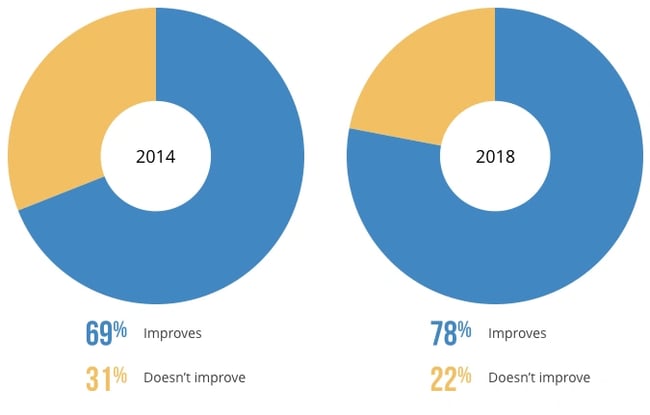
Source: Software Advice
The takeaway? Scripts are a powerful tool, but they must be designed and delivered in a way that enhances the human element of service, rather than replacing it.
How Top-Performing Service Teams Use Positive Scripting
To dig into what sets great scripts apart, let‘s look at how CX leaders leverage them for maximum impact.
Zappos is renowned for their stellar service, and scripts play a key role in maintaining those high standards across a large distributed team. But they‘re quick to clarify that their scripts are more like guidelines. Agents are encouraged to let their personality shine through and use their best judgment to go off-script when needed to make the customer happy.
In one legendary case, a Zappos rep spent over 10 hours on the phone with a customer, breaking the record for their longest call. Far from being reprimanded for deviating from the standard flow, the agent was praised for epitomizing Zappos‘ customer-centric values. It just goes to show that sometimes veering off-script is exactly the right move.
Nordstrom is another brand famous for empowering employees to use their discretion in service to the customer. As Forbes contributor Shep Hyken reports, Nordstrom uses one simple script: "Use your good judgment in all situations. There will be no additional rules."
By hiring right and instilling customer-first values from day one, they‘re able to give reps incredible autonomy without sacrificing quality or consistency. Scripts are in place more as guardrails than gospel.
Ann Handley, Chief Content Officer at MarketingProfs, recommends a similar approach she calls "Judo Scripting". The idea is to arm reps with a repertoire of open-ended questions and flexible phrases they can adapt to any context, rather than dictating a rigid, linear dialog.
For example, instead of responding to an angry customer with:
"I apologize for the frustration you‘ve experienced with your billing statement. Let me review the charges with you in more detail…"
A Judo approach would be:
"Thank you so much for reaching out about this billing issue. I want to make sure I fully understand your concerns so I can provide the best solution. Would you mind sharing a bit more detail about what looks off to you? I‘m here to help get to the bottom of this."
The second version hits the same key points as the first, but trades generic platitudes for a more authentic, personalized feel that invites the customer to share openly.
5 Steps to Develop Positive Scripts Your Whole Team Can Get Behind
Ready to uplevel your own scripting efforts? Follow these steps to create messaging that is on-brand, customer-focused, and adaptable to any situation.
-
Audit your current scripts: Review existing scripts across all channels and identify portions that sound robotic, vague, or misaligned with your brand voice. Also look for places where reps frequently have to deviate from the script to actually solve the issue at hand.
-
Gather input from agents and customers: Survey your agents to understand what scripted responses work well, which fall flat, and what scenarios they feel ill-equipped to handle. Combine this with insight from customer feedback, complaints and chat/call transcripts to zero in on areas for improvement.
-
Establish your guiding principles: Distill your company‘s voice, tone and values into a set of guiding principles for all scripted content. For example, Zappos‘ scripts are guided by their core value to "Deliver WOW Through Service." Make these guidelines crystal clear so anyone who touches scripts can internalize them.
-
Focus on frameworks over scripts: Build out a library of flexible scripts covering your most common customer situations – think intros, discovery questions, hold messages, closing lines, etc. But present them as frameworks that reps can mix and match vs. rigid sequential dialog. The goal is to provide guardrails, not handcuffs.
-
Test, iterate and train continuously: Treat your scripts as living documents. Regularly assess what‘s resonating with customers and what needs to be tweaked based on feedback. Make sure to keep reps‘ skills fresh with ongoing coaching, role-playing and sharing of best practices. The better they know the intent behind the script, the more naturally they can bring it to life.
Putting Positive Scripting to Work: A Customizable Template
To help you put these principles into practice, we‘ve created a starter template covering some of the most critical scripting touch points. Use this as a baseline to build out your own master messaging bank.
Greeting:
Hi [Customer Name], thanks for reaching out to [Company X] support. My name is [Agent Name]. How are you doing today?
Establish Rapport:
I see you‘ve been a customer since [Year] – thank you so much for your loyalty! We truly appreciate your business.
Acknowledge Concern:
I can understand why [issue] would be frustrating. You‘re right to expect better from us. Let‘s see what we can do to make this right.
Clarify the Issue:
Just to make sure I‘m fully understanding the situation, [rephrase issue]? Okay, I‘m tracking now. Let me take a closer look and identify the best next steps.
Take Ownership:
I‘m going to personally ensure we get this sorted out for you. I‘ll pull in additional resources as needed and keep you updated at each step. Your satisfaction is my top priority.
Provide Options:
Based on what you‘ve shared, here are a couple paths forward. Option 1 is [describe]. Option 2 is [describe]. Do either of those sound like a good fit, or is there another solution you have in mind?
Set Expectations:
Just to set expectations, the typical turnaround time for [resolution] is [timeframe]. I‘ll be working to expedite that as much as possible. You can expect to hear back from me with an update no later than [date/time].
Confirm Next Steps:
Okay, so to recap, I‘m going to [next steps]. You‘ll receive [expected outcome] by [timeframe]. I‘ll also [additional follow-up]. Does that align with your expectations? Let me know if you need me to clarify or adjust anything.
Close on a Positive Note:
[Customer Name], thanks again for your patience and understanding. It‘s been a pleasure assisting you today. Please don‘t hesitate to reach back out if you have any additional questions or concerns. Have a wonderful rest of your day!
The key to making these scripts your own is to infuse them with your unique voice, culture and offers. Use them as a starting point, but continually gather feedback to optimize the language and flow. And most importantly, empower your reps to wield them judiciously and inject their own personal flair.
The Future of Positive Scripting in an AI-Enabled World
As AI and automation become an increasingly prevalent part of the service experience, the role of scripting is evolving. Chatbots and virtual agents rely heavily on scripts to handle routine inquiries, freeing up human reps to focus on more complex, emotionally charged interactions.
In this new paradigm, the importance of positive scripting for human agents is only magnified. When a customer reaches a live rep, it‘s often because they have a high-stakes need that requires nuanced handling. Arming reps with thoughtful scripts to navigate these make-or-break moments with empathy and precision is critical.
At the same time, with bots handling more of the standard issues, agents‘ scripts will need to become more sophisticated and adaptable. Rote dialog will no longer cut it – scripts must be designed to deal with the long tail of unique scenarios that AI isn‘t (yet) equipped to handle.
CX luminary Shep Hyken envisions a future in which AI actively assists agents in real-time by surfacing relevant script snippets based on the context and sentiment of the conversation. Imagine a world where as a customer is speaking, the AI is transcribing the conversation, analyzing the content, and providing the agent with intelligent prompts to empathetically handle that specific customer‘s needs.
In this AI-human collaboration, scripts act more like dynamic conversation partners than static reference documents. The role of CX leaders will be to continually feed the AI engine with best-practice messaging and train agents to skilfully apply those recommendations to each customer‘s unique situation.
Key Takeaways: Embracing Positive Scripting as a CX Differentiator
When employed strategically, positive scripting is a powerful tool for aligning your whole team around messaging that makes customers feel valued, understood and well-served. But like any tool, its effectiveness depends on thoughtful design and application. Here are some Do‘s and Don‘ts to keep top of mind:
Do:
- Use scripts to guide agents, not restrict them
- Focus on the intent behind the language, not just the exact words
- Hire skilled communicators and train them to think beyond the script
- Regularly update scripts based on customer and employee feedback
- Adapt scripting to integrate with AI-powered support
Don‘t:
- Get so attached to the script you miss what the customer really needs
- Sound robotic or inauthentic just to follow the "rules"
- Let scripts become a substitute for properly onboarding and training agents
- Treat scripts as set-it-and-forget-it
- Expect one-size-fits-all scripts to work across every channel and issue
By striking the right balance between scripted best practices and authentic human engagement, you can turn positive scripting into a true differentiator. Invest the time to get it right, weave it thoughtfully into your support strategy and technology, and continually optimize based on real-world learnings.
Your reward will be happier customers, more confident agents, and a support experience that sets you apart from the pack. And that‘s something worth scripting a big "thank you" for.