15 Healthcare Website Design Examples We Love [+ How To Make Your Own]
Healthcare website design can be a tricky balance – you want to create an inviting, engaging online presence to attract patients, but you also need to convey professionalism and clearly communicate important health information. With over 80% of patients now using online resources to research health issues and find providers, a well-designed website is more critical than ever for healthcare organizations.
As Jacob Lundy, CEO of healthcare marketing agency Vanguard Communications explains, "Your website is your new front door. It‘s the first impression many patients will have of your organization, so it needs to instantly convey that you are a trusted, compassionate partner in their care."
So what separates the best healthcare websites from the rest? Here are 15 examples of stellar healthcare website design that we love – along with tips for creating your own patient-focused site.
Why Healthcare Website Design Matters
First, let‘s look at some key statistics that illustrate the importance of effective healthcare website design:
| Stat | Percentage |
|---|---|
| Patients who use online resources to find health information | 80% |
| Patients who say a positive online reputation is very or extremely important when choosing a provider | 84% |
| Patients who would switch providers for a better digital experience | 50% |
| Patients who booked appointments directly after visiting a hospital website | 44% |
Source: Kyruus, PatientPop
Clearly, your website plays a huge role in a patient‘s decision to choose your organization for their care. It needs to make a strong first impression, provide the information they are looking for, and make it easy to take the next step.
Some of the top features patients look for on healthcare websites include:
- Conditions & services information (83% say very important)
- Accepted insurance (65%)
- Provider credentials & bios (63%)
- Appointment scheduling (49%)
- Patient reviews/testimonials (45%)
15 Best Healthcare Website Design Examples
Now let‘s dive into 15 examples of healthcare organizations whose websites tick all the boxes when it comes to user experience, engaging content, and conversion-focused design.
1. Mayo Clinic
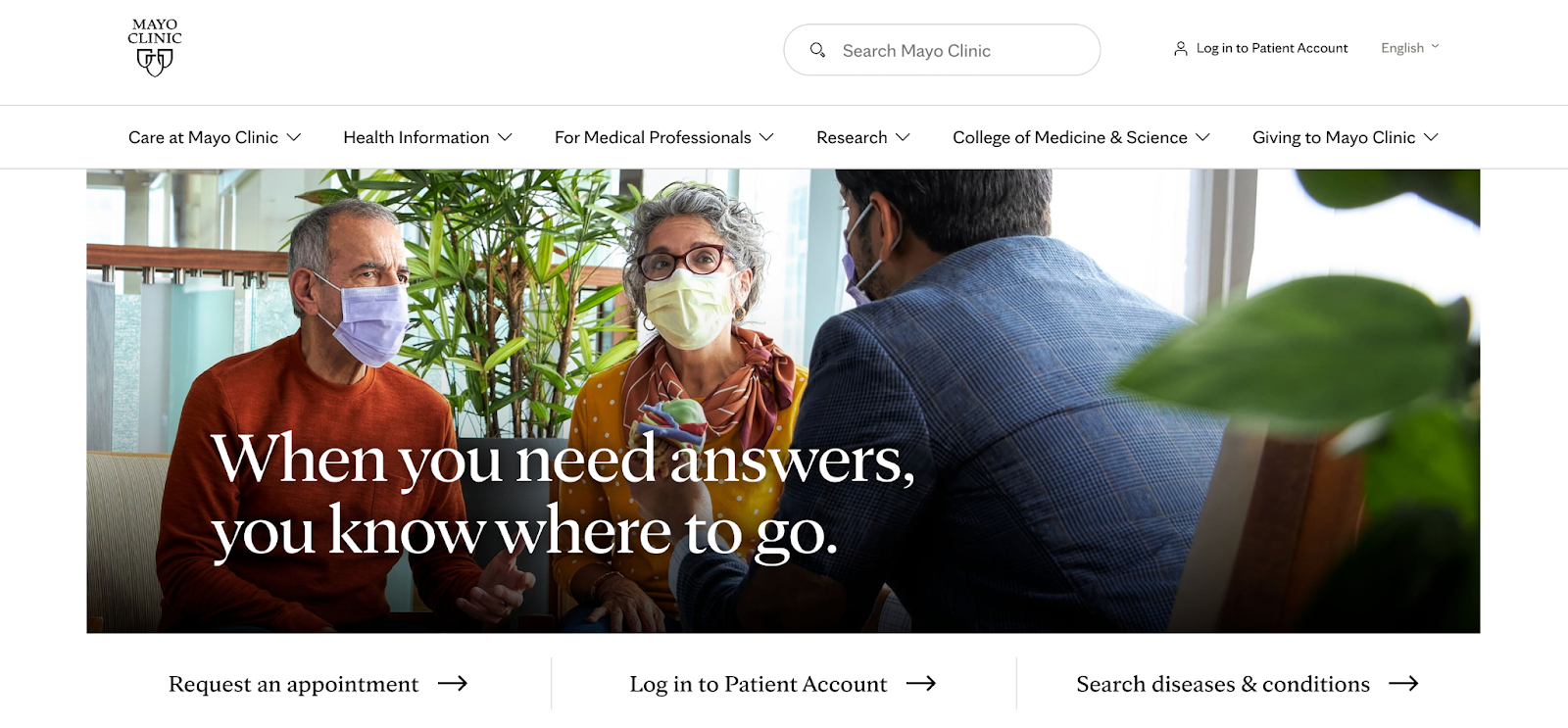
Mayo Clinic has long been a leader in consumer health information. Their website reflects that commitment to patient education with an extensive library of articles, videos, and tools. We love how the site:
- Organizes content using clear section headings by health topic and body system
- Provides multi-format information including articles, illustrations, videos, and podcasts
- Incorporates interactive tools like symptom checker and health risk assessments
- Offers location-specific information and directories for each Mayo Clinic campus
2. WebMD
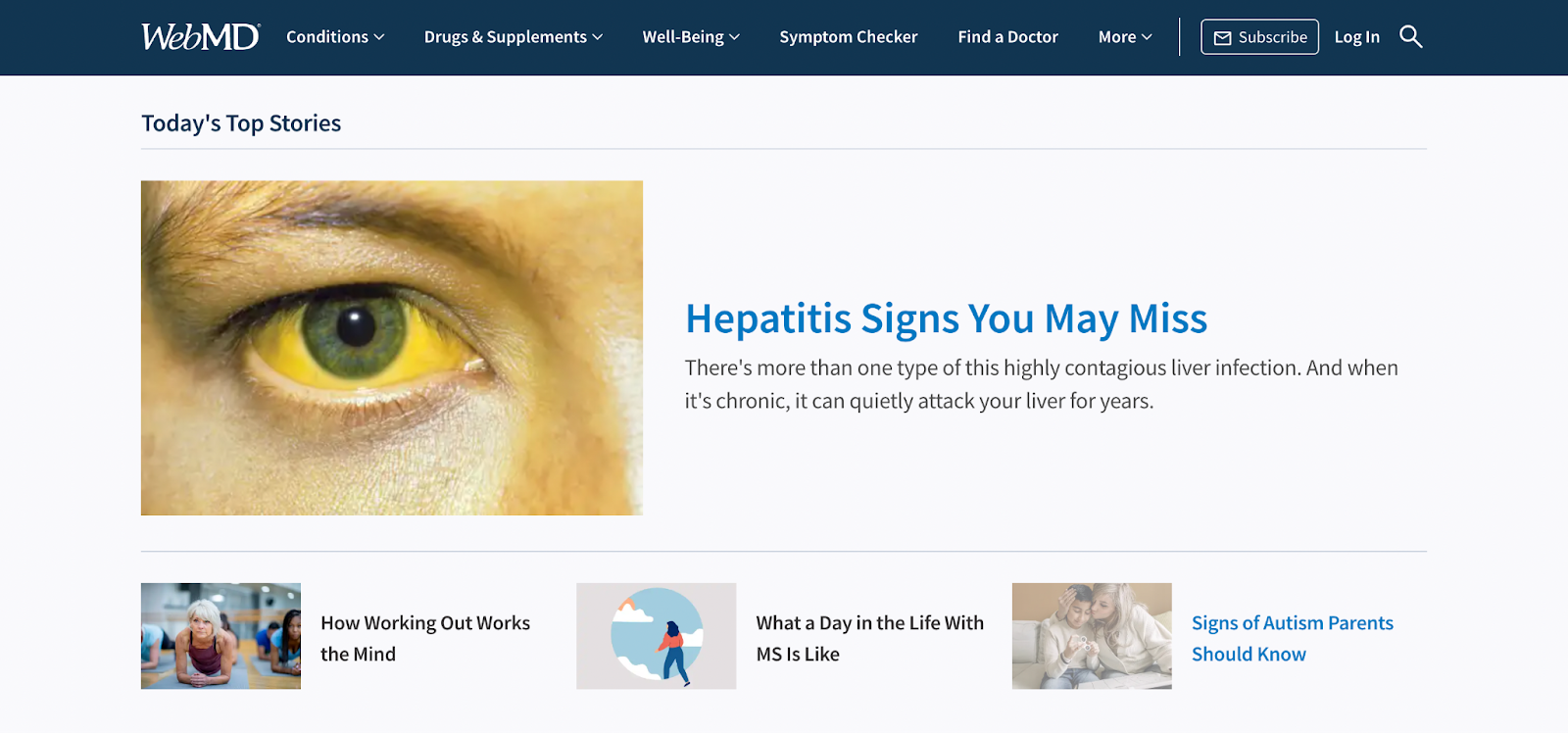
One of the largest online health publishers, WebMD‘s site is all about empowering patients with trusted medical information. Noteworthy elements include:
- Clean, uncluttered layout with articles categorized by health topic
- Engaging multimedia content including news, videos, quizzes, and podcasts
- Free interactive tools like symptom checker, BMI calculator, and pill identifier
- Expert perspectives from their medical review board and Chief Medical Officer
3. One Medical
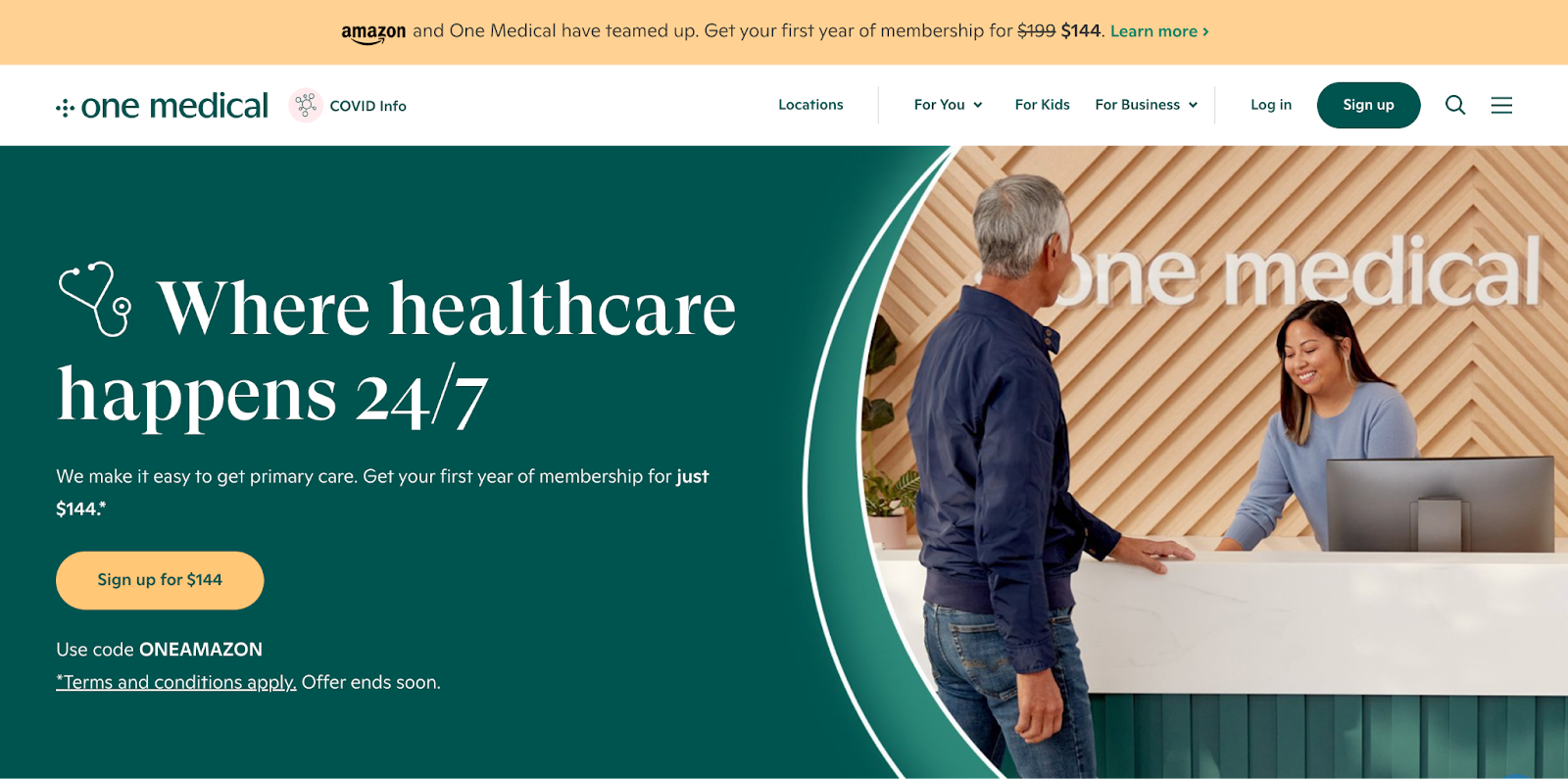
This membership-based primary care practice puts user experience at the forefront with a website that makes accessing care a breeze. Highlights include:
- Warm, inviting design with patient-focused messaging throughout
- Intuitive top navigation with clear CTAs for booking appointments and joining
- Virtual tour video showing their modern, welcoming office spaces
- Detailed provider bios with option to book directly from profiles
4. Tia
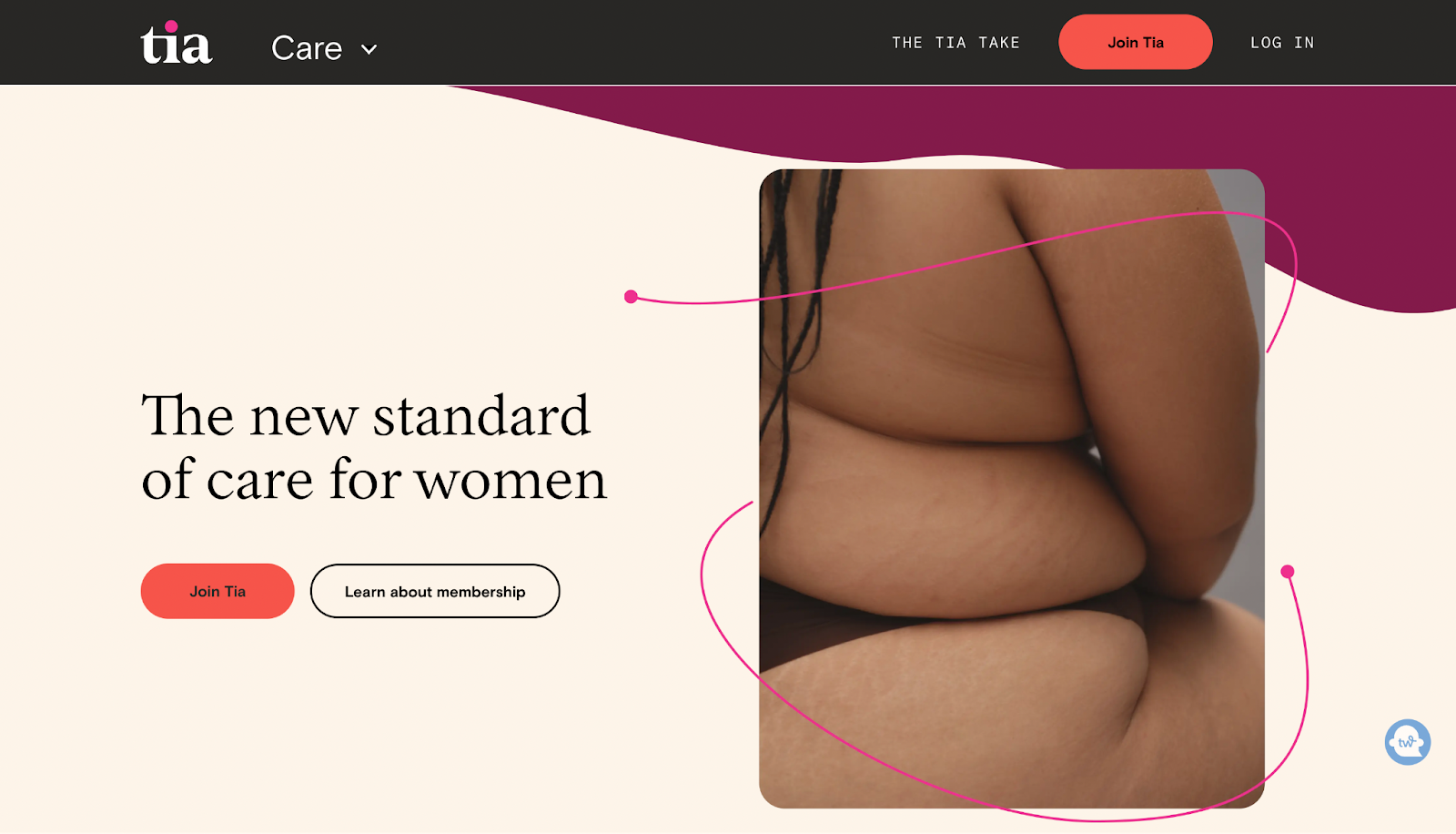
Women‘s health startup Tia takes a fresh, friendly approach with a website that feels more like a lifestyle brand than a clinical practice. We‘re impressed by:
- Trendy color palette and illustrations conveying an approachable vibe
- Concierge-style messaging focused on building real patient relationships
- Prominent provider diversity showing commitment to culturally competent care
- Instagram-worthy office photos and patient testimonial videos
5. Zocdoc

This popular online healthcare marketplace makes it incredibly easy for patients to find and book providers. Site strengths include:
- Powerful search with filters for insurance, specialty, location, gender, availability
- Verified patient reviews and star ratings displayed on provider profiles
- In-depth provider info like professional statement, education, certifications
- Seamless booking flow allowing patients to see real-time availability by provider
"60% of patients prefer digital scheduling and nearly 50% would switch providers for the ability to book online. Healthcare organizations must prioritize improving this digital experience to attract and retain patients," says Oliver Kharraz, MD, Zocdoc Founder and CEO.
6. Cleveland Clinic

Another renowned academic medical center, Cleveland Clinic‘s website reflects their expertise with detailed treatment guides and pioneering research. Standout elements:
- Comprehensive health library with articles reviewed by Cleveland Clinic experts
- Multimedia patient education including webchats, podcasts, and Facebook Live Q&As
- Intuitive find a doctor tool with filter for virtual visits and online scheduling
- Extensive clinical trials database with ability to search by condition or treatment
7. Devoted Health

This Medicare Advantage plan puts seniors at the center with a jargon-free website laser-focused on helping them understand their options. Noteworthy features include:
- Simplified navigation focused on the key actions seniors want to take
- Warm lifestyle photography of diverse seniors living active, vibrant lives
- Clear CTAs to learn more, compare plans, and check enrollment eligibility
- Helpful tools like formulary and provider lookups, plan comparison, drug cost estimator
"Seniors are increasingly using digital channels to research and enroll in Medicare plans. Plans must ensure their websites deliver relevant information in an easy-to-understand way in order to win their trust and business," explains Abner Mason, CEO of senior healthcare platform ConsejoSano.
8. Carbon Health

This tech-enabled primary care provider shows that a healthcare website can be cutting-edge yet still warm and approachable. We love:
- Friendly, conversational copywriting focused on building real patient relationships
- Bold color blocking and modern illustrations to highlight different services
- Upfront transparent pricing listed for membership and service fees
- Easy online booking plus option to text or call to book by phone
Tips for Designing a Patient-Focused Healthcare Website
Ready to revamp your own website to better serve patients‘ needs? Follow these best practices:
1. Keep it simple and skimmable
- Avoid medical jargon and use plain language at an 8th grade reading level
- Break up text with subheads, bullets, pull quotes, and plenty of white space
- Front-load the most important content in headlines and above the fold
2. Design mobile-first
- Over 60% of patients now access healthcare websites exclusively by smartphone
- Use a responsive design that adapts to smaller screen sizes
- Compress images and minify code to ensure fast load times on mobile connections
3. Prioritize accessibility
- Follow Web Content Accessibility Guidelines (WCAG) to support users of all abilities
- Provide text alternatives for images and captions/transcripts for multimedia
- Allow for keyboard-only navigation and ensure color contrast passes WCAG standards
4. Guide the patient journey
- Organize content around key patient tasks like finding a doctor and booking appointments
- Provide clear next steps and conversion points on each page
- Use pathways and funnels to guide patients to relevant content for their needs
5. Leverage patient stories and social proof
- Feature testimonials, reviews, and success stories to build trust and credibility
- Obtain patient consent and ensure HIPAA compliance when using real names/photos
- Incorporate provider ratings from verified third-party sources like Healthgrades
6. Create compelling provider profiles
- Include a professional headshot, credentials, accepted insurance, and personal statement
- Highlight specialties, areas of focus, and any special training or procedures
- Provide a calendar with real-time availability to book appointments online
7. Optimize for local search
- Claim and optimize your Google Business Profile listing with photos, hours, Q&A
- Incorporate location-based keywords naturally throughout your site content
- Build local citations and listings on high-quality online directories
8. Analyze and test continually
- Use analytics to track traffic, engagement, and conversions to key pages
- Survey your patients to collect feedback on their website experience
- Run A/B tests on CTAs, headlines, and page layouts to optimize performance
"The most effective healthcare websites put themselves in their patients‘ shoes. They focus relentlessly on creating an experience that is informative, comforting, and intuitive," summarizes Kris Borgraeve, healthcare marketing consultant and founder of digital agency Vanguard.
Emerging Trends in Healthcare Website Design
As technology and patient expectations continue to evolve, healthcare website design must adapt to keep pace. Here are some of the top trends we expect to see more of in 2023 and beyond:
Chatbots and conversational AI
- 24/7 virtual assistance to triage symptoms, answer FAQs, and guide next steps
- Integration with messaging apps like Facebook Messenger or WhatsApp
- Voice search optimization for conversational queries
Internet of Things integration
- Connected devices like wearables sending patient data into web-based platforms
- Website alerts and notifications based on device readings or medication reminders
- Patient dashboards displaying real-time health metrics and trends
Consolidated patient portals
- Single login access to medical records, lab results, prescription refills across providers
- 2-way messaging, live chat, and telehealth appointments with care team
- Mobile wallet integration for insurance cards, payment, and check-in
Hyper-personalization
- Dynamic website content tailored to individual patient data and preferences
- Predictive analytics and AI recommending relevant health content, products, services
- Geotargeted provider and location recommendations based on user‘s location
Voice-enabled experiences
- Voice assistants like Alexa and Siri providing web content via audio
- Voice-activated FAQ bots and voice search on practice websites
- Voice interfaces for hands-free website navigation and form completion
"Over the coming years, we‘ll see healthcare websites move beyond information delivery to become intelligent platforms that can collect patient data, learn preferences, and provide proactive care recommendations in real-time," predicts Daniel Kivatinos, Co-Founder & COO of AI-powered EHR company DrChrono.
Conclusion
Effective healthcare website design has the power to attract new patients, increase engagement, and even drive better health outcomes. The 15 examples highlighted here illustrate that a patient-first approach, combined with modern design best practices and a focus on the full digital patient journey can create web experiences that delight and empower.
Whether you‘re starting a website redesign from scratch or looking to level up your current site, keeping the patient at the center is key. Let these examples and tips inspire you to create a healthcare website that showcases your unique brand while making it as easy and intuitive as possible for patients to access the care they need.