
Software Toolchains: The Key to Unlocking Developer Productivity
As a software leader, you know the relentless pressure to deliver better software faster. But too often, developers get bogged down in manual, repetitive tasks instead of innovating. The solution? Modernize your software factory with integrated toolchains that streamline workflows across the development lifecycle.
What exactly is a software toolchain?
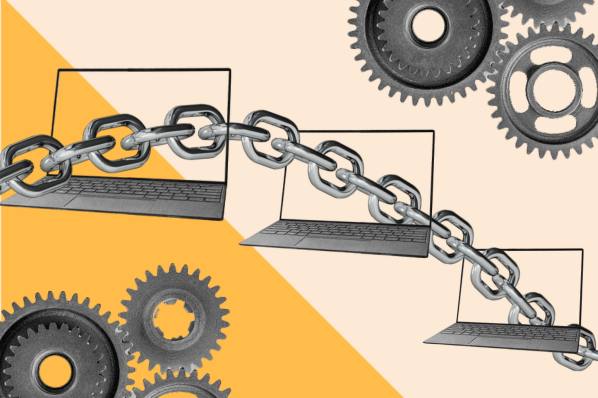
A software toolchain is a collection of programming tools that are used to perform a complex software development task or create a software product. More than just a random assortment of tools, a toolchain strategically combines tools so that the output of one tool feeds as input into the next, enabling a smooth flow of changes from development to production.
As Gartner puts it: "A toolchain is the embodiment of the processes, practices and tools used in the development, deployment and operations of an application."
Why you can‘t afford to ignore toolchains
In the digital age, software is at the heart of how companies innovate and compete. Yet software development remains painfully inefficient. Consider these sobering statistics:
- Developers spend over 17 hours per week on maintaining internal tooling, infrastructure and processes
- Over 30% of developer time is spent waiting for builds, tests and deployments to complete
- Fixing bugs takes 25-30x longer when caught in production vs. development
The opportunity cost is immense. As software architectures grow more complex and release cycles more compressed, no organization can afford these productivity sinkholes. That‘s where toolchains come in.
The layers of a modern DevOps toolchain
A well-designed toolchain supports the entire software delivery lifecycle, eliminating silos between teams and automating key development tasks. Let‘s dive into the common layers:
Integrated Development Environment (IDE)
This is the workbench where developers write, test and debug code. IDEs like Visual Studio Code, IntelliJ and Eclipse boost productivity with features like intelligent code completion, navigation and refactoring.
Source Control Management (SCM)
SCM tools like Git track changes to code, allowing developers to version, branch and collaborate asynchronously. Git repositories are typically hosted on services like GitHub, GitLab or Bitbucket.
Build Automation
Build tools take source code and compile it into deployable artifacts like JAR files or Docker images. Popular build systems include Maven, Gradle, and MSBuild.
Continuous Integration and Delivery (CI/CD)
CI/CD pipelines orchestrate build, test and deployment tasks, triggered whenever developers commit code changes. Tools like Jenkins, CircleCI, GitLab and GitHub Actions enable teams to release software on-demand.
Test Automation
Automated tests run as part of the CI/CD process, providing rapid feedback on code quality. Testing frameworks like Selenium, Cypress and JUnit can be integrated into the toolchain.
Infrastructure as Code
With IaC tools like Terraform, Ansible and Kubernetes, infrastructure is defined as declarative code, provisioned automatically as part of the deployment pipeline. This ensures consistency between environments.
Deployment Targets
Modern toolchains deploy applications across a range of environments, from on-premises servers to public clouds, containerized microservices and serverless functions. Deployment tools like AWS CodeDeploy, Azure DevOps and Spinnaker can push changes to production safely.
Observability
To operate reliably, toolchains need visibility into system health and performance. Monitoring tools like Prometheus, Grafana, Datadog and New Relic provide real-time insights to proactively detect and resolve issues.
When assembled thoughtfully, these toolchain components click together to form a powerful software delivery machine. But tools alone are not enough. Toolchains must be wielded with the right processes and culture.
Toolchain best practices from the experts
Building an enterprise-grade toolchain is no simple feat. It requires deep expertise and relentless focus. Here are some hard-won lessons from those on the bleeding edge of toolchain innovation:
1. Optimize for developer experience
"The best toolchains are the ones that developers actually want to use," says Kelsey Hightower, Principal Engineer at Google Cloud. Design your toolchain to minimize cognitive load on developers, with simple, intuitive interfaces.
2. Treat your toolchain as a product
"Your toolchain should be an internal product with a dedicated team responsible for building, running and improving it over time," advises Charity Majors, co-founder and CTO of honeycomb.io. "Don‘t just build it and forget it."
3. Standardize, but allow for flexibility
"Avoid ‘tool sprawl‘ by standardizing on a well-integrated toolchain, but create space for teams to experiment with new, purpose-built tools as needed," recommends Jez Humble, co-author of Continuous Delivery.
4. Instrument everything
"You can‘t improve what you don‘t measure," warns Kohsuke Kawaguchi, creator of Jenkins. Capture metrics across your toolchain to identify bottlenecks, drive optimization and showcase business value.
5. Invest in GitOps
" GitOps has emerged as the gold standard for deploying and managing cloud-native toolchains," asserts Alexis Richardson, CEO of Weaveworks. "By using Git as the single source of truth, GitOps brings greater reliability, traceability and security to software delivery."
These and other experts are worth following to stay on top of toolchain trends. But you don‘t have to take their word for the benefits.
Toolchain transformation in action
Intrigued by the potential of toolchains, but wondering what it looks like in practice? Here are a few real-world examples of companies wielding toolchains for competitive advantage:
Netflix
The streaming giant has built a sophisticated internal toolchain to support over 1,000 deployments per day. Their custom CI/CD platform, Spinnaker, has been open-sourced for the broader community.
Spotify
The popular music service created a homegrown developer portal called Backstage to make it easy for teams to discover and use tools across their toolchain. They donated Backstage to the Cloud Native Computing Foundation in 2020.
Etsy
The ecommerce company moved from monolithic releases to continuous delivery powered by a streamlined toolchain. The result? Deployment frequency jumped from twice weekly to 50+ times a day.
US Air Force
It‘s not just the private sector benefiting from toolchains. The Air Force adopted Kubernetes and GitOps to deploy a new "flight line of the future" app in days instead of months.
These case studies reinforce that despite unique constraints, modernizing developer toolchains is both achievable and transformational. What will your toolchain story be?
Getting started on your toolchain journey
By now, you‘re probably eager to reap the rewards of a world-class toolchain. But where to begin? Here are some suggestions:
- Assess your current toolchain maturity using a framework like the DORA quick check or VersionOne‘s DevOps assessment
- Align on a multi-phased toolchain roadmap linked to business outcomes
- Design with the DevOps toolchain Periodic Table and toolchain capability model in mind
- Favor open, loosely coupled tools that integrate well over monolithic vendor stacks
- Pilot tools with a small group of early adopters before scaling to the whole organization
- Provide training and support to help developers take full advantage of the toolchain
- Gather regular feedback and measure KPIs to demonstrate impact and build momentum
Remember, there is no one-size-fits-all toolchain. The key is to start small, experiment often and evolve your toolchain in lockstep with your people and processes.
Future-proofing your toolchain
Modernizing your toolchain is not a one-and-done effort. As Accenture notes, "Toolchains are not static; they change rapidly in step with innovations in tools, methods and processes. Organizations need to continuously recalibrate and improve toolchains."
Looking ahead, you can expect toolchains to become even more intelligent, automated and self-service. Trends like AI-pair programming, feature management and low-code will dramatically reshape how we build and operate software at scale.
To stay ahead of the curve, elite software organizations are:
- Leveraging ML/AI to automate repetitive development tasks and proactively detect issues
- Empowering developers with self-service toolchain catalogs and guardrails
- Implementing progressive delivery techniques like canary releases and A/B testing
- Participating in InnerSource communities to co-create and share reusable tools
The possibilities are endless. As long as you commit to continuously platforming your platform, your toolchain will pay dividends for years to come.
Toolchains: The engine of modern software innovation
The bar for software innovation has never been higher. To stay relevant in an eat-or-be-eaten marketplace, companies must empower developers with frictionless, end-to-end toolchains.
By abstracting away the complexities of infrastructure and operations, effective toolchains give developers the freedom to focus on customer value. The evidence is clear: organizations that wield toolchains as a strategic asset are able to sustainably deliver software with greater quality, security and speed.
If you haven‘t already, now is the time to uplevel your toolchain. Benchmark your software delivery performance, rally around a bold vision, and start assembling a toolchain that puts developers in the driver‘s seat.
The journey won‘t be easy, but the opportunity cost of inaction is simply too high. In a digital world, your competitiveness depends on code. Make sure your developers are equipped with a toolchain worthy of their talents and watch your software – and your business – soar.



![Adding a Privacy Policy to Your WordPress Site [Step-by-Step Guide]](https://greenlitcontent.com/wp-content/uploads/2026/04/20260423230642-69eaa602d826b-768x512.jpeg)