The Crash of ChatGPT: Navigating the Surge in Demand and Its Profound Implications
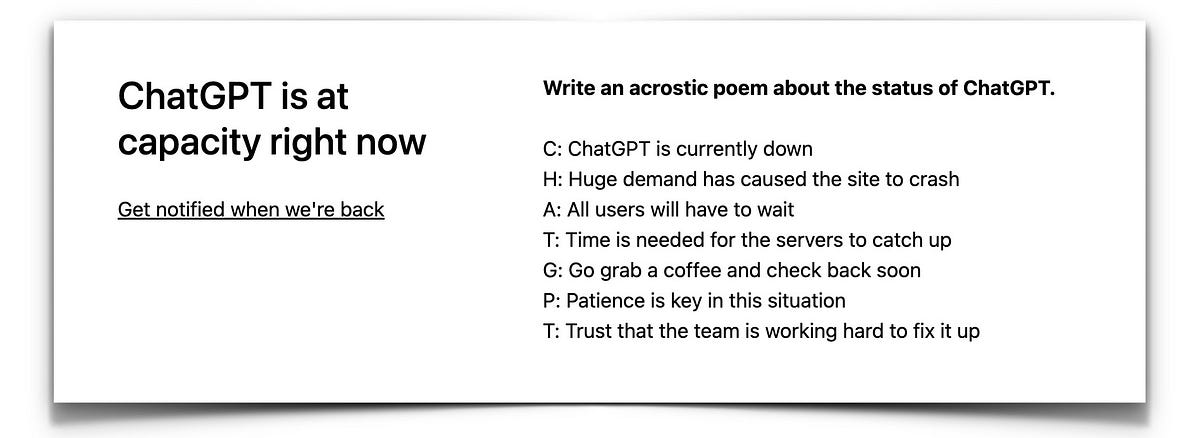
In the ever-evolving landscape of artificial intelligence, the meteoric rise of OpenAI‘s ChatGPT has captivated the world, sparking a frenzy of excitement and curiosity. This groundbreaking language model has demonstrated an unprecedented level of natural language understanding and generation, leaving users in awe of its capabilities. However, the overwhelming surge in demand for ChatGPT has led to a series of crashes and outages, exposing the challenges and complexities inherent in scaling such a transformative technology.
As an expert in the field of AI and language models, I‘ve closely followed the journey of ChatGPT, and I can attest to the profound implications it holds for the future of human-machine interaction. In this comprehensive article, we‘ll delve into the factors driving the explosive growth of ChatGPT, the technical and operational hurdles faced by its creators, and the far-reaching consequences it has on various industries and user segments. Prepare to embark on a thought-provoking exploration of the crash of ChatGPT and the profound impact it will have on our personal and professional lives.
The Perfect Storm: Factors Fueling the Surge in ChatGPT Demand
To understand the unprecedented surge in demand for ChatGPT, we must first examine the key factors that have converged to create this perfect storm of popularity.
Unparalleled Natural Language Capabilities
At the heart of ChatGPT‘s allure lies its remarkable ability to engage in human-like conversations, providing detailed and coherent responses to a wide range of queries. Powered by advanced natural language processing (NLP) algorithms, the model has demonstrated a level of linguistic fluency and contextual understanding that has left users in awe. From complex problem-solving to creative writing, ChatGPT has proven itself to be a versatile and capable assistant, capable of tackling tasks that were once the exclusive domain of human intelligence.
Widespread Curiosity and Excitement around AI
The rapid advancements in artificial intelligence have captured the public‘s imagination, fueling a growing curiosity and excitement about the potential of these technologies. ChatGPT, with its ability to mimic human-like responses, has become a tangible representation of this AI revolution, captivating users across various demographics. The viral nature of social media has further amplified this excitement, as users share their experiences and the impressive capabilities of the AI, driving even more people to explore and engage with the platform.
Diverse Applications and User Segments
The versatility of ChatGPT has made it an invaluable tool for a wide range of users, from students seeking academic assistance to professionals exploring new ways to streamline their workflows. Educators have embraced the AI‘s potential to enhance learning experiences, while content creators and writers have leveraged it for ideation, research, and even content generation. Developers and businesses, too, have recognized the transformative impact of integrating ChatGPT into their products and services.
Viral Social Media Exposure
The viral nature of ChatGPT‘s success on social media platforms has played a significant role in its meteoric rise. As users share their experiences, awe-inspiring demonstrations, and the practical applications of the AI, the word has spread like wildfire, leading to a surge in new signups and usage. This snowball effect has further fueled the demand, with more and more people eager to explore the capabilities of this groundbreaking language model.
Scaling the Unscalable: The Challenges Faced by OpenAI
As the demand for ChatGPT skyrocketed, the team at OpenAI found themselves facing a daunting challenge: scaling the infrastructure and computational resources required to support the exponential growth in user traffic. This was no easy feat, as the sheer scale of the problem posed significant technical and operational hurdles.
Technical Challenges
Ensuring the reliable and consistent performance of ChatGPT in the face of surging demand has been a constant battle for OpenAI‘s engineers. The underlying language model, while incredibly sophisticated, requires immense computational power and sophisticated load-balancing mechanisms to handle the influx of users. Scaling the necessary hardware and software infrastructure to meet this demand has proven to be a complex and time-consuming endeavor, leading to the frequent crashes and outages that have frustrated users.
Moreover, the team at OpenAI has had to grapple with the complexities of maintaining data integrity, managing user privacy, and implementing robust security measures to protect the platform from malicious actors. As the volume of user interactions and the sensitivity of the data processed by ChatGPT continue to grow, the need for robust data management and security protocols has become increasingly critical.
Operational Challenges
Alongside the technical hurdles, OpenAI has also faced significant operational challenges in managing the surge in demand for ChatGPT. Coordinating the efforts of their engineering, product, and customer support teams to ensure a seamless user experience has been a constant balancing act.
The need to rapidly expand their workforce and onboard new talent has put a strain on the organization‘s resources, as they strive to maintain the high standards of quality and reliability that users have come to expect. Furthermore, the unpredictable nature of the demand spikes has made it increasingly difficult to plan and allocate resources effectively, leading to periods of instability and frustration for users.
Lessons Learned and the Path Forward
Despite the challenges, the team at OpenAI has demonstrated remarkable resilience and agility in their efforts to address the issues surrounding ChatGPT‘s crashes and outages. They have learned valuable lessons about the importance of scalable infrastructure, robust data management, and effective operational planning in the face of exponential growth.
As they continue to refine and optimize their systems, OpenAI is also exploring innovative approaches to mitigate the impact of future demand surges. This may involve the implementation of advanced load-balancing mechanisms, the development of more efficient language models, and the exploration of distributed computing architectures to enhance the platform‘s overall resilience.
Moreover, the company is actively engaging with its user community, seeking feedback and insights to better understand the evolving needs and pain points. By fostering this collaborative approach, OpenAI aims to not only address the immediate challenges but also to shape the long-term roadmap for ChatGPT and its integration into the broader AI ecosystem.
The Ripple Effect: Implications for Users and Professionals
The crashes and outages of ChatGPT have had a profound impact on a wide range of user segments, each facing unique challenges and opportunities presented by this transformative technology.
Implications for Students and Educators
For students and educators, the potential of ChatGPT to assist with academic tasks has raised significant concerns about plagiarism and academic integrity. Educators are now grappling with the need to adapt their assessment methods and teaching strategies to accommodate the rise of AI-generated content, ensuring that students are not simply relying on the AI to produce their work.
The unpredictable availability of ChatGPT has also disrupted the learning experiences of students, who have come to rely on the AI for research, writing, and problem-solving. This has highlighted the importance of developing digital literacy skills and fostering a deeper understanding of the capabilities and limitations of language models among the student population.
Implications for Content Creators and Writers
The integration of ChatGPT into the creative process has had a profound impact on content creators and writers. While the AI has been embraced as a valuable tool for ideation, research, and even content generation, the ability to produce high-quality text with minimal effort has raised questions about the future of creative professions.
Concerns have been raised about the potential for AI-generated content to be passed off as original work, undermining the value and authenticity of human-created content. This has led to calls for increased transparency and the development of ethical guidelines around the use of language models in creative pursuits.
Implications for Developers and Businesses
Developers and businesses exploring the integration of ChatGPT into their products and services have faced their own set of challenges. The unpredictable availability of the AI has forced them to rethink their strategies and explore alternative solutions to ensure the reliability and continuity of their offerings.
Moreover, the potential for ChatGPT to disrupt various industries has not gone unnoticed. Businesses are now grappling with the need to adapt their workflows, processes, and even business models to capitalize on the opportunities presented by this transformative technology. This has led to a surge in investment and innovation, as companies race to harness the power of language models to gain a competitive edge.
Implications for Individual Users
The crashes and outages of ChatGPT have also had a significant impact on individual users who have come to rely on the AI for a wide range of personal tasks, from writing assistance to task planning and problem-solving. The frustration of being unable to access the AI when needed has highlighted the importance of developing a more robust and resilient infrastructure to support the growing demand.
As the use of language models becomes more widespread, individual users will need to navigate the ethical and practical considerations of integrating these tools into their daily lives. This may involve developing a deeper understanding of the capabilities and limitations of AI, as well as the importance of maintaining a critical eye when relying on AI-generated content.
The Future of ChatGPT and AI Language Models: Navigating the Challenges and Opportunities
As the dust settles from the initial surge in ChatGPT‘s popularity, the focus has shifted to the long-term implications of this AI language model and the broader trends in the field of natural language processing.
Advancements in Language Understanding and Generation
Experts predict that the advancements in language understanding, generation, and reasoning capabilities will continue to accelerate, paving the way for even more sophisticated AI assistants. The potential for these models to revolutionize various industries, from education and healthcare to finance and creative arts, is immense.
However, this progress also raises concerns about the ethical implications of AI-generated content, the potential for job displacement, and the need for robust governance frameworks to ensure the responsible deployment of these technologies.
The Race for Dominance in the AI Language Model Landscape
OpenAI and other tech giants, such as Google, Microsoft, and Meta, are making significant investments to stay ahead of the curve in the AI language model race. These companies are exploring ways to improve the scalability, reliability, and safety of their AI language models, while also seeking to differentiate their offerings and capture a larger share of the market.
The competition in this space is fierce, with each company vying to develop the most advanced and user-friendly language models. This has led to a flurry of innovation, as researchers and engineers push the boundaries of what is possible in natural language processing.
Regulatory and Policy Considerations
As the impact of AI language models becomes more widespread, regulatory and policy frameworks are being developed to govern the use of these technologies. Policymakers, ethicists, and industry leaders are grappling with questions of data privacy, algorithmic bias, and the societal implications of AI-driven content generation.
The need for transparent and accountable AI systems has become increasingly critical, as the potential for misuse or unintended consequences grows. Governments and industry bodies are working to establish guidelines and standards that will ensure the responsible development and deployment of language models like ChatGPT.
Embracing the AI Revolution with Caution and Wisdom
As we navigate the challenges and opportunities presented by the rise of ChatGPT and AI language models, it is crucial to embrace the potential of this technology while addressing the ethical and practical considerations. Collaboration between developers, users, and policymakers will be essential in shaping a future where AI and human intelligence coexist and complement each other.
Through proactive adaptation, continuous education, and a commitment to responsible innovation, we can harness the power of AI language models to enhance our lives, streamline our workflows, and unlock new avenues for creativity and problem-solving. By approaching the AI revolution with a balanced and thoughtful approach, we can navigate the crashes and outages of ChatGPT and emerge stronger, more resilient, and better equipped to navigate the transformative changes ahead.
The crash of ChatGPT has served as a wake-up call, reminding us of the immense power and potential of artificial intelligence, as well as the challenges we must overcome to ensure its responsible and sustainable development. As we move forward, it is our collective responsibility to shape the future of this technology in a way that benefits humanity as a whole, while remaining vigilant against the potential pitfalls and unintended consequences.