11 Rare Coins Worth Money: From the $18.8M Double Eagle to Hidden Treasures
The numismatic world witnessed history in June 2021 when a single coin – the legendary 1933 Double Eagle – sold for an astounding $18.8 million at Sotheby‘s auction. This record-breaking sale highlighted the enduring allure and remarkable value potential of rare coins. As an antique collector and numismatic expert with over two decades in the field, I‘ve witnessed firsthand how these metallic treasures capture both our imagination and investment dollars.
The Legendary 1933 Double Eagle
The story of the 1933 Double Eagle reads like a Hollywood thriller. In the depths of the Great Depression, the U.S. Mint struck 445,500 of these magnificent gold coins. However, before they could enter circulation, President Franklin D. Roosevelt issued Executive Order 6102, prohibiting private gold ownership and effectively condemning nearly all these coins to the melting pot.
Through mysterious circumstances, a handful survived. Today, only 13 specimens remain, with a single example in private hands – the very coin that achieved that remarkable $18.8 million price. The coin‘s design, crafted by renowned sculptor Augustus Saint-Gaudens, represents the pinnacle of American coin artistry. Its obverse features Lady Liberty striding forward with a torch and olive branch, while the reverse showcases a majestic eagle in flight.
The First American Dollar: 1794 Flowing Hair
When examining rare American coins, we must acknowledge the foundational importance of the 1794 Flowing Hair Dollar. This coin represents the first silver dollar issued by the United States federal government, marking a crucial moment in American monetary history. Of the roughly 1,758 pieces originally minted, fewer than 100 survive today.
The finest known specimen, graded Specimen-66 by PCGS, sold for $10,016,875 in 2013. This particular coin, with its pristine surfaces and sharp strike, likely served as a presentation piece to demonstrate the new nation‘s minting capabilities. Current market values for circulated examples start around $100,000, while higher-grade specimens regularly command seven-figure prices.
The Mysterious 1913 Liberty Head Nickel
Perhaps no rare coin carries more intrigue than the 1913 Liberty Head Nickel. Official Mint records show no authorization for Liberty Head nickels in 1913, as the design had been replaced by the Indian Head (Buffalo) nickel. Yet five specimens emerged in the 1920s, all traced back to former Mint employee Samuel Brown.
The most recent sale of a 1913 Liberty Head Nickel reached $3.7 million in 2013. Today, two reside in museum collections, while three remain in private hands. Authentication requires extensive die analysis and metallurgical testing, as the coin‘s mysterious origins have made it a target for sophisticated counterfeiters.
The Sacagawea Cheerios Dollar Discovery
Moving to more recent rarities, the Sacagawea Cheerios Dollar represents how modern minting variations can create significant value. In 2000, the U.S. Mint partnered with General Mills to promote the new Sacagawea dollar by including 5,500 coins in boxes of Cheerios. Years later, collectors discovered these promotional coins featured a different reverse die pattern than regular issues.
The "Cheerios Dollars" show enhanced tail feather detail on the eagle, creating a distinct variety that can command $5,000 to $20,000 depending on condition. This discovery demonstrates how careful observation and documentation can reveal valuable variations even in modern coinage.
Wisconsin Quarter Extra Leaf Varieties
The 50 State Quarters program produced several notable varieties, but none more significant than the 2004 Wisconsin quarter "Extra Leaf" variations. Two distinct types exist – the "High Leaf" and "Low Leaf" – showing what appears to be an additional leaf on the ear of corn in the design.
These variations likely resulted from die damage or debris, but their distinctive appearance and relatively low numbers (estimated at 5,000 pieces each) have driven strong collector demand. High-grade examples regularly sell for $300 to $1,000, with exceptional specimens reaching even higher prices.
The 1955 Doubled Die Lincoln Cent
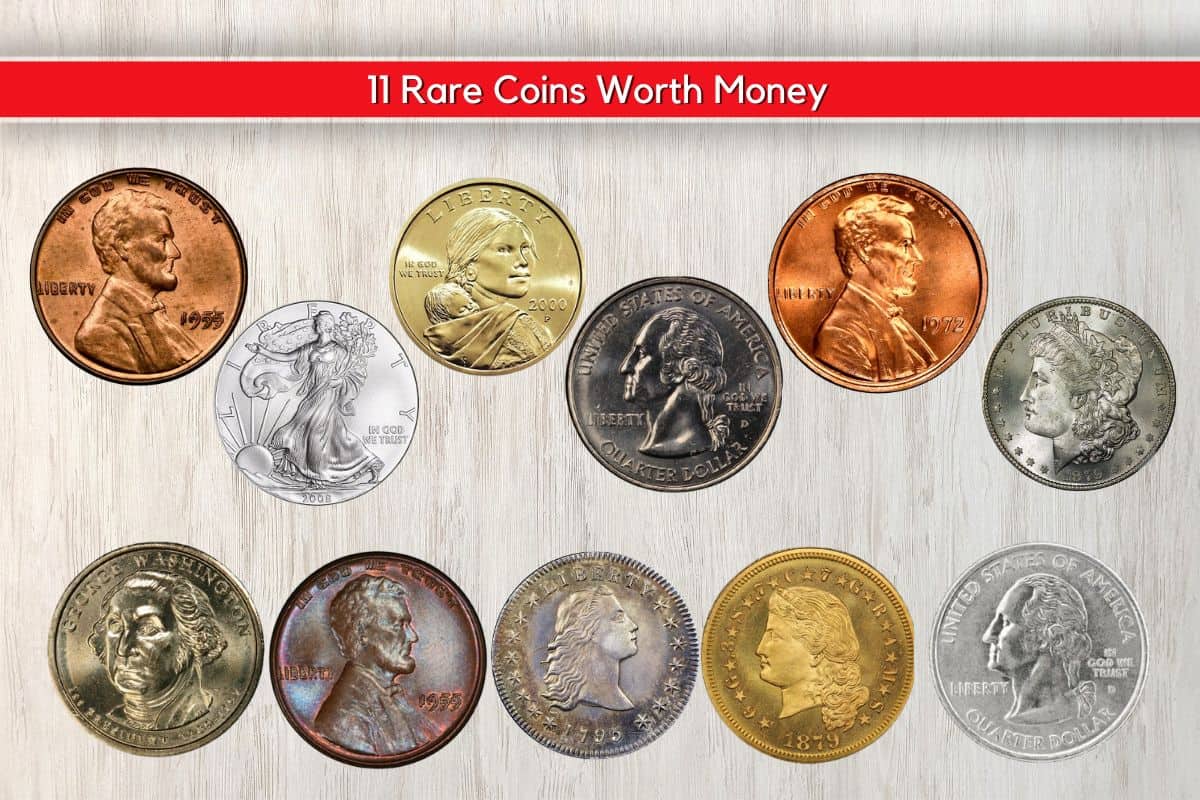
Among circulation finds, the 1955 Doubled Die Lincoln Cent stands supreme. This dramatic error, showing significant doubling on all obverse lettering and the date, occurred when the die received multiple impressions at slightly different angles during manufacture. Approximately 20,000-24,000 pieces entered circulation.
Today, well-preserved specimens command $2,000 to $3,000, with the finest examples reaching $25,000 or more. The doubling appears so prominent that even non-collectors can spot it, making this a favorite target for pocket change searches.
Morgan Silver Dollars: The Collector‘s Mainstay
No discussion of valuable coins would be complete without addressing Morgan Silver Dollars. Minted from 1878 to 1904, and again in 1921, these iconic coins combine historical significance with relative accessibility. Key dates like the 1889-CC and 1893-S can command tens of thousands of dollars in high grades.
Condition plays a crucial role in Morgan Dollar values. While common dates in circulated condition might sell for only their silver content (about $20-25), pristine uncirculated specimens can reach hundreds or thousands of dollars. The 1895 Proof-only issue, with just 880 pieces struck, regularly sells for over $100,000.
The Presidential Dollar Edge Lettering Errors
Modern minting technology occasionally produces interesting errors, as demonstrated by the Presidential Dollar edge lettering varieties. These coins, introduced in 2007, feature incused edge lettering applied in a separate step after striking. This process created several error types:
- Missing edge lettering
- Double edge lettering
- Inverted edge lettering
- Partial edge lettering
While not as valuable as classic rarities, these errors typically sell for $50 to $3,000 depending on type and condition. They represent an accessible entry point for error coin collecting.
The $4 Gold Stella: A Pattern That Became Legend
The 1879 $4 Gold Stella, though technically a pattern coin, has achieved legendary status among collectors. Created as a proposed international trade coin, only 425 pieces were struck in two primary varieties – Flowing Hair and Coiled Hair designs.
These coins, originally distributed to Congressional representatives for $6.50 each, now regularly command $200,000 to $500,000. The finest specimens have sold for over $1 million, demonstrating the remarkable appreciation potential of truly exceptional numismatic items.
Authentication and Preservation
For collectors pursuing these rarities, authentication proves crucial. Professional grading services like PCGS and NGC provide essential certification, but understanding diagnostics remains important. Key authentication points include:
- Die characteristics and markers
- Strike quality and detail
- Surface texture and luster
- Weight and metallic composition
- Proper patination and toning
Proper preservation requires careful handling and storage:
- Use cotton gloves when handling
- Store in appropriate holders
- Maintain stable temperature and humidity
- Avoid cleaning or chemical treatments
- Document condition changes
Investment Considerations
When approaching rare coins as investments, consider these factors:
- Rarity levels and population reports
- Historical price trends
- Market liquidity
- Condition and grade
- Authentication and provenance
- Storage and insurance costs
- Acquisition opportunities
The rare coin market continues showing strength, particularly for exceptional specimens with strong provenance. Current trends suggest growing international interest, especially from Asian markets, while traditional American collectors maintain their focus on classic rarities.
Regional Market Variations
Collecting patterns vary significantly by region. East Coast collectors often focus on early American issues, while Western collectors show greater interest in territorial gold and trade dollars. International markets increasingly influence prices for top-tier rarities, creating new opportunities and challenges for collectors.
Future Outlook
The rare coin market appears positioned for continued growth, driven by:
- Increasing global wealth
- Growing appreciation for tangible assets
- Limited supply of premier rarities
- Improving market transparency
- Enhanced authentication methods
- Digital trading platforms
For collectors entering this fascinating field, focus on building knowledge before making major purchases. Develop relationships with respected dealers, understand grading standards, and maintain proper documentation. Success in rare coin collecting requires patience, education, and careful attention to authenticity and preservation.
The remarkable $18.8 million Double Eagle sale reminds us that exceptional coins represent both historical treasures and significant investments. Whether pursuing classic rarities or modern varieties, informed collecting decisions based on careful research and authentication will continue rewarding collectors with both personal satisfaction and potential financial returns.