1804 Silver Dollar Value Chart: Inside the $7.68M Numismatic Marvel
When discussing the most valuable coins in American numismatics, one specimen stands alone at the pinnacle of collector desire and monetary worth – the 1804 Silver Dollar. As a longtime collector and numismatic expert who has studied these remarkable coins for over three decades, I can tell you that the fascination surrounding this piece extends far beyond its impressive $7.68 million auction record.
The Fascinating Origins of America‘s Most Valuable Silver Dollar
The story of the 1804 Silver Dollar reads like a historical mystery novel. Despite bearing the date 1804, none of these legendary coins were actually struck during that year. The U.S. Mint‘s records indicate that 19,570 silver dollars were produced in 1804, yet these were all dated 1803. The true 1804-dated dollars wouldn‘t emerge for another three decades.
In 1834, President Andrew Jackson‘s administration commissioned special proof sets as diplomatic gifts for foreign rulers. The State Department requested complete sets of American coinage, including silver dollars. Since the Mint had ceased dollar production in 1804, they created new dies dated 1804 to represent the last year of official mintage. This decision would unknowingly birth one of numismatics‘ greatest treasures.
Understanding the Three Classes
The complexity of 1804 Silver Dollars requires understanding their three distinct classifications. The Class I specimens, struck in 1834, represent the original diplomatic presentation pieces. These eight surviving examples exhibit the finest craftsmanship, with sharp strikes and brilliant proof surfaces. The spacing between "STATES" and "OF" on the reverse provides a key diagnostic feature.
The Class II category contains just a single specimen, produced in 1858 and distinguished by its plain edge. This unique piece resides permanently in the Smithsonian Institution‘s National Numismatic Collection. Its creation marked the Mint‘s first attempt to replicate the original diplomatic pieces.
Class III dollars, struck in the late 1850s, comprise six known specimens. These coins feature lettered edges but show subtle differences in strike quality and die characteristics compared to Class I pieces. The existence of these "restrikes" demonstrates the immediate collector demand for 1804 dollars, even in the 19th century.
Market Values Through Time: A Record of Remarkable Growth
The appreciation of 1804 Silver Dollars provides one of numismatics‘ most impressive value trajectories. In 1960, a specimen might command $30,000 – substantial money for the era but modest compared to modern valuations. By 1980, prices reached $250,000 as wealthy collectors recognized these coins‘ historical importance.
The new millennium brought exponential growth. The year 2000 saw prices approach $2 million. The Sultan of Muscat specimen, graded PCGS PR-68, shattered records in 2021 when it achieved $7.68 million at auction. This sale represents more than just a price point – it demonstrates the enduring appeal of exceptional numismatic rarities.
Authentication: The Critical Elements
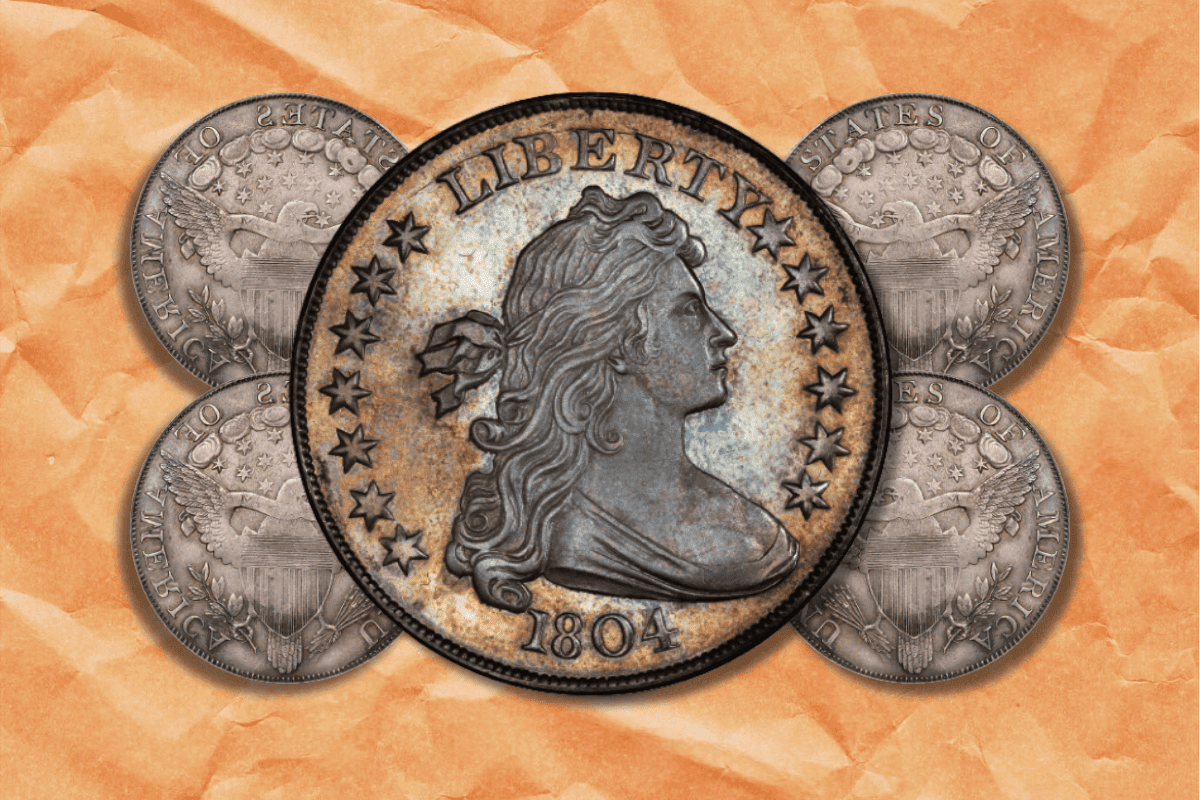
For collectors and investors, understanding authentication becomes paramount given the values involved. Genuine 1804 dollars exhibit specific characteristics that experienced numismatists recognize. The strike quality shows exceptional detail in Liberty‘s hair strands and the eagle‘s feathers. Star points maintain sharpness rather than the mushy appearance common to counterfeits.
Surface texture provides crucial authentication evidence. Original proof surfaces display appropriate silver patina and lack artificial enhancement. Modern technology assists authentication through high-resolution imaging and metal composition analysis. The precise silver-copper alloy ratio matches period-correct specifications.
Edge details require particular scrutiny. Class I pieces show distinctive lettering executed with period-correct punches. The Class II specimen‘s plain edge remains unique, while Class III examples exhibit lettering with subtle but important differences from Class I coins.
Investment Considerations for Modern Collectors
Today‘s market for 1804 Silver Dollars operates on a different level from traditional coin collecting. These pieces represent blue-chip numismatic investments that typically trade through major auction houses or private treaties. Provenance plays a crucial role in valuation, with documented ownership chains adding significant premium value.
Condition assessment demands professional expertise. While all genuine specimens carry seven-figure values, grade differences can mean millions in realized prices. The Sultan of Muscat specimen‘s PR-68 grade represents virtual perfection, explaining its record-setting price.
Market timing presents unique challenges. With only 15 known specimens and many held in permanent collections, trading opportunities arise infrequently. Serious buyers must maintain constant market awareness and substantial liquid capital for purchase opportunities.
Regional Market Dynamics and International Appeal
The market for 1804 dollars extends globally, though American collectors historically dominated ownership. European collectors show increasing interest, particularly in specimens with royal provenance like the Sultan of Muscat piece. Asian markets demonstrate growing appreciation, especially given the coins‘ original diplomatic connection to Eastern rulers.
Auction results reflect this international demand. While major American auction houses handle most sales, international bidding influences final prices. Private treaty sales, often involving foreign buyers, suggest broader geographical distribution of these treasures than public records indicate.
Preservation and Conservation Methods
Maintaining these valuable coins requires museum-grade conservation practices. Environmental control stands paramount – constant temperature between 68-72°F and humidity at 45-50% prevent metal deterioration. UV protection prevents subtle surface changes that could impact long-term preservation.
Professional conservation focuses on stabilization rather than improvement. Unlike lesser coins, 1804 dollars should never undergo cleaning or restoration. Original surfaces, even with natural toning, command premium values over cleaned examples.
Notable Collections and Their Stories
Each surviving 1804 dollar tells a unique story. The King of Siam presentation set, containing a Class I specimen, remained with Thai royalty for generations before entering the collector market. This complete diplomatic gift set provides direct evidence of the coins‘ original purpose.
The Stickney specimen, first owned by Massachusetts collector Matthew Adams Stickney, established early market values when he purchased it directly from the Mint in 1843. Its subsequent ownership by Louis E. Eliasberg Sr. added to an already impressive pedigree.
Current Market Analysis
Today‘s market for 1804 Silver Dollars reflects their status as numismatic royalty. All specimens remain carefully tracked, with condition changes and ownership transfers documented by researchers. Recent years show steady value appreciation, with particular strength in finest-known examples.
Private collectors hold most specimens, though several important pieces reside in museum collections. The Smithsonian‘s National Numismatic Collection houses two examples, including the unique Class II piece. The American Numismatic Association museum displays another, allowing public viewing of these remarkable coins.
Authentication Resources and Expert Networks
Professional authentication services play vital roles in market confidence. PCGS and NGC, the leading third-party grading services, maintain detailed databases of verified specimens. Their certification provides essential documentation for sales and insurance.
Specialized reference works document die characteristics, provenance chains, and authentication points. The standard reference "The Fantastic 1804 Dollar" by Newman and Bressett remains essential reading for serious collectors and researchers.
Future Outlook and Market Projections
The market for 1804 Silver Dollars appears positioned for continued strength. Limited supply meets increasing global wealth and collector sophistication. Historical price trends suggest ongoing appreciation, particularly for finest-known specimens with superior provenance.
Digital trading platforms and international auction reach expand the potential buyer pool. However, the fundamental rarity of 1804 dollars ensures their status as ultimate numismatic trophies. For the serious collector or investor, these coins represent the pinnacle of American numismatics – true national treasures that combine historical significance, exceptional rarity, and remarkable value.