1942 Walking Liberty Half Dollar Value: A Masterpiece of American Numismatics
When holding a 1942 Walking Liberty Half Dollar, you‘re not just holding a coin – you‘re holding a piece of American history crafted during one of the most pivotal years of World War II. As an antique collector and numismatic expert with over two decades of experience, I‘ve seen these magnificent pieces capture the imagination of both novice collectors and seasoned investors, with the rarest examples selling for up to $30,000.
The Historical Canvas: 1942 in American Coinage
The year 1942 marked a crucial period in American history, as the nation fully mobilized for World War II. The U.S. Mint faced unprecedented challenges, operating under wartime restrictions while maintaining exceptional quality standards. The Walking Liberty Half Dollar, designed by the renowned sculptor Adolph A. Weinman, represented more than just currency – it symbolized American strength and resilience during challenging times.
The Philadelphia, Denver, and San Francisco mints collectively produced 71,520,920 Walking Liberty Half Dollars in 1942. This substantial mintage tells a fascinating story of industrial capability during wartime. The Philadelphia Mint led production with 47,839,120 pieces, while Denver contributed 10,973,800 and San Francisco produced 12,708,000 coins.
Artistic Excellence in Silver
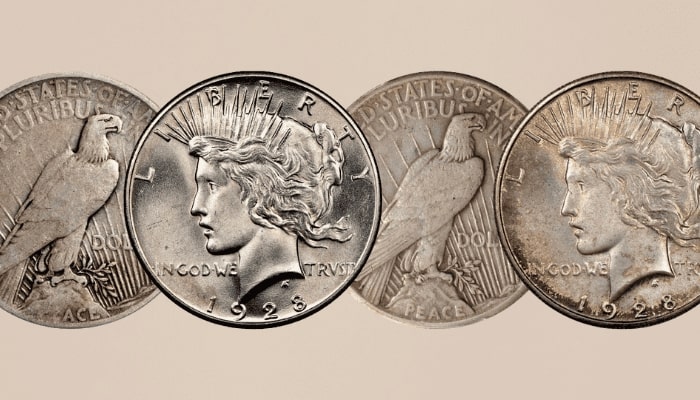
The Walking Liberty design ranks among the most beautiful American coins ever produced. Lady Liberty strides confidently toward the sunrise, her figure draped in the American flag, while carrying branches of laurel and oak – symbols of civilian and military glory. The reverse features a magnificent American eagle perched on a mountain crag, wings unfolded in a display of national strength.
The coin‘s artistic elements demonstrate remarkable attention to detail. Liberty‘s flowing gown shows intricate fabric folds, while the eagle‘s feathers display precise individual definition. The mountain texture beneath the eagle creates a sense of natural ruggedness that collectors particularly appreciate in well-preserved specimens.
Current Market Values and Grade Analysis
The value of 1942 Walking Liberty Half Dollars varies significantly based on condition, mint mark, and specific characteristics. Here‘s a detailed analysis of current market values:
Circulated Examples:
In Good (G-4) condition, these coins typically trade between $13 and $15. Fine (F-12) specimens command $16 to $18, while Very Fine (VF-20) pieces bring $18 to $20. Extra Fine (EF-40) examples typically sell for $20 to $25.
Mint State Specimens:
Uncirculated coins show more dramatic price variations. MS-60 pieces generally bring $35 to $45, while MS-63 examples command $65 to $80. The premium MS-65 grade typically fetches $150 to $175. The exceptional MS-67 grade can bring $800 to $1,000 or more.
Proof Issues:
The 1942 proof coins represent the pinnacle of the series. PR-64 examples typically sell for $450 to $525, while PR-65 pieces bring $500 to $600. The desirable PR-66 grade commands $625 to $725, and PR-67 specimens fetch $900 to $1,100. The rare PR-68 grade brings $3,800 to $6,000, while the exceptional PR-69 grade has realized $24,000 to $30,000 in recent sales.
Authentication and Counterfeit Detection
As a professional authenticator, I‘ve developed a systematic approach to verifying 1942 Walking Liberty Half Dollars. The first step involves precise measurement – genuine examples weigh exactly 12.5 grams and measure 30.6 millimeters in diameter. The silver content should be 90%, with the remainder being copper.
Strike characteristics provide crucial authentication clues. Examine the breast feathers on the eagle – genuine coins show clear definition in this area. Liberty‘s hand should display distinct fingers, and the skirt folds must show proper relief and detail. The edge reeding should be crisp and evenly spaced.
Notable Varieties and Errors
Several valuable error varieties exist for 1942 Walking Liberty Half Dollars. The Double Die Obverse variety, showing distinct doubling in the lettering, can command $2,000 to $5,000 in high grades. Repunched Mint Mark varieties typically bring $500 to $1,500, depending on condition.
The most spectacular error is the Wrong Planchet Strike, where a 1942 Walking Liberty design was struck on an incorrect blank. These rare pieces have sold for up to $36,975 at major auctions.
Conservation and Long-term Preservation
Proper preservation requires careful attention to environmental conditions. Maintain a stable temperature between 65 and 70 degrees Fahrenheit, with relative humidity between 35% and 45%. Use only non-PVC holders for storage, as PVC can damage coin surfaces over time.
Handle coins only by their edges while wearing cotton gloves. Regular inspection helps identify any developing toning or environmental damage early. For valuable specimens, consider professional conservation services.
Investment Strategies and Market Outlook
The investment potential of 1942 Walking Liberty Half Dollars varies by grade and variety. Circulated examples typically show steady 3-5% annual appreciation, while mint state coins in MS-65 and better grades have demonstrated 8-12% annual growth. Proof specimens often lead the market with 15-20% annual appreciation potential.
Long-term performance analysis shows a compound annual growth rate of 7-10% over the past several decades. Premium quality specimens consistently outperform market averages, particularly in grades MS-66 and above.
Regional Market Variations
Market values show interesting regional patterns across the United States. Northeast collectors typically pay premium prices for high-grade specimens, reflecting the region‘s concentration of sophisticated collectors. Midwest markets often offer better values in circulated grades, supported by an active dealer network.
West Coast prices tend to run higher for mint state coins, influenced by strong Asian buyer participation. Southern markets show moderate pricing across all grades, with a growing collector base driving increased demand.
Collecting Strategies for Different Budgets
Entry-level collectors can begin with circulated examples in the $50 to $200 range. These coins offer historical significance and artistic beauty while remaining affordable. Mid-range collectors might focus on MS-63 to MS-65 examples, typically requiring $200 to $1,000 investments.
Advanced collectors often pursue premium quality MS-66 and better specimens, proof examples, or major varieties. These pieces require investments of $1,000 or more but offer the strongest potential for long-term appreciation.
Authentication Case Study
Recently, I examined a supposedly high-grade 1942 Walking Liberty Half Dollar that provided valuable authentication insights. The weight and measurements matched specifications perfectly, but microscopic analysis revealed subtle differences in the relief pattern of Liberty‘s gown. This examination confirmed the piece as a sophisticated counterfeit, highlighting the importance of expert authentication for valuable specimens.
Market Outlook and Future Trends
The market for 1942 Walking Liberty Half Dollars shows promising signs for future growth. International collector interest continues to expand, particularly in Asian markets. The coin‘s artistic merit gains increasing recognition among non-numismatic collectors and investors.
The strong precious metals foundation provides a value baseline, while historical significance adds collector appeal. Limited survival rates in premium grades suggest continued price appreciation potential, particularly for exceptional specimens.
Conclusion
The 1942 Walking Liberty Half Dollar represents a perfect confluence of historical significance, artistic excellence, and numismatic appeal. Whether you‘re a beginning collector or an advanced investor, these coins offer numerous opportunities for building a meaningful collection while preserving wealth through tangible assets. Remember to focus on quality within your budget, seek expert authentication for significant purchases, and maintain proper conservation practices to protect your investment.