1971 Silver Dollar Value Guide: How Much Is A 1971 Silver Dollar Worth Today?
When you hold a 1971 silver dollar in your hands, you‘re not just holding currency – you‘re holding a piece of American numismatic history. As someone who has spent decades studying and trading these remarkable coins, I can tell you that their value extends far beyond their face value or even their silver content.
Understanding Your 1971 Silver Dollar
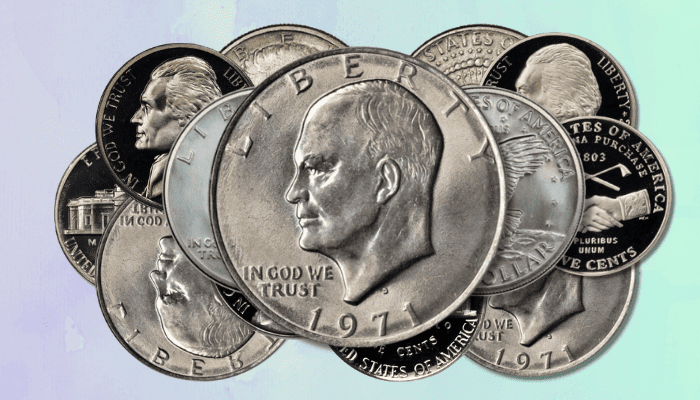
The 1971 Eisenhower dollar marked a significant return to large-size dollar coins in American coinage. After a 36-year gap following the Peace dollar‘s discontinuation in 1935, this new design paid tribute to President Dwight D. Eisenhower while commemorating humanity‘s first steps on the moon.
The San Francisco Mint produced two distinct silver versions in 1971: the uncirculated silver-clad dollar and the proof silver-clad dollar. These coins contain 40% silver and 60% copper, making them notably different from their copper-nickel clad counterparts produced at the Philadelphia and Denver mints.
Current Market Values
In today‘s market, a 1971 silver dollar‘s worth varies significantly based on its condition and type. An uncirculated silver-clad specimen in MS65 (Gem Mint State) condition typically commands $26-30. However, exceptional examples have sold for considerably more at major auctions.
For proof versions, prices typically range from $15-20 for well-preserved specimens. These values reflect current market conditions, but it‘s worth noting that prices can fluctuate based on various factors, including silver spot prices and collector demand.
Identifying Authentic 1971 Silver Dollars
One of the most crucial skills in collecting these coins is proper identification. The silver-clad versions will weigh exactly 24.59 grams, while the copper-nickel clad coins weigh 22.68 grams. This weight difference provides a reliable authentication method.
The mint mark location serves as another key identifier. On genuine 1971 silver dollars, you‘ll find the S mint mark (for San Francisco) positioned above the date on the obverse. The strike quality on silver versions typically appears sharper, with better detail definition, particularly in Eisenhower‘s hair and the eagle‘s feathers on the reverse.
Grading and Condition Assessment
The condition of your 1971 silver dollar significantly impacts its value. Professional grading services use a 70-point scale, with MS70 representing perfect condition. Most uncirculated specimens fall between MS60 and MS65.
Key grading points include:
- Strike quality and detail preservation
- Surface marks and contact points
- Luster quality and consistency
- Overall eye appeal
A coin graded MS65 should display strong luster with minimal contact marks. Even slight differences in grade can result in substantial price variations.
Historical Significance and Design Elements
The 1971 Eisenhower dollar represents more than just currency – it commemorates two significant American achievements. The obverse features President Eisenhower, Supreme Allied Commander during World War II and 34th President of the United States. The reverse depicts an eagle landing on the moon, inspired by the Apollo 11 mission patch.
Frank Gasparro, the U.S. Mint‘s Chief Engraver, designed both sides of the coin. His initials, "FG," appear on the truncation of Eisenhower‘s neck and below the eagle on the reverse.
Varieties and Special Issues
Several notable varieties exist among 1971 silver dollars. The most significant include:
The Proof Silver-Clad Version: These coins exhibit mirror-like fields and frosted devices, created through special minting processes. They were sold directly to collectors and never intended for circulation.
The Uncirculated Silver-Clad Version: While similar in composition to proofs, these coins received standard striking procedures but were still never meant for circulation.
Investment Potential and Market Trends
The investment outlook for 1971 silver dollars remains positive. Several factors contribute to their long-term value potential:
Historical Significance: As the first year of issue for the Eisenhower series, 1971 coins hold special appeal for collectors.
Silver Content: The 40% silver composition provides intrinsic value beyond numismatic worth.
Limited Availability: High-grade specimens become increasingly scarce as time passes.
Conservation and Preservation
Proper storage and handling prove crucial for maintaining your coin‘s value. Store your 1971 silver dollar in an appropriate holder that‘s free from PVC plastics. Handle the coin only by its edges, preferably wearing cotton gloves to prevent skin oils from contacting the surface.
Climate control plays a vital role – maintain stable temperature and humidity levels to prevent environmental damage. Never attempt to clean your coin, as this can significantly reduce its value.
Regional Market Variations
Market values for 1971 silver dollars show interesting regional variations across the United States. Northeast collectors typically pay premium prices for high-grade specimens, while Midwest markets often offer better values. Western states, particularly California, show strong demand due to the San Francisco Mint connection.
Building a Collection
For those interested in collecting 1971 silver dollars, consider these strategies:
Start with authenticated pieces from reputable dealers or certified by major grading services. Focus initially on obtaining both proof and uncirculated silver versions in the best condition you can afford. Consider collecting multiple examples showing different stages of strike quality or die wear.
Authentication Tips
When authenticating a 1971 silver dollar, pay attention to:
Weight and Measurements: Use a precise scale and calipers to verify specifications.
Surface Texture: Genuine coins display specific patterns in their metal flow.
Strike Characteristics: Study the relief depth and detail quality.
Edge Reading: Examine the reeding for proper spacing and consistency.
Market Outlook
The future looks promising for 1971 silver dollars. Growing interest in 20th-century American coinage, combined with increasing appreciation for the series‘ historical significance, suggests continued value appreciation. The limited supply of high-grade specimens particularly positions them for potential growth.
Conclusion
The 1971 silver dollar represents a fascinating intersection of American history, numismatic artistry, and precious metal value. Whether you‘re a seasoned collector or just beginning your numismatic journey, understanding these coins‘ characteristics, values, and market dynamics proves essential for making informed decisions.
Remember that condition remains paramount – an uncleaned, well-preserved specimen will always command premium prices. Take time to study authentication points, consider professional grading for valuable pieces, and store your coins properly to preserve their value for future generations.
As we move forward, these coins continue to tell their story of American innovation, commemoration, and craftsmanship. Their enduring appeal makes them not just valuable collectibles, but tangible connections to our nation‘s history.