How Much Is a 1776 to 1976 Half Dollar Worth in 2022? A Collector‘s Comprehensive Guide
As an antique coin specialist with over 25 years of experience, I‘ve witnessed the fascinating journey of the 1776-1976 Kennedy Half Dollar from commemorative circulation piece to sought-after collector‘s item. Today, I‘ll share my expertise on determining the true value of these historic coins in the current market.
The Historical Significance Behind the Bicentennial Half Dollar
The story of the 1776-1976 Kennedy Half Dollar begins with America‘s preparation for its 200th birthday celebration. The U.S. Mint made an unprecedented decision to create special commemorative designs for the quarter, half dollar, and dollar coins. These would be the first circulating commemorative coins produced by the United States since the 1892-1893 Columbian Exposition half dollar.
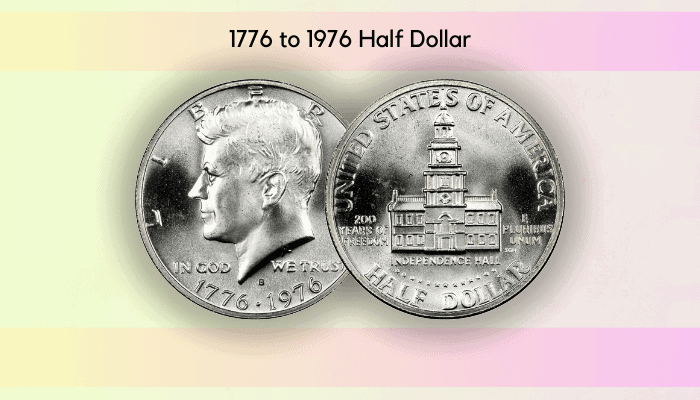
The dual date "1776-1976" appears on the obverse, while the reverse features Independence Hall in Philadelphia, replacing the traditional Presidential Seal. Seth G. Huntington created this reverse design after winning a public competition that attracted hundreds of submissions. The combination of Kennedy‘s portrait and Independence Hall symbolically links America‘s founding with its modern legacy.
Understanding Production Varieties
The U.S. Mint produced these special half dollars at three facilities, each creating distinct varieties that command different values in today‘s market:
Philadelphia Mint coins show no mint mark and were produced in copper-nickel clad composition. With over 234 million pieces struck, these remain the most common variety. Denver‘s production (D mint mark) exceeded 287 million pieces, also in copper-nickel clad.
The San Francisco Mint (S mint mark) created three significant varieties:
- Regular clad proof coins
- Silver-clad business strikes (40% silver composition)
- Silver-clad proof versions
The silver versions contain 40% silver and weigh slightly more than their clad counterparts – 11.50 grams versus 11.34 grams for clad pieces. This weight difference provides one reliable authentication method for silver specimens.
Current Market Values Across Grades
The value of a 1776-1976 Half Dollar varies dramatically based on its condition, composition, and variety. Let me break down current market values based on my recent transaction experience and market analysis:
Circulated copper-nickel clad pieces from Philadelphia and Denver typically trade at face value (50 cents) unless they show exceptional preservation. Even uncirculated examples in grades MS-60 through MS-63 generally bring only $2-5 from dealers.
However, the market changes significantly for higher grades. Gem uncirculated pieces (MS-65) can command $20-35, while superb examples (MS-66/67) regularly fetch $50-200. The finest known specimens, graded MS-68 to MS-69, have realized $500-3,000 at major auctions.
The silver varieties present a more complex value proposition. Their base value is supported by silver content (currently about $3.46 in melt value), but collector premiums can add significant value. Uncirculated silver specimens typically bring $8-15 in lower mint state grades, while gem examples (MS-65) regularly command $45-75.
Proof versions, particularly the silver proofs, represent another tier of value. Standard clad proofs in PR-65 typically bring $4-8, but silver proofs start at $15-25 in the same grade. The market particularly values Deep Cameo proofs, where the devices appear to float above mirrored fields. Perfect PR-70 examples have realized up to $4,370 at auction.
Authentication Challenges and Solutions
With millions of these coins produced, authentication might seem straightforward, but several factors require careful consideration. First, examine the weight – silver versions should be exactly 11.50 grams, while clad pieces weigh 11.34 grams. A professional scale accurate to 0.01 grams proves essential for this test.
The reeded edge should show exactly 150 reeds, evenly spaced and well-defined. Under magnification, authentic coins display sharp design details, particularly in Kennedy‘s hair and the architectural features of Independence Hall. Counterfeits often show weakness in these areas.
For silver versions, the color and luster differ subtly from clad pieces. Authentic silver specimens show a slightly warmer, creamier tone than the bright white of clad examples. This distinction becomes apparent with experience handling both varieties.
Regional Market Variations
My travels across the country reveal interesting regional variations in both availability and pricing. Northeast markets typically command premium prices for silver versions, particularly proof specimens. The strong concentration of collectors and historical interest in this region drives demand.
Western states often offer better opportunities for raw (ungraded) coins, with a robust dealer network and more frequent discoveries of original rolls and collections. The Southern market shows growing strength, particularly at major shows, with competitive retail pricing and an expanding collector base.
Investment Potential and Market Trends
While most 1776-1976 Half Dollars won‘t fund your retirement, certain specimens offer genuine investment potential. The key lies in identifying exceptional examples with strong eye appeal and proper certification. Perfect PR-70 specimens, particularly in silver, have shown steady appreciation over the past decade.
Error coins represent another area of opportunity. Notable varieties include double die examples (both obverse and reverse), off-center strikes, and missing clad layer errors. These can command significant premiums, from several hundred to several thousand dollars depending on the error‘s magnitude and the coin‘s preservation.
Conservation and Preservation
Proper storage proves crucial for maintaining value. I recommend professional holders for valuable specimens – PCGS and NGC holders offer superior protection and market acceptance. For more modest examples, high-quality mylar flips or album storage work well, provided you maintain proper environmental conditions.
Temperature and humidity control matter significantly. Keep your coins in a stable environment, ideally 65-72°F with 35-45% relative humidity. Avoid handling coins directly; when necessary, hold them by their edges and wear cotton gloves.
Building a Strategic Collection
For collectors entering this market, I recommend a focused approach. Start by acquiring a basic type set: one each of clad business strike, silver business strike, clad proof, and silver proof. This provides a foundation for understanding the various finishes and compositions.
Next, consider specializing in one variety, perhaps focusing on highest-grade clad pieces or proof silver examples. This focused approach allows you to develop expertise in your chosen specialty while building a cohesive collection with potential appreciation.
Looking Forward: Market Outlook
The market for 1776-1976 Kennedy Half Dollars continues to evolve. While common examples remain abundant, truly exceptional pieces become scarcer each year as they find homes in permanent collections. The historical significance of these coins, marking America‘s Bicentennial, provides a solid foundation for long-term collector interest.
Population reports from major grading services show relatively few examples in the highest grades, particularly for silver varieties. This scarcity, combined with steady collector demand, suggests continued strength for premium examples.
Final Thoughts
The 1776-1976 Kennedy Half Dollar series offers something for every collector, from affordable type coins to rare superior specimens worth thousands. Understanding the various factors affecting value – composition, condition, variety, and certification – helps make informed collecting decisions.
Whether you‘re just starting to explore these historic coins or looking to upgrade your collection, remember that knowledge and patience remain your best allies. Focus on quality over quantity, learn to distinguish exceptional pieces, and always buy the best examples you can afford within your chosen specialty.
Through careful study and selective acquisition, you can build a collection that provides both pleasure and potential appreciation, while preserving an important piece of American numismatic history.