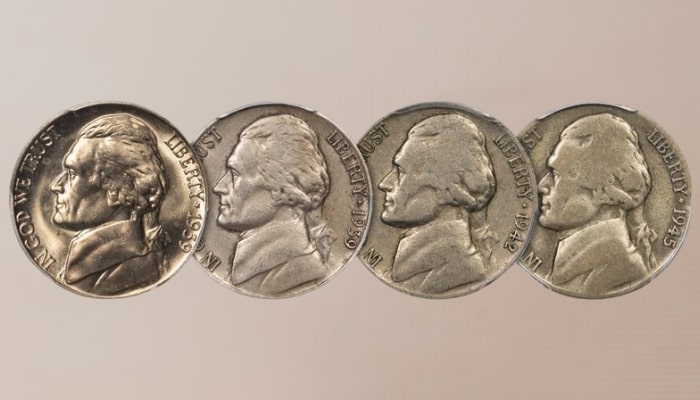
A Review of the Most Valuable and Rarest Jefferson Nickels
As I hold a pristine 1954-S Jefferson nickel under my loupe, the sharp details of Monticello‘s steps remind me why these coins have fascinated collectors for generations. After 35 years of examining, trading, and authenticating rare coins, I can tell you that Jefferson nickels offer some of the most compelling opportunities in American numismatics.
The Historical Significance
The Jefferson nickel series began in 1938, replacing the beloved Buffalo design. The U.S. Mint held a competition for the new design, which Felix Schlag won with his portrayal of Thomas Jefferson and his home, Monticello. What many newer collectors don‘t realize is that the original design underwent subtle modifications before production began.
The Most Valuable Jefferson Nickels
1. 1954-S MS67 Full Steps ($35,250)
The king of Jefferson nickels, this extraordinary specimen represents the finest known example of the date. When it crossed the auction block in 2020, the bidding was intense. The coin‘s surfaces display pristine preservation, with immaculate mint luster and zero distracting marks. Most importantly, it shows complete step detail on Monticello – a feature that eludes most specimens from this era.
2. 1969-D MS65 Full Steps ($33,600)
This remarkable coin defies the conventional wisdom about late 1960s mint quality. During this period, the Philadelphia and Denver mints typically produced coins with mushy strikes, making full step examples extraordinarily rare. This specimen‘s sharp strike and outstanding preservation made it a prime target when it sold in 2021.
3. 1942-D D Over Horizontal D ($32,200)
Here‘s a fascinating error that provides insight into mint operations. The mintmark was initially punched sideways, then corrected with a properly oriented "D." With fewer than 100 examples known, this MS64 specimen represents one of the finest surviving pieces. The dramatic nature of the error makes it especially appealing to specialists.
4. 1964 Special Mint Set ($31,200)
While not technically a circulation strike, this specimen from the experimental Special Mint Set program shows extraordinary quality. The surfaces display deep, mirror-like fields and sharp design elements. Only about 20-50 examples were produced with this exceptional finish.
5. 1940 Reverse of 1938 ($28,750)
This transitional variety occurred when the mint accidentally used an older reverse die. The differences are subtle but significant to specialists. The steps on Monticello show distinct architectural variations, and the ground beneath is rendered differently.
Understanding Grade and Value
The value of Jefferson nickels depends heavily on three key factors:
-
Strike Quality
The steps leading to Monticello‘s entrance serve as a crucial indicator. Full Steps (FS) designation requires all six steps to be clearly defined. This feature commands significant premiums, particularly on dates known for weak strikes. -
Surface Preservation
Original mint luster must remain intact, with minimal contact marks or friction. The highest grades (MS65 and above) show pristine surfaces that appear virtually as-struck. Natural toning, if present, should be attractive and even. -
Technical Grade
Professional grading services like PCGS and NGC use a 70-point scale. For investment-grade Jefferson nickels, MS65 is typically the minimum acceptable grade, with MS67 being the peak of quality for most dates.
Regional Market Variations
My experience traveling to major coin shows across the country has revealed interesting regional patterns in Jefferson nickel collecting. West Coast collectors tend to focus more on mint state examples, while East Coast collectors often appreciate original, circulated pieces with attractive toning.
The San Francisco mint products, particularly from the 1950s, command higher premiums in Western markets. Meanwhile, Philadelphia mint errors find their strongest market in the Northeast, where there‘s a long tradition of variety collecting.
Authentication Techniques
When examining valuable Jefferson nickels, I follow a systematic authentication process:
First, study the mint luster. Genuine coins display a distinctive cartwheel effect when rotated under light. This pattern results from the flow lines created during striking and cannot be accurately replicated.
Next, examine the design elements under magnification. The hair details on Jefferson and the architectural features of Monticello should show proper relief and texture. Counterfeits often fail to capture these subtle characteristics correctly.
Finally, verify the strike characteristics match known patterns for the date and mint. Each facility had distinctive striking characteristics that varied by year.
Investment Strategy
For collectors considering Jefferson nickels as investments, I recommend focusing on three categories:
Condition Rarities: Common dates in exceptional grades (MS67 and above) have shown strong appreciation. Population reports confirm their genuine rarity.
Key Dates in High Grade: The 1950-D, 1939-D, and 1938-D in MS65 or better condition combine historical significance with true scarcity.
Major Varieties: The 1942-D Over Horizontal D and 1939 Doubled Monticello represent important pieces of numismatic history.
Conservation and Preservation
Proper storage is crucial for maintaining value. I recommend:
- Inert holders free from PVC or other harmful plastics
- Climate-controlled environment (constant temperature and humidity)
- Minimal handling using cotton gloves when necessary
- Regular documentation of condition changes
- Professional conservation only when absolutely necessary
Building a Significant Collection
After decades of helping collectors build their holdings, I‘ve developed a strategic approach:
Start with type examples in MS63-MS65, learning the characteristics of proper strike and surface quality. Study auction records and population reports to understand true rarity versus price relationships.
Graduate to key dates once you‘ve developed grading expertise. Focus on coins that combine eye appeal with technical quality – these tend to appreciate most consistently.
Consider specialized areas like Full Steps examples or important varieties. These niches often offer value opportunities that general collectors overlook.
Market Outlook
The Jefferson nickel market shows promising signs for careful collectors. Population data suggests increasing scarcity in top grades as more coins enter permanent collections. Meanwhile, new collectors continue to enter the market, particularly through registry set competition.
Prices for finest-known examples have shown steady appreciation over the past decade, while mid-range material remains affordable. This creates opportunities for collectors to build significant holdings with reasonable investment.
Authentication Case Study
Recently, I examined what was presented as a 1954-S MS67 Full Steps – a potential six-figure coin. Close inspection revealed subtle differences in the step definition compared to known specimens. Further analysis showed evidence of mechanical enhancement of the steps, making the coin commercially altered rather than naturally this sharp.
This experience underscores the importance of buying important pieces from reputable dealers and requiring third-party certification. The financial stakes are simply too high to risk purchasing raw coins at these levels.
Conclusion
Jefferson nickels offer rich opportunities for collectors at every level. Whether pursuing condition rarities, key dates, or major varieties, success requires patience, knowledge, and attention to detail. Focus on quality over quantity, buy the best you can afford, and always verify authenticity through trusted sources.
The series continues to reward careful study and disciplined collecting. As more collectors recognize the rarity of high-grade examples and important varieties, I expect continued appreciation for the finest specimens.
Remember that condition is paramount – a common date in truly superb condition will usually outperform a key date in average grade. Study the series thoroughly, handle coins carefully, and build relationships with knowledgeable dealers. Your patience and diligence will be rewarded.