Discovering Silver Treasures: Which Year Quarters Are Made of Silver?
The weight feels different in your palm – heavier, more substantial. The ring when dropped on a hard surface produces a distinctive musical note that no modern quarter can replicate. As someone who has spent over 30 years examining, collecting, and trading silver quarters, I can tell you these coins carry stories far beyond their face value.
The Silver Legacy: A Journey Through American Coinage
The story of silver quarters begins in 1796, when the first examples emerged from the Philadelphia Mint. These early pieces, featuring the Draped Bust design, were struck in 89.24% silver and 10.76% copper, an alloy that would remain remarkably consistent for the next 168 years. The decision to use silver wasn‘t arbitrary – it reflected America‘s commitment to sound money and the metal‘s intrinsic value.
When examining a 1796 quarter today, you‘re holding a direct connection to the founding of our nation. These first quarters were struck by hand, with each planchet carefully prepared and each strike requiring physical effort from the mint workers. The resulting coins show remarkable character, with subtle variations in strike quality that modern machine-made coins simply cannot replicate.
The Evolution of Silver Quarter Designs
The Draped Bust design (1796-1807) gave way to the Capped Bust quarter (1815-1838), marking a significant advancement in minting technology. The steam-powered press had arrived, allowing for more consistent strikes and higher production numbers. Yet these coins retain their own charm – the slightly crude yet artistic rendering of Liberty speaks to an America still finding its visual identity.
The Liberty Seated design (1838-1891) represents the longest-running silver quarter series. During this period, America experienced tremendous growth and change, from the Civil War to the Industrial Revolution. These quarters circulated through general stores, saloons, and newly established banks, bearing witness to the nation‘s transformation.
Charles Barber‘s design (1892-1916) brought classical influences to American coinage. The Barber quarter, despite initial criticism, has aged gracefully. The deep relief and intricate details make these coins particularly satisfying to examine under magnification. When properly preserved, the luster on a Barber quarter can rival any coin produced today.
Technical Specifications and Composition Analysis
The consistent 90% silver composition created coins with unique physical properties. A silver quarter weighs precisely 6.25 grams, with 5.625 grams being pure silver. This standardization was crucial for commerce and helped establish trust in American currency.
The remaining 10% copper wasn‘t just filler – it provided crucial durability. Pure silver would have worn too quickly for circulation. The copper alloy created coins that could withstand decades of use while maintaining their intrinsic value. This is why well-circulated silver quarters still command significant premiums over their base metal content.
Market Dynamics and Investment Considerations
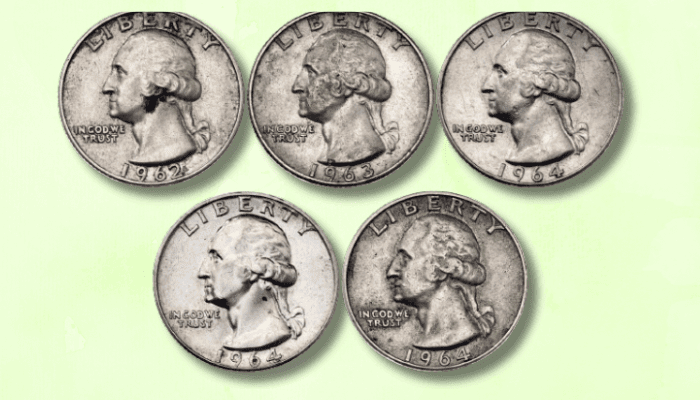
Today‘s market for silver quarters reflects both numismatic interest and precious metal value. Common date Washington silver quarters (1932-1964) typically trade for 15-20 times their face value, depending on condition and silver prices. However, the real action lies in key dates and high-grade examples.
Consider the 1901-S Barber quarter. With a mintage of just 72,664 pieces and most examples heavily circulated, a mint state specimen can command $100,000 or more. Even in well-worn condition, this date brings strong five-figure prices. Such examples demonstrate how rarity and historical significance can multiply value far beyond silver content.
Regional Market Variations and Collecting Opportunities
The market for silver quarters shows fascinating geographic patterns. New England collectors tend to focus on early dates and high grades, driving premium prices for choice examples. The Midwest often yields more circulated pieces, reflecting the agricultural economy‘s heavy use of coinage well into the 20th century.
Western states, particularly California, show strong interest in San Francisco mint products. The "S" mint mark carries special significance here, often commanding higher prices than identical dates from Philadelphia or Denver. Understanding these regional preferences can help collectors make smarter purchasing decisions.
Authentication Techniques and Counterfeit Detection
Modern technology has made counterfeit detection both easier and more necessary. Basic tools like a precision scale and calipers remain essential, but advanced methods now include specific gravity testing and XRF analysis. The investment in proper testing equipment pays dividends by preventing costly mistakes.
Key authentication points include:
The edge reeding must show proper spacing and depth. Counterfeits often display irregular patterns or incorrect count. The surface should have appropriate mint luster or natural wear patterns – artificial circulation marks are a red flag. Weight must be within acceptable tolerance of 6.25 grams.
Conservation Science and Proper Storage
Proper conservation begins with understanding silver‘s chemical properties. The metal reacts with sulfur and other atmospheric compounds, leading to toning. While some toning can enhance value, active corrosion must be prevented.
Temperature stability is crucial – fluctuations can promote condensation and chemical reactions. Maintain storage environments between 65-70°F with relative humidity below 50%. Use high-quality holders free from PVC or other harmful plastics. Consider investing in a proper safe with fire protection.
Building a Meaningful Collection
Starting a silver quarter collection requires strategy. Focus initially on learning grading standards and market values. Handle as many genuine examples as possible. Build relationships with reputable dealers who can provide guidance and access to choice pieces.
Consider specializing in a particular series or date range. The Standing Liberty quarters (1916-1930) offer numerous collecting challenges, from the rare 1916 to the many strike variations. The Washington series provides opportunities to study mint marks and condition rarity.
Investment Strategy and Market Analysis
Silver quarters offer multiple paths to potential appreciation. The base silver content provides a value floor, while numismatic premiums can multiply returns. Key date coins have shown steady appreciation, particularly in higher grades.
Current market trends suggest growing interest from younger collectors, often driven by social media and online communities. This new demographic tends to favor high-grade certified coins, potentially changing traditional market dynamics.
Looking Forward: The Future of Silver Quarter Collecting
The market for silver quarters continues to evolve. Digital trading platforms have increased market efficiency but also highlighted the importance of proper authentication. The growing appreciation for tangible assets suggests sustained collector interest.
For those starting their journey into silver quarter collecting, the opportunities remain abundant. Whether pursuing complete date sets, focusing on specific varieties, or simply accumulating silver content, these historic coins offer both challenge and reward.
Remember that each silver quarter represents a piece of American history – a tangible connection to past generations who used these coins in daily commerce. Their preservation isn‘t just about potential profit; it‘s about maintaining our numismatic heritage for future collectors to study and enjoy.