A Comprehensive Journey into Image Caption Generation: Unveiling the Magic of AI-Powered Visual Storytelling
The Fascinating World of Machine Vision
Imagine a technology that can look at an image and describe it precisely, just like a human would. This isn‘t science fiction—it‘s the remarkable realm of image caption generation, a groundbreaking field where artificial intelligence transforms visual data into meaningful narratives.
The Genesis of Visual Understanding
The quest to teach machines how to "see" and comprehend images has been a long-standing dream of computer scientists. Unlike humans, who effortlessly interpret visual scenes, machines traditionally struggled to translate pixels into coherent descriptions. The journey of image caption generation represents a profound milestone in artificial intelligence, bridging the gap between visual perception and linguistic expression.
Decoding the Technical Symphony
Neural Networks: The Brain Behind the Magic
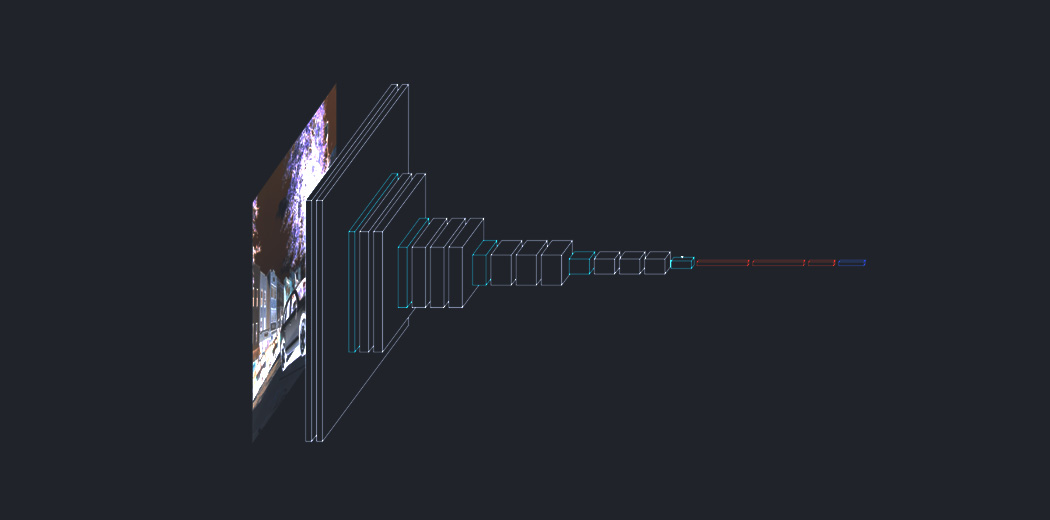
At the heart of image caption generation lie sophisticated neural network architectures. These aren‘t just algorithms; they‘re intricate systems mimicking the human brain‘s complex information processing mechanisms. Convolutional Neural Networks (CNNs) act as visual feature extractors, while Recurrent Neural Networks (RNNs), particularly Long Short-Term Memory (LSTM) networks, transform these features into eloquent textual descriptions.
The Feature Extraction Ballet
When an image enters the system, CNNs perform an intricate dance of feature extraction. Each layer progressively abstracts visual information—from basic edges and shapes to complex semantic representations. Imagine a painter gradually adding layers of detail to a canvas, transforming a rough sketch into a vivid masterpiece.
Mathematical Foundations
The mathematical elegance underlying image caption generation is breathtaking. Complex tensor operations and gradient descent algorithms collaborate to minimize prediction errors. Mathematically, we‘re solving a multi-modal optimization problem that maps visual features to linguistic representations.
The Learning Journey: From Data to Wisdom
Training: More Than Just Algorithms
Training an image caption generator isn‘t merely about feeding data into a model. It‘s an intricate process of teaching machines to understand context, semantics, and nuanced relationships between visual elements and language.
Dataset Curation: The Critical First Step
Selecting the right dataset is paramount. Renowned datasets like COCO (Common Objects in Context) and Flickr8k provide rich, diverse image-caption pairs. These aren‘t just collections of images; they‘re carefully curated repositories representing complex real-world scenarios.
Architectural Innovations
Model Architectures: Beyond Traditional Approaches
Contemporary image caption generators leverage advanced architectures like:
- Encoder-Decoder Frameworks
- Attention Mechanisms
- Transformer-based Models
Each architecture offers unique advantages in capturing visual-linguistic relationships. The encoder-decoder model, for instance, acts like a translator—converting visual "language" into human-readable text.
Performance Metrics: Measuring Machine Creativity
Evaluating an image caption generator goes beyond simple accuracy metrics. Sophisticated evaluation techniques like BLEU, METEOR, and CIDEr scores provide nuanced insights into the model‘s performance.
The BLEU Score: A Linguistic Precision Tool
BLEU (Bilingual Evaluation Understudy) score measures the similarity between machine-generated captions and human-written references. It‘s not just a number—it‘s a sophisticated linguistic comparison tool that assesses translation quality.
Challenges and Limitations
No technology is perfect, and image caption generation is no exception. Challenges include:
- Handling complex, multi-object scenes
- Maintaining contextual coherence
- Mitigating inherent biases in training data
- Managing computational complexity
Ethical Considerations in AI Vision
As we advance image caption technology, ethical considerations become increasingly crucial. Responsible AI development demands:
- Transparency in model decisions
- Bias detection and mitigation
- Protecting individual privacy
- Ensuring fair representation
Future Horizons: Where Are We Heading?
The future of image caption generation is incredibly promising. Emerging research explores:
- Multimodal learning integrating audio, text, and visual inputs
- Zero-shot learning capabilities
- More energy-efficient model architectures
- Enhanced semantic understanding
Practical Implementation: A Developer‘s Perspective
For developers eager to implement image caption generators, the journey involves:
- Selecting appropriate neural network architectures
- Curating high-quality datasets
- Implementing robust preprocessing techniques
- Continuous model refinement
Code Snippet: Feature Extraction
def extract_visual_features(image):
    """
    Advanced feature extraction using pre-trained CNN
    """
    base_model = VGG16(weights=‘imagenet‘, include_top=False)
    features = base_model.predict(preprocess_image(image))
    return features
Conclusion: A New Era of Machine Perception
Image caption generation represents more than technological advancement—it‘s a testament to human creativity and technological innovation. We‘re not just teaching machines to see; we‘re enabling them to understand and communicate.
As an AI researcher and technology enthusiast, I‘m continually amazed by how far we‘ve come and excited about the boundless possibilities ahead.
The journey of image caption generation is a beautiful reminder that technology, at its core, is about expanding human understanding and connection.