Most Valuable $2 Bill Value Chart: Hidden Treasures Worth Up to $30,000
As a currency specialist with decades of experience examining rare bills, I‘ve witnessed countless collectors‘ eyes light up when discovering their $2 bill‘s true worth. While most circulating $2 bills hold only face value, certain specimens can command astounding prices reaching $30,000 or more. Let me guide you through the fascinating world of these underappreciated treasures.
The Rich History Behind the $2 Bill
The story of the $2 bill begins in 1862, during the Civil War era when the federal government first introduced this denomination. Initially featuring Alexander Hamilton‘s portrait, the bill‘s design reflected the young nation‘s monetary evolution. In those early days, a $2 bill represented significant purchasing power – equivalent to about $60 in today‘s money.
The social perception of $2 bills has always been intriguing. During the late 1800s, these notes gained an unfortunate association with gambling halls and questionable establishments, leading some merchants to refuse them. This stigma, combined with production costs, nearly led to their discontinuation several times.
Design Evolution Through the Ages
The most dramatic transformation came in 1928 when the Treasury Department standardized currency sizes. Thomas Jefferson replaced Hamilton, and the reverse side featured his home, Monticello. This design remained relatively unchanged until 1976, when the stunning Declaration of Independence scene replaced Monticello, commemorating America‘s bicentennial.
Understanding $2 Bill Types
Three main categories exist:
Legal Tender Notes (1862-1963)
These bear distinctive red seals and serial numbers, representing direct government obligations. The earliest examples command premium prices, particularly in pristine condition.
Federal Reserve Notes (1976-present)
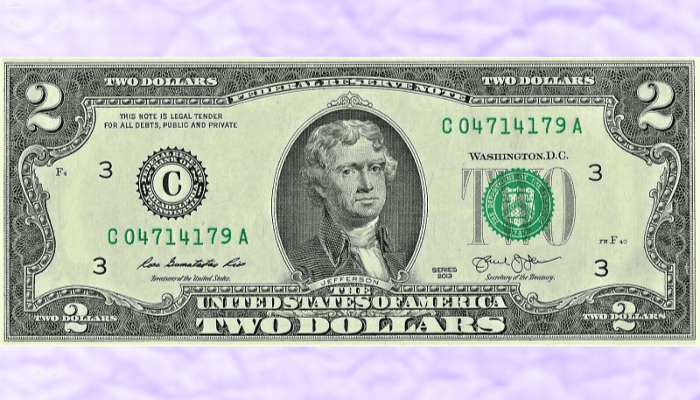
Distinguished by green seals and serial numbers, these modern notes typically trade at face value unless they possess special characteristics.
Silver Certificates (1886-1899)
These rare notes promised payment in silver and now rank among the most valuable $2 denominations.
The Comprehensive Value Chart
Let‘s examine specific values across different series:
Pre-1928 Large Size Notes
1862 Legal Tender: [$500-2,800] (circulated to uncirculated)
1869 Rainbow Series: [$600-3,800]
1875 "Lazy Deuce": [$400-2,400]
1880 Series: [$175-3,500]
Small Size Legal Tender Notes
1928 Series: [$7-750] (basic to star notes)
1953 Series: [$2.25-12]
1963 Series: [$2.25-30,000] (standard to rare star notes)
Modern Federal Reserve Notes
1976 Series: [$2-3,000] (standard to errors)
1995 Series: [$2-500]
2003-2013 Series: [$2-100]
Premium Value Factors
Serial Number Significance
The serial number often determines extraordinary value. For example, I recently evaluated a 1963 $2 bill with a radar serial number (12344321) that sold for $4,500. Binary serial numbers (10101010) typically command [$1,000-5,000], while solid serial numbers (88888888) can reach [$10,000] or more.
Condition Assessment
Professional grading uses this scale:
- Gem Uncirculated (65-67): Premium values, often 10x standard
- Choice Uncirculated (63-64): Strong premiums
- About Uncirculated (50-58): Moderate premiums
- Extremely Fine (40-45): Slight premiums
Error Notes
Manufacturing mistakes create some of the most valuable specimens. Notable examples include:
Inverted Back Errors
A 1976 Federal Reserve Note with an inverted back sold for $16,800 at auction. These dramatic errors occur when one side prints upside-down relative to the other.
Missing Print Errors
Notes missing serial numbers or Treasury seals can fetch [$3,000-7,000]. A spectacular 1976 specimen missing all face printing reached $28,000 at auction.
Authentication Techniques
Proper authentication requires multiple steps:
Paper Analysis
Genuine currency paper contains red and blue security fibers. Under magnification, these should appear randomly distributed throughout the note.
Printing Characteristics
Examine the fine-line detail in portraits and scrollwork. Genuine notes show sharp, clear lines without breaks or bleeding.
Security Features
Modern notes include color-shifting ink, security threads, and watermarks. Each series has specific security markers that must align with production dates.
Investment Strategies
Market Entry Points
For beginning collectors, I recommend focusing on:
- Uncirculated 1976 Bicentennial notes
- Star notes from 1995-present
- Sequential numbered sets
- Error notes from modern series
Building a Collection
Start with readily available specimens and gradually add scarcer examples. Document provenance and condition carefully. Network with established dealers and join numismatic organizations.
Storage and Conservation
Proper storage proves crucial for maintaining value:
Temperature Control
Maintain constant temperature between 65-70°F (18-21°C). Avoid basements and attics where conditions fluctuate.
Humidity Management
Keep relative humidity between 45-50%. Use silica gel packets in storage containers when necessary.
Physical Protection
Store notes in archival-grade currency holders. Never use PVC-based products, which can damage paper over time.
Regional Market Variations
The market for rare $2 bills shows interesting geographic patterns. New England and Mid-Atlantic regions typically command premium prices due to concentrated collector populations. Western states often yield better deals, particularly for pre-1928 notes that circulated heavily during settlement periods.
Notable Collections and Sales
The Smithsonian‘s National Numismatic Collection includes several million-dollar examples of rare $2 bills. Private collections have achieved remarkable results:
- The Anderson Collection (2018): [$4.2 million] total, including a unique 1890 Treasury Note
- Heritage Auction Record (2020): [$32,900] for a 1928-B star note
- Stack‘s Bowers Sale (2021): [$28,750] for an 1863 Legal Tender specimen
Future Market Outlook
Several factors suggest continued strength in the rare $2 bill market:
Growing Interest
Young collectors increasingly appreciate currency collecting, particularly error notes and star specimens.
Limited Supply
Many rare examples remain permanently housed in institutional collections, reducing available supply.
Investment Potential
As traditional investments become volatile, tangible assets like rare currency attract new buyers.
Practical Collecting Advice
When building your collection:
Start with Knowledge
Study reference materials, attend shows, and handle as many genuine notes as possible.
Build Relationships
Develop connections with reputable dealers who specialize in rare currency.
Document Everything
Maintain detailed records of purchases, including condition photos and provenance information.
Conclusion
The $2 bill market offers fascinating opportunities for both collectors and investors. While most examples trade at face value, understanding what makes certain specimens valuable can lead to remarkable discoveries. Whether you‘re a seasoned numismatist or just starting your journey, the hunt for rare $2 bills combines history, artistry, and the thrill of the chase.
Remember, condition remains paramount, authentication proves crucial, and patience often yields the best opportunities. As you build your collection, focus on quality over quantity, and always verify authenticity before making significant purchases.