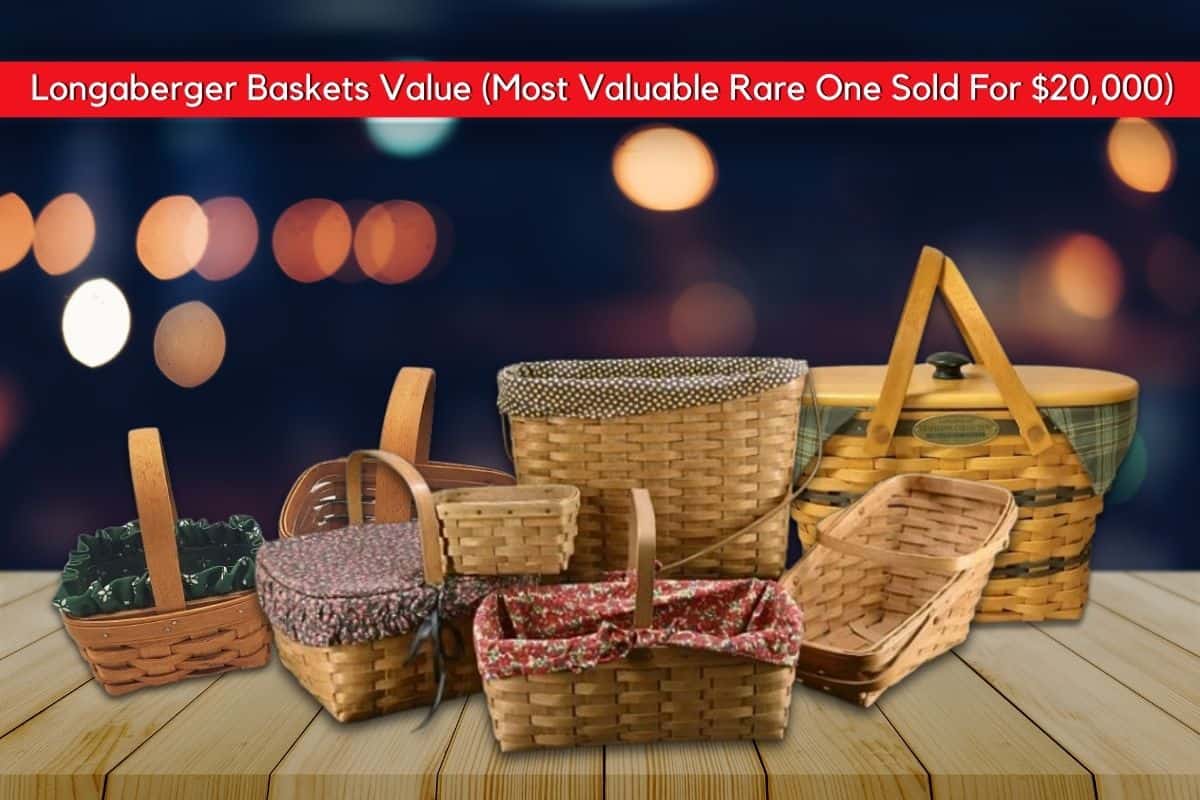
Longaberger Baskets Value: Guide to Collectibles (Rarest Sold for $20,000)
When I first encountered a genuine Longaberger basket at an Ohio estate sale twenty years ago, I didn‘t realize I was holding a piece of American crafting history in my hands. As an antique collector and appraiser specializing in American handcrafts, I‘ve since evaluated thousands of these maple wood treasures. Let me share what makes these baskets such remarkable collectibles, with some pieces now commanding prices up to $20,000.
The Rich Heritage of Longaberger Craftsmanship
The story begins in the small town of Dresden, Ohio, where J.W. Longaberger first picked up his weaving tools in 1919. In those early days, basket-making wasn‘t just an art form – it was essential to daily life in rural America. J.W. learned from master weavers who passed down techniques that had evolved over generations. These fundamental methods would later become the cornerstone of what we now recognize as the distinctive Longaberger style.
When Dave Longaberger officially founded The Longaberger Company in 1973, he brought his father‘s traditional craftsmanship into the modern era. The company‘s dedication to quality helped transform what began as utilitarian items into sought-after collectibles. Each basket represented countless hours of skilled handiwork, with artisans carefully selecting and preparing maple strips, weaving intricate patterns, and applying finishing touches that would become hallmarks of the Longaberger brand.
Understanding Longaberger Basket Values
The market for Longaberger baskets operates on multiple tiers, with values ranging from modest to extraordinary. I recently appraised a collection where a single 1996 Longaberger Blue Large basket sold for $20,000 – a price that would have seemed unimaginable in the company‘s early days.
The most valuable pieces typically share several key characteristics. First, there‘s provenance – baskets with direct connections to the Longaberger family command premium prices. A basket bearing Grandma Bonnie‘s signature might sell for ten times what an unsigned piece from the same period would bring. Similarly, pieces signed by Dave Longaberger or his daughters, Tami and Rachel, hold special significance for collectors.
Age plays a crucial role, but it‘s more complex than simply "older is better." The most valuable period spans from the company‘s founding through the mid-1990s, with particular emphasis on pieces made before 1990. These early baskets showcase the transition from traditional craft to refined art form, often displaying subtle variations in weaving techniques that fascinate serious collectors.
Authentication: The Critical Eye
Through years of examining Longaberger baskets, I‘ve developed a detailed authentication process. Every genuine Longaberger basket tells its own story through specific markers. The maple wood should have a distinctive grain pattern and color variation. The weave tension must be consistent – too tight suggests modern machine production, while too loose indicates amateur craftsmanship.
Look for the Longaberger stamp or brand mark on the bottom. Post-1976 pieces feature date stamps, but these must match known production patterns. The "Longaberger Bows" – those characteristic green horizontal bands – should show proper placement and color intensity. I‘ve seen countless imitations where these details don‘t quite align with authentic examples.
Regional Market Variations
The Longaberger market shows fascinating geographic patterns. In the Midwest, particularly Ohio and surrounding states, values tend to be more stable due to greater supply and local knowledge. However, coastal markets often yield surprising results. I recently witnessed a California auction where East Coast collectors drove prices well above typical Midwest values, particularly for holiday-themed pieces.
New England shows strong preference for earlier, more traditional designs, while Southern collectors often favor larger, more decorative pieces. These regional variations create opportunities for knowledgeable collectors who understand market dynamics.
Conservation and Care
Proper conservation significantly impacts value. Store baskets away from direct sunlight to prevent UV damage to the wood. Maintain consistent humidity levels – too dry causes cracking, too damp promotes mold growth. I recommend using food-grade mineral oil sparingly to condition the wood, applying with a soft cloth following the grain pattern.
Never attempt to repair damaged baskets without professional guidance. I‘ve seen well-intentioned restoration attempts dramatically reduce value. Document condition with detailed photographs, particularly for investment-grade pieces.
Investment Strategy and Market Outlook
The Longaberger market continues to evolve. While mass-produced pieces from the company‘s later years hold steady at modest values, rare early examples and significant pieces show strong appreciation potential. Current trends favor:
- Pre-1990 production pieces
- Documented family signatures
- Complete sets with original accessories
- Limited editions with certificates
- Holiday collections in original packaging
Investment strategy should focus on condition and authenticity. Build relationships with reputable dealers and join collector networks. Document provenance whenever possible. Consider insurance for valuable pieces – I recommend specialized collectibles coverage rather than standard homeowner‘s policies.
Notable Collections and Sales
Recent years have seen remarkable sales:
- Complete JW Original Collection (1985-1994): $3,900
- Vintage Signed Dave/Bonnie Collection: $2,000
- Original JW Shopping Cart (Authenticated): $1,750
- Heritage Series Complete Set: $1,625
- Presidential Collection: $1,399
These prices reflect perfect condition pieces with solid provenance. The market particularly values complete sets and themed collections over individual pieces.
Future of Collecting
The Longaberger collecting community continues to grow, with increasing interest from younger collectors drawn to American handcrafts. Online platforms have expanded market reach, though they‘ve also increased the circulation of counterfeits. Success in today‘s market requires combining traditional collecting knowledge with digital savvy.
Expert Recommendations
For those entering the Longaberger market, I recommend starting with mid-range pieces to develop your eye. Study authenticated examples, handle as many genuine pieces as possible, and build relationships with experienced collectors. Document everything – condition, provenance, purchase details, and market comparables.
Join collector groups and attend basket conventions. These gatherings offer invaluable opportunities to examine rare pieces and learn from other enthusiasts. Consider specialized storage solutions for valuable pieces – custom-built display cases with UV protection and humidity control can help preserve value.
Conclusion
Longaberger baskets represent more than just collectibles – they embody a uniquely American craft tradition. Whether you‘re a serious investor or passionate collector, understanding their history, authenticity markers, and market dynamics proves essential. As values continue to appreciate for the finest examples, informed collecting becomes increasingly important.
Remember that each basket tells a story – of skilled artisans, family tradition, and American craftsmanship. By preserving these pieces properly and understanding their true value, we help ensure this remarkable heritage continues for future generations of collectors.