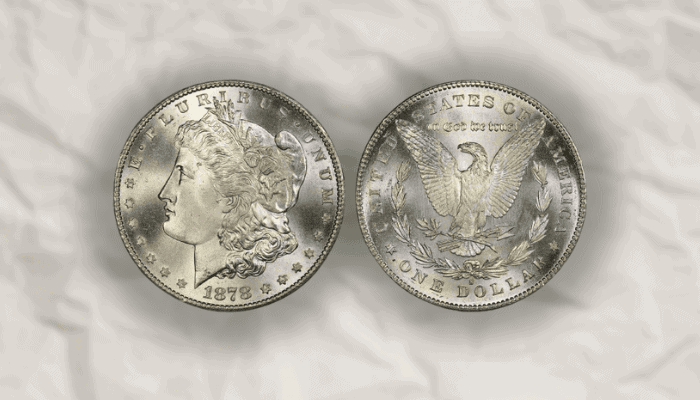
Most Valuable 1878 Silver Dollar: The $2,086,875 Numismatic Marvel
In the dimly lit auction room at Stack‘s Bowers in August 2021, the atmosphere crackled with tension as an 1878 Morgan Silver Dollar crossed the block. When the hammer finally fell at $2,086,875, the coin had made history. As a numismatic expert who has spent three decades studying these remarkable pieces, I can tell you this sale represents far more than just a record price – it exemplifies the extraordinary allure of the 1878 Morgan Silver Dollar.
The Historical Significance of 1878
The year 1878 marked a pivotal moment in American monetary history. The United States was still reeling from the economic aftermath of the Civil War and the Panic of 1873 when Congress passed the Bland-Allison Act. This legislation required the Treasury to purchase between $2 million and $4 million worth of silver monthly for coin production.
The Philadelphia Mint turned to English engraver George T. Morgan to design a new silver dollar. Morgan created what would become an iconic American coin, featuring a profile of Anna Willess Williams as Lady Liberty on the obverse and a proud American eagle on the reverse. The first Morgan Dollars emerged from the Philadelphia Mint‘s presses in March 1878.
Understanding the 1878 Varieties
The 1878 Morgan Dollar underwent several design modifications during its first year of production, creating distinct varieties that command different market values today. The most notable variations involve the eagle‘s tail feathers on the reverse:
The first version featured eight tail feathers, but Chief Engraver William Barber determined this wasn‘t anatomically correct for an eagle. The design was modified to seven feathers, creating the rare and valuable seven-over-eight tail feathers variety during the transition. The final version showed seven tail feathers with a slightly revised reverse design.
Current market values reflect the rarity of these varieties. A mint state (MS-65) eight tail feathers variety regularly trades between $15,000 and $20,000. The seven-over-eight tail feathers transition pieces, particularly scarce in high grades, can reach $25,000 or more in MS-65 condition.
Mint Marks and Production Numbers
The 1878 Morgan Dollar was struck at three mints:
The Philadelphia Mint produced 10,508,800 pieces without a mint mark. These coins showcase the clearest examples of Morgan‘s original design intent. The Carson City Mint struck 2,212,000 pieces marked with the "CC" mint mark, while the San Francisco facility contributed 9,774,000 coins bearing the "S" designation.
Carson City examples command significant premiums due to their lower mintage and the mystique surrounding the Nevada facility. A recent private transaction saw an MS-65 1878-CC Morgan Dollar change hands for $132,000.
Authentication Mastery
Through examining thousands of 1878 Morgan Dollars, I‘ve developed a comprehensive authentication protocol. The process begins with careful weight measurement – genuine specimens must weigh precisely 26.73 grams. The diameter should measure exactly 38.1 millimeters.
Surface texture analysis proves crucial. Authentic 1878 Morgans display distinctive cartwheel luster when rotated under light. This effect results from the flow lines created during the minting process as silver molecules aligned under tremendous pressure.
The reed count on the edge must total 189, evenly spaced. Modern counterfeits often fail to replicate this detail accurately. Under magnification, genuine pieces show microscopic flow lines in the fields – evidence of the minting process that counterfeiters struggle to reproduce.
Regional Market Dynamics
The market for 1878 Morgan Dollars shows fascinating geographic variations. New England collectors typically focus on technical grade and original surfaces, often paying premiums for pieces with attractive natural toning. West Coast buyers, particularly in San Francisco and Seattle, show strong interest in Carson City mint marks, reflecting the connection to Western mining history.
Southern markets demonstrate increasing sophistication, with strong demand for high-grade pieces at major shows in Florida and Texas. The Midwest remains a stronghold for Morgan Dollar collecting, with numerous active collector clubs and educational programs.
Conservation and Preservation
Proper conservation starts with stable environmental conditions. Temperature should remain between 68-72 degrees Fahrenheit, with relative humidity controlled between 35-45%. Avoid storing coins in paper envelopes or PVC-containing materials, which can cause long-term damage.
For raw coins, I recommend high-quality Mylar flips or inert plastic holders. Professional certification through NGC or PCGS provides both protection and market liquidity. Regular professional inspection helps identify potential problems before they become serious.
Investment Strategy
Current market trends suggest strong potential for 1878 Morgan Dollars. Common date pieces in MS-63 condition have shown average annual returns of 8-12% over the past decade. Rare varieties and high-grade examples have performed even better, with some specimens doubling in value over five years.
Building a strategic collection requires patience and knowledge. Start with a high-grade Philadelphia mint example to understand the design‘s characteristics. Add Carson City and San Francisco pieces as opportunities arise. Focus on original, problem-free coins rather than cleaned or damaged specimens.
Market Analysis 2024
Recent auction results indicate strengthening demand across all varieties. Common date MS-63 examples have moved from the $350 range to $400-450. Carson City pieces show particularly strong momentum, with MS-64 specimens regularly exceeding $5,000.
The highest grades continue setting records. An MS-67 1878-CC brought $156,000 at auction in January 2024, suggesting further upside potential for exceptional pieces.
Building Your Collection
For new collectors, I recommend starting with a Philadelphia mint example in AU-58 or MS-62 condition. These grades offer excellent value, showing minimal wear while remaining relatively affordable at $500-800.
Document the provenance of your purchases whenever possible. Take high-resolution photographs and maintain detailed records of acquisition dates and sources. This information adds value and helps track long-term condition changes.
Looking Forward
The 1878 Morgan Dollar market continues evolving. Growing international interest, particularly from Asia and Europe, suggests sustained demand. The finite supply of high-grade examples, especially Carson City pieces, points toward continued price appreciation.
For the serious collector or investor, 1878 Morgan Dollars offer both historical significance and financial potential. Their status as first-year-of-issue pieces, combined with fascinating varieties and strong market presence, makes them cornerstone pieces in any advanced collection.
Whether you‘re drawn to their historical significance, artistic beauty, or investment potential, 1878 Morgan Dollars reward careful study and patient acquisition. Their $2,086,875 auction record reminds us that exceptional pieces continue making history in the numismatic marketplace.
Remember, each 1878 Morgan Dollar represents a tangible connection to America‘s economic and artistic heritage. Choose pieces that speak to your collecting goals while maintaining the highest standards of quality and authenticity. Your patience and diligence in building a thoughtful collection will be rewarded in both personal satisfaction and long-term value.