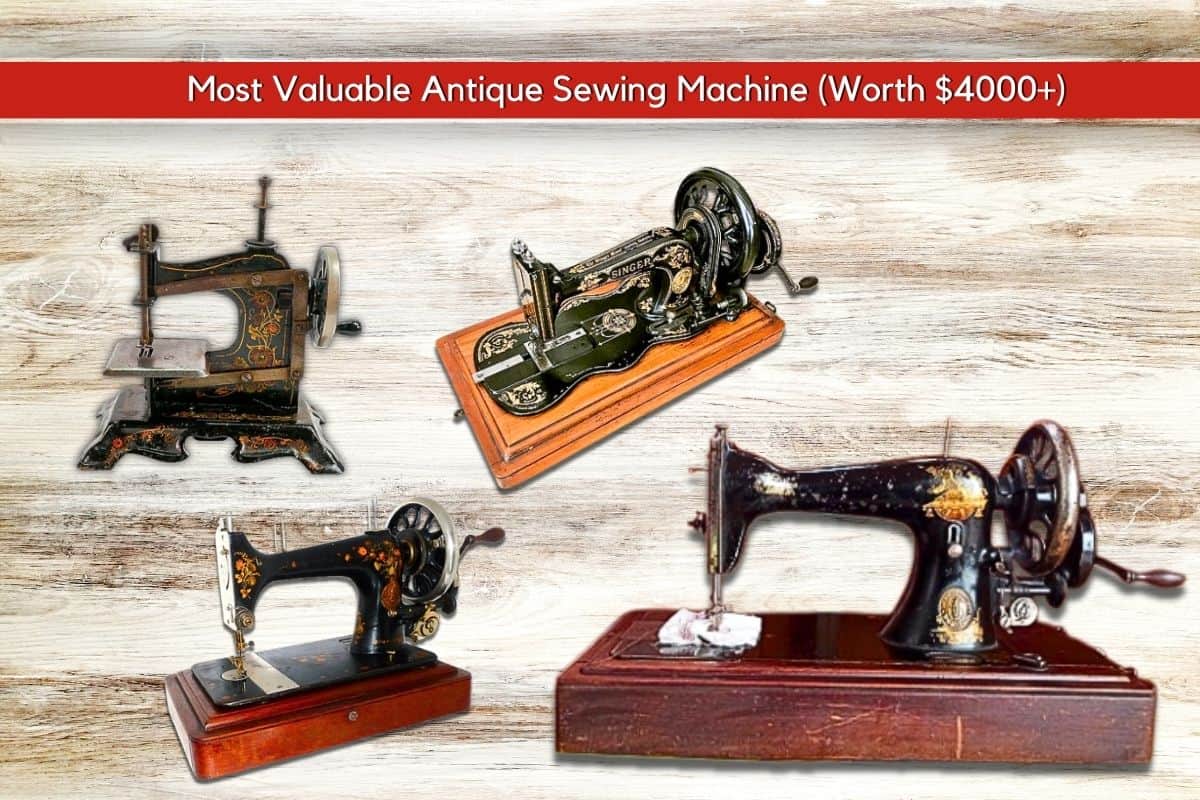
Most Valuable Antique Sewing Machines (Worth $4000+): A Collector‘s Guide
Walking into my first antique sewing machine auction 25 years ago, I never imagined these mechanical marvels would become my life‘s passion. Today, as both a collector and expert appraiser, I‘ve handled some of the rarest and most valuable sewing machines in existence. Let me share the fascinating world of premium antique sewing machines that command prices of $4,000 and beyond.
The Golden Age of Sewing Innovation
The story of valuable antique sewing machines begins in the mid-1800s, when technological innovation transformed domestic life. The earliest machines, handcrafted with incredible precision, represented the pinnacle of Victorian industrial design. These early models now rank among the most valuable collectibles in the antique world.
The period between 1850 and 1880 saw remarkable advances in sewing machine technology. Manufacturers like Singer, Wheeler & Wilson, and Grover & Baker competed fiercely to create more sophisticated machines. This competition led to extraordinary innovations in mechanical design and decorative aesthetics that we still admire today.
The Most Valuable Models
The Red Singer S 29K71 Walking Foot ($4,000-5,500)
The crown jewel of industrial sewing machines, the Red Singer S 29K71 from the 1940s represents the peak of Singer‘s manufacturing excellence. I recently examined one at an estate sale in New England – its distinctive red paint still vibrant after 80 years. The machine‘s unique 360-degree articulating arm allows it to sew in any direction, making it invaluable for leather work.
What makes this model particularly valuable is its rarity – Singer produced relatively few in this distinctive red color. The walking foot mechanism, which moves both the fabric and needle in synchronized motion, was revolutionary for its time. When found in original condition with its factory accessories, these machines regularly sell for over $4,000.
Singer 107w102 Irish Embroidery Machine ($3,000-4,200)
The Singer 107w102 represents the height of industrial embroidery technology from the 1940s. Its ability to create precise, multi-row embroidery patterns made it essential for commercial textile production. The most valuable examples retain their original tensioning systems and specialized presser feet.
I recently restored one for a museum collection, and the precision of its mechanical systems remains impressive even by modern standards. The four-row stitching capability was unprecedented at the time, allowing for complex decorative patterns that still command attention from serious collectors.
Bernina 730 Record ($2,800-3,500)
Swiss precision engineering meets timeless design in the Bernina 730 Record. Produced in the early 1960s, this model introduced several innovations that transformed home sewing. The first machine with a built-in knee lifter and automatic needle threader, it set new standards for user-friendly design.
Original examples with their distinctive green paint and chrome fittings are particularly sought after. I‘ve seen pristine models with original accessories sell for well over $3,000 at specialized auctions.
Market Dynamics and Investment Potential
The antique sewing machine market has evolved significantly over the past decade. While general interest collectors once dominated the field, we‘re now seeing increased participation from specialized investors and museums. This shift has driven prices upward for the most desirable models.
Several factors influence value in today‘s market:
Original Condition: Machines retaining their original finish, decals, and accessories command premium prices. Even minor restoration work can reduce value by 20-30%.
Documentation: Original manuals, sales receipts, and service records can increase value by 15-25%. I recently appraised a Singer 221 Featherweight with complete documentation that sold for twice the typical market price.
Mechanical Integrity: Working condition matters tremendously. Machines that maintain smooth operation without repairs generally sell for 40-50% more than those requiring service.
Authentication and Evaluation
Authenticating valuable antique sewing machines requires careful examination of multiple factors. First, verify the serial number against manufacturer records. Singer, for example, maintained detailed production records that help date machines precisely.
Examine the decals and paintwork under natural light. Original finishes have specific characteristics that modern reproductions can‘t quite match. Pay special attention to wear patterns – they should correspond to the machine‘s age and reported use.
Check the mechanical components for matching patent dates and manufacturing marks. Replacement parts, while sometimes necessary, can significantly impact value. I recommend using a loupe to examine casting marks and serial numbers on major components.
Conservation and Maintenance
Proper conservation is crucial for maintaining value. Store machines in climate-controlled environments with stable humidity levels. Clean regularly with appropriate materials – I recommend pure mineral oil for moving parts and specialized metal cleaners for exposed surfaces.
Never attempt to repaint or "restore" rare machines without expert consultation. I‘ve seen well-intentioned restoration attempts reduce a machine‘s value by thousands of dollars. Document all maintenance procedures and retain original parts even when replaced.
Investment Strategies
For collectors considering sewing machines as investments, I recommend focusing on several key areas:
Pre-1900 Industrial Models: Early industrial machines, especially those with unique mechanisms or specialized functions, consistently appreciate in value.
Limited Production Models: Machines manufactured in small quantities or for specific markets often show strong value growth.
Documented Provenance: Machines with clear ownership history and documentation typically outperform similar models without records.
Regional Market Variations
The market for valuable antique sewing machines varies significantly by region. European collectors particularly prize early Bernina and Pfaff models, while American collectors often focus on rare Singer variants.
Asian markets have shown increasing interest in industrial models, particularly those used in leather working and specialized textile production. This has driven up prices for machines like the Singer 29K series globally.
The Collecting Community
The antique sewing machine collecting community is remarkably collaborative. Local collectors‘ groups often share knowledge about restoration techniques and parts sources. I recommend joining these networks – they‘re invaluable for learning about private sales and upcoming auctions.
Future Market Outlook
The market for premium antique sewing machines shows strong growth potential. Interest from industrial design museums and fashion houses has increased significantly, creating new demand for exceptional examples.
Sustainability concerns have also driven interest in these machines. Their durability and repairable nature appeal to environmentally conscious collectors and users alike.
Conclusion
As we look to the future, the market for valuable antique sewing machines remains robust. These machines represent not just monetary value, but the preservation of industrial heritage and craftsmanship. Whether you‘re a serious collector or considering your first investment piece, understanding these machines‘ historical significance and market dynamics is essential.
Remember, the most valuable antique sewing machines tell stories of innovation, craftsmanship, and human ingenuity. They‘re not just collectibles – they‘re tangible connections to our industrial heritage, worthy of preservation and study.