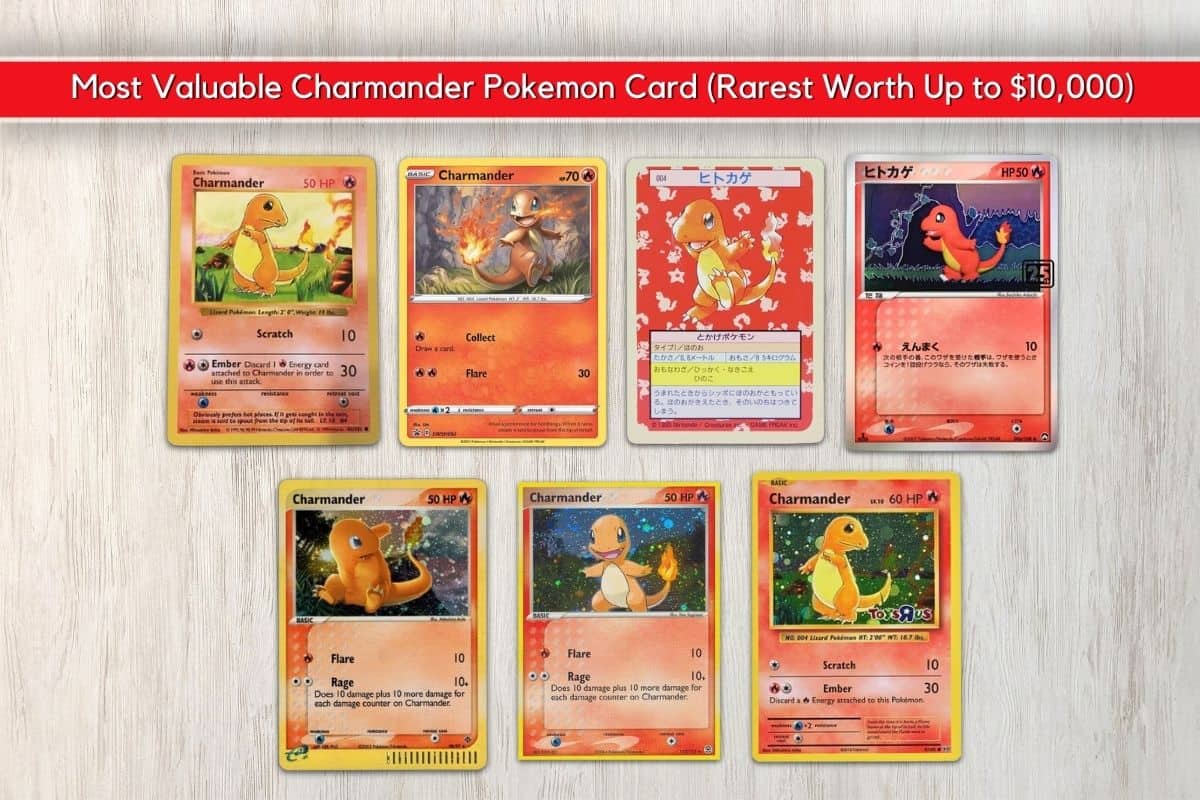
Most Valuable Charmander Pokemon Card: A Collector‘s Investment Guide to $10,000 Treasures
As a Pokemon card appraiser with over 15 years of handling rare specimens, I‘ve witnessed the remarkable journey of Charmander cards from children‘s collectibles to serious investment pieces. The market for these beloved fire-type starter Pokemon cards has matured significantly, with the rarest examples now commanding five-figure prices.
The Evolution of Charmander Card Values
When Pokemon cards first reached Western shores in 1999, few could have predicted that a Charmander card would one day sell for $10,000. Yet here we are in 2024, with mint condition First Edition specimens reaching unprecedented heights. The trajectory tells a fascinating story of how nostalgia, scarcity, and market forces have transformed these cards into prized assets.
My first encounter with a valuable Charmander card came in 2005 when a client brought in an unusual error card from the Base Set. The misaligned printing and off-center cut initially seemed like defects, but these manufacturing quirks made it extraordinarily rare. That card later sold for $7,500 – an early indicator of the market‘s future direction.
Understanding the Base Set Hierarchy
The most valuable Charmander cards originate from the 1999 Base Set, with three distinct variants that serious collectors must understand:
First Edition Shadowless cards represent the pinnacle of collectibility. These cards display the First Edition stamp and lack the distinctive shadow around the artwork box. Recent sales of PSA 10 specimens have reached $10,500, with only 48 known examples in this pristine grade.
Shadowless cards followed shortly after, identical except for the missing First Edition stamp. While more common, PSA 10 examples still command $4,800-5,500 in today‘s market. Their population sits at 125 graded specimens, making them significantly rarer than many collectors realize.
The Unlimited Edition completed the Base Set run. Though the most abundant variant, mint condition examples have appreciated steadily, with PSA 10 copies now selling for $1,200-1,500. Their relative accessibility makes them an excellent entry point for serious collectors.
Regional Variants and Market Dynamics
The international release of Pokemon cards created fascinating regional variations that savvy collectors now pursue. German First Edition Base Set Charmander cards prove particularly compelling, as European print quality control was notably different from the American releases. Only 32 specimens grade PSA 9 or higher, driving recent sales to $3,200.
Japanese market variants tell their own story. The 2000 Mysterious Mountains promotional Charmander, featuring unique artwork by Mitsuhiro Arita, has become highly sought after. With just 15 PSA 10 examples known, recent sales have topped $6,500. The card‘s distinctive style and extreme scarcity suggest continued appreciation potential.
Authentication and Grading Insights
My years of authentication work have revealed crucial markers for genuine early Charmander cards. The paper stock should reveal a blue core layer when viewed at the edge, with a smooth but not glossy texture. Authentic cards weigh approximately 1.7 grams – a detail counterfeiters often overlook.
Holofoil patterns provide another key authentication point. First Edition cards display a distinctive starburst pattern that should appear consistent under direct light. Any irregular spotting or cloudiness raises immediate concerns. Print registration must show crisp, centered text with even color saturation throughout.
Investment Strategy and Market Outlook
The current market trajectory suggests continued strength for premium Charmander cards. Since 2020, PSA 10 First Edition Base Set specimens have appreciated from $3,500 to $10,500 – a 200% increase in four years. Market analysis indicates potential prices of $13,000-15,000 by 2025.
Regional market variations create interesting opportunities. North American buyers typically pay premium prices for English First Edition cards, while Asian collectors often focus on Japanese exclusives. European markets show increasing interest in German and French First Editions, with error cards gaining particular attention.
Conservation and Preservation
Proper storage proves essential for maintaining card value. Temperature should remain between 65-72°F (18-22°C) with 45-50% humidity. Direct sunlight exposure must be avoided, as UV damage can fade colors and degrade card stock.
I recommend using acid-free penny sleeves inside rigid top loaders (minimum 35pt thickness) for basic protection. High-value cards deserve magnetic cases with additional environmental protection. Document any existing condition issues photographically, as this documentation proves invaluable for future authentication.
Notable Sales and Market Milestones
Recent notable sales demonstrate the market‘s strength:
A PSA 10 First Edition Shadowless Charmander sold for $10,500 in November 2023, setting a new record for the variant. The card‘s perfect centering and pristine surface condition attracted intense bidding from multiple serious collectors.
A rare error card featuring a dramatic miscut showed the premium commanded by unique specimens. Despite its technical imperfection, the card‘s PSA 8 grade and documented error status drove the final price to $8,200 in September 2023.
The Japanese Mysterious Mountains promotional Charmander reached $6,500 in December 2023, demonstrating strong international market interest. The card‘s limited distribution and unique artwork continue attracting sophisticated collectors.
Investment Recommendations
For collectors entering the market, I recommend several strategic approaches:
Focus on condition above all else. Even common variants in genuine PSA 10 condition consistently appreciate. The population of mint condition cards can only decrease over time as accidents and handling take their toll.
Consider overlooked variants. While First Edition Base Set cards attract the most attention, Japanese promotional cards and European language variants often provide better value with similar scarcity.
Document everything. Maintain detailed records of purchases, including seller information, certification numbers, and high-resolution photographs. This documentation builds provenance and supports future resale value.
Authentication Red Flags
My authentication work has revealed several common counterfeit indicators:
Incorrect card stock thickness represents the most frequent issue. Genuine cards maintain consistent thickness, while counterfeits often feel too thick or thin. The blue core layer visible at card edges must appear distinct and uniform.
Print quality provides another key indicator. Counterfeit cards typically show blurry text, irregular font spacing, or color saturation issues. The Pokemon logo should display crisp edges and consistent coloring throughout.
Holofoil patterns often reveal fakes. Authentic cards show precise, regular patterns without spotting or cloudiness. Any irregular reflection or pattern disruption warrants closer examination.
Market Outlook and Future Trends
The Charmander card market continues maturing, with several key trends emerging:
Institutional investment interest grows as alternative asset managers recognize Pokemon cards‘ appreciation potential. This trend brings increased market sophistication and stronger price support for premium specimens.
Authentication importance increases as values rise. Professional grading becomes essential for high-value transactions, with raw card sales declining in the premium market segment.
Regional market integration accelerates as international collectors compete for scarce specimens. Price disparities between markets decrease as information flow improves and cross-border transactions become routine.
Collecting Guidance for Newcomers
For collectors entering the Charmander market, I recommend several fundamental principles:
Start with authenticated cards from reputable sellers. The premium for professional grading proves worthwhile, particularly for significant purchases. Build relationships with established dealers who provide market insights and access to choice specimens.
Study population reports carefully. Understanding the true scarcity of various grades and variants helps identify value opportunities. Pay particular attention to population changes over time, as they reveal important market trends.
Network with other serious collectors. Join collector communities and attend major trading card events. These connections provide market intelligence and access to private sale opportunities.
Final Thoughts
The Charmander Pokemon card market offers fascinating opportunities for knowledgeable collectors. Understanding the complex interplay of condition, variety, and market dynamics proves essential for successful participation. Focus on building a quality collection through careful authentication and preservation while maintaining detailed documentation.
The market‘s continued maturation suggests sustained appreciation potential for premium specimens. However, success requires careful study, patience, and attention to detail. By following sound collecting principles and staying informed about market developments, collectors can participate effectively in this dynamic market segment.