Top 10 Most Valuable Matchbox Cars Every Collector Needs: A Treasure Hunter‘s Guide
In the fascinating world of die-cast collectibles, few items capture the imagination quite like vintage Matchbox cars. What began as humble toys in the 1950s have transformed into prized investments, with some rare models commanding prices that would make luxury car dealers take notice. As an antique collector who has spent three decades specializing in die-cast vehicles, I‘ve witnessed the remarkable evolution of this market firsthand.
The Birth of a Collection Revolution
The story of Matchbox cars begins in 1953 when Leslie and Rodney Smith, along with Jack Odell, created the first Matchbox toy at their company, Lesney Products. The initial inspiration came from Odell‘s daughter, whose school only allowed children to bring toys that could fit inside a matchbox. This simple requirement would ultimately shape the entire die-cast toy industry.
The first Matchbox car, a miniature brass road roller, rolled off the production line in 1953. By 1954, the company had established its iconic 1-75 series, producing 75 different models simultaneously. This standardization would prove crucial for future collectors, creating a structured system for categorizing and valuing these miniature masterpieces.
The Most Valuable Matchbox Cars: A Detailed Analysis
1. Matchbox Major Scale Quarry Truck (1955)
The holy grail of Matchbox collecting, this pre-production prototype stands as the most valuable Matchbox car ever sold. In 2010, a Japanese collector parted with $15,000 to acquire one of only six known examples. The truck features hand-assembled components, distinctive metallic finish, and original rubber wheels – hallmarks of its prototype status.
What makes this model particularly significant is its intended role in the Major Scale series, which never materialized. The truck represents a crucial turning point in Matchbox history, marking the company‘s brief exploration into larger-scale models before committing to their signature small-scale format.
2. Magirus-Deutz Crane (1961)
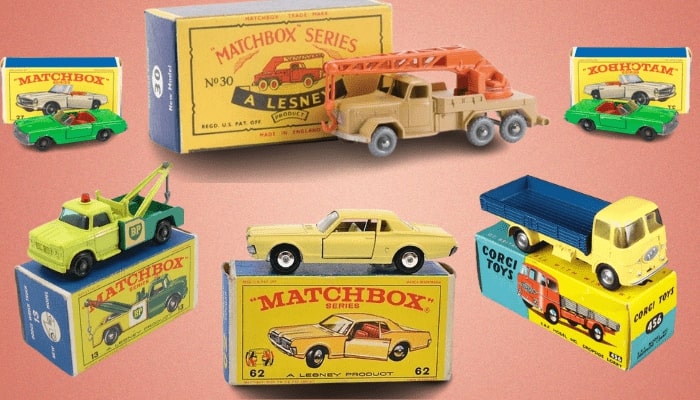
The pre-production tan Magirus-Deutz Crane represents a fascinating chapter in Matchbox color experimentation. While regular production models featured silver bodies with orange cranes, this rare variant showcases a light brown body with a red crane arm. Only two documented sales exist, with prices reaching $13,000.
The model‘s authentication requires careful examination of the axle rivets, paint composition, and base plate details. Original examples display particular wear patterns on the crane mechanism that counterfeiters struggle to replicate accurately.
3. Opel Diplomat in Seafoam Green (1967)
This rare color variant emerged from a special production run intended for the G2d transporter set. While standard Diplomats came in yellow or metallic gold, this seafoam green version with grey engine baseplate commands prices approaching $9,000.
The model‘s value stems from its documented production anomaly. Factory records indicate this color variant resulted from a mixed paint batch that proved too costly to discard. Rather than waste materials, Lesney approved a limited production run.
4. ERF Dropside Lorry (1958)
The mint-colored ERF Dropside Lorry demonstrates how color variations can dramatically impact value. Regular production models in maroon or blue typically sell for $25-50, while the mint variant commands $9,000-9,500.
Authentication focuses on the original decals – not stickers – and specific wheel configurations unique to 1958 production. The mint color resulted from an experimental paint formulation that proved unstable for mass production.
5. BP Dodge Wreck Truck (1965)
A fascinating example of how manufacturing errors create collector value, this model features reversed color schemes – green parts painted yellow and yellow parts painted green. The error occurred during a production line reset, creating a small batch of reversed-color vehicles before quality control caught the mistake.
Current market value ranges from $8,500 to $10,000 for authenticated examples. Verification requires examining the BP logo, which must be a period-correct decal rather than a sticker, and confirming the silver-sprayed grill details characteristic of this production error.
6. Mercedes Benz 230SL in Apple Green (1967)
This mysterious variant presents one of collecting‘s most intriguing stories. No official factory documentation confirms its production, yet authenticated examples exist. The apple green color with red interior differs markedly from standard white or yellow versions.
Valued at $6,765 in recent sales, this model demonstrates how unofficial variants can sometimes surpass regular production models in value. Authentication requires extensive paint analysis to confirm period-correct materials.
7. Mercury Cougar in Cream (1968)
Pre-production cream-colored Mercury Cougars represent another valuable prototype variation. Before settling on the standard metallic green, Lesney experimented with various color schemes. The cream version with white interior never entered full production.
Recent sales have reached $6,500, with buyers particularly interested in examples showing prototype markings on the base plate. These markings provide crucial authentication evidence, distinguishing genuine pre-production models from later repaints.
8. Green Ford Kennel Truck (1969)
Part of the Superfast series, the mint green Ford Kennel Truck with black wheels represents a brief production experiment. While regular versions featured lime green or metallic green paint, this distinctive mint shade appeared only briefly before being discontinued.
Authenticated examples have sold for $4,100, with collectors particularly valuing those retaining their original transparent plastic toppers and white dog figures.
9. Mercury Station Wagon (1969)
The yellow prototype Mercury Station Wagon stands as another pre-production rarity. While regular production featured metallic light green bodies with cream interiors, this yellow variant never progressed beyond initial testing.
Current market values approach $3,800 for authenticated examples. Verification requires examining the base plate date stamps and comparing paint composition to known factory standards.
10. Ford Mustang (1966)
Rounding out our top ten, the white 1966 Ford Mustang with red interior and black engine base represents early Matchbox production techniques. While not as rare as some other entries, its historical significance and condition-sensitive nature make it highly collectible.
Mint examples command $3,000 or more, with collectors particularly valuing those retaining original packaging and showing minimal play wear.
Authentication and Preservation
Proper authentication requires understanding period-correct materials and manufacturing techniques. Key verification points include:
Paint Analysis: Original Matchbox cars used specific paint formulations that aged distinctively. Modern spectrographic analysis can confirm paint composition matches period standards.
Construction Details: Each era featured particular rivet patterns, wheel types, and base plate materials. Understanding these details proves crucial for authentication.
Documentation: Original packaging, factory records, and period advertisements provide valuable authentication support. However, documentation must itself be authenticated, as sophisticated forgeries exist.
Preservation requires careful environmental control:
- Maintain constant temperature between 65-70°F
- Keep humidity at 45-55%
- Minimize UV exposure
- Use acid-free storage materials
- Avoid silicon-based products
Market Analysis and Investment Potential
The Matchbox collecting market continues showing strong growth, with annual appreciation rates averaging 8-12% for premium pieces. Regional variations affect values significantly:
United Kingdom: Original home market typically commands premium prices, particularly for early models
North America: Largest current market with steady price appreciation
Asia: Emerging collector base driving new price records
Australia: Strong market for regional variants
Investment strategy should consider:
- Condition remains paramount
- Documentation adds 25-35% to value
- Original packaging can double value
- Period-correct wear patterns support authenticity
Building Your Collection
For aspiring collectors, I recommend:
- Study reference materials extensively
- Build relationships with reputable dealers
- Learn authentication techniques
- Focus on specific models or eras
- Maintain detailed documentation
- Store pieces properly
- Network with other collectors
Remember that condition significantly impacts value. A mint example often commands ten times the price of the same model in played condition. However, don‘t overlook played examples that show historically accurate wear – these pieces help authenticate mint examples and often provide affordable entry points for collecting rare models.
The Matchbox collecting world offers both financial and personal rewards. While monetary returns can be significant, the real value lies in preserving these miniature pieces of automotive and cultural history. Whether you‘re an investor or enthusiast, understanding these most valuable models provides crucial market insight and collecting guidance.