Who Is On The $20 Bill? (History And Controversy!)
As an antique currency collector with over two decades of experience examining historical American banknotes, I find the $20 bill particularly fascinating. This denomination tells a remarkable story of American history, featuring one of our most controversial presidents, Andrew Jackson. Let me take you through the rich history, significant controversies, and collecting insights surrounding this important piece of American currency.
The Current Face of the Twenty
Andrew Jackson‘s stern visage has gazed out from the $20 Federal Reserve Note since 1928, making it one of our longest-running unchanged currency designs. The portrait shows Jackson in his later years, based on a painting by Ralph E.W. Earl, capturing the determined expression of America‘s seventh president. What makes this particular design noteworthy from a collector‘s perspective is its remarkable staying power – while other denominations have seen multiple design changes, Jackson‘s portrait has remained largely consistent for nearly a century.
Andrew Jackson‘s Journey to the Twenty
The story of how Jackson came to be on the $20 bill reveals much about American monetary history. Jackson, known as "Old Hickory" for his toughness, rose from humble beginnings in the Carolina frontier to become a powerful military leader and eventually president. His selection for the $20 denomination carries a touch of historical irony – Jackson strongly opposed paper money and fought to dismantle the Second Bank of the United States.
Jackson‘s presidency from 1829 to 1837 marked a pivotal period in American history. His military achievements, particularly the victory at the Battle of New Orleans in 1815, established his reputation as a national hero. However, his presidency also witnessed some of the darkest chapters in American history, including the forced removal of Native American tribes through the Indian Removal Act of 1830.
Evolution of the Twenty Dollar Bill
The twenty-dollar denomination‘s history stretches back to 1862, when the first $20 Legal Tender Notes were issued during the Civil War. From a collector‘s standpoint, these early notes represent some of the most valuable specimens in American currency. The earliest $20 bills featured a variety of designs and portraits:
The 1862-1863 Demand Notes displayed Treasury Secretary Salmon P. Chase, printed in rich green ink that gave rise to the term "greenbacks." These rare notes now command prices exceeding $100,000 in prime condition.
Between 1863 and 1878, Legal Tender Notes underwent several design changes, incorporating increasingly complex anti-counterfeiting measures. The artwork during this period often included elaborate allegorical figures representing Liberty, Commerce, and Agriculture.
The 1878-1914 period saw the introduction of Silver Certificates, which featured particularly striking designs. These notes promised payment in silver rather than gold and often displayed more ornate artwork than their predecessors.
Design Elements of the Modern Twenty
Today‘s $20 bill, last updated in 2003, incorporates sophisticated security features while maintaining its historical character. The front design centers on Jackson‘s portrait, surrounded by intricate scrollwork and geometric patterns that make counterfeiting more difficult.
The reverse features the White House, symbolizing federal authority and governmental continuity. This image replaced the earlier design of the White House‘s south facade, offering a more dramatic architectural perspective.
Key security elements include:
Color-shifting ink that changes from copper to green when tilted, creating a distinctive optical effect that‘s particularly difficult to reproduce. This feature appears on the number "20" in the bill‘s lower right corner.
Fine-line printing creates incredibly detailed patterns that standard copying equipment cannot accurately reproduce. Under magnification, these lines reveal precise, unbroken patterns.
Security threads embedded within the paper contain text visible under ultraviolet light. The position and characteristics of these threads vary by denomination, making them crucial authentication features.
The Harriet Tubman Controversy
In 2016, the Treasury Department announced plans to replace Jackson‘s portrait with that of Harriet Tubman, the renowned abolitionist and Underground Railroad conductor. This decision marked a watershed moment in American currency history, proposing the first African American and first woman to appear on standard U.S. paper currency.
The proposed change sparked intense debate. Supporters highlighted Tubman‘s heroic legacy of fighting for freedom and justice, arguing that her image would better reflect modern American values. Critics, including some historians and collectors, argued for preserving historical continuity in currency design.
The implementation timeline has faced numerous delays. Current projections suggest the new design might not appear until 2030, making existing Jackson twenties increasingly interesting to collectors as their eventual replacement approaches.
Collecting Historical Twenty Dollar Notes
For serious currency collectors, twenty-dollar notes offer fascinating opportunities. Different series, printing errors, and special designations can significantly affect value. Here‘s what collectors should know:
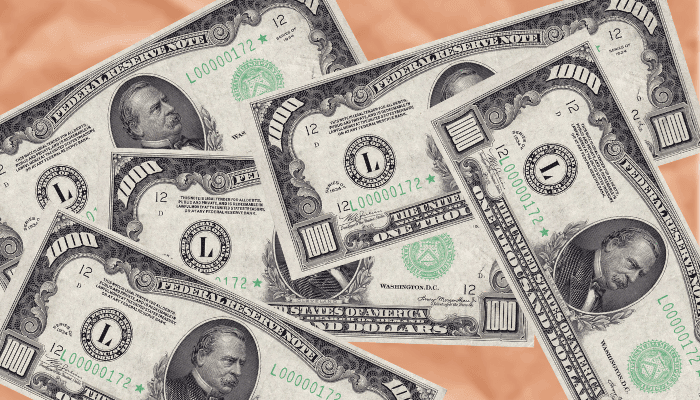
Star Notes, marked with a star at the end of their serial numbers, indicate replacement notes printed to substitute for damaged bills during production. These carry premium values, particularly for rare series or well-preserved specimens.
Large-size notes (pre-1928) command substantial premiums. These older, larger format bills often feature more elaborate artwork and historical significance. Well-preserved specimens from the 1800s can sell for tens of thousands of dollars.
National Bank Notes in the twenty-dollar denomination represent a particularly interesting collecting category. These notes, issued by individual banks between 1863 and 1935, carry both local and national historical significance.
Authentication and Preservation
Proper authentication requires careful examination of multiple security features. When examining a twenty-dollar bill, pay particular attention to:
Paper composition – genuine bills use specific cotton and linen fiber papers with embedded red and blue security fibers. The paper should have a distinctive texture and feel.
Printing quality – genuine Federal Reserve Notes show clear, sharp printing with no bleeding or fuzzy edges. The portrait should show distinct lines and subtle shading.
Serial number characteristics – proper font spacing, alignment, and number sequences help verify authenticity. Different series have specific number patterns collectors should recognize.
Regional Variations and Market Analysis
The market for twenty-dollar bill collectibles varies significantly by region. East Coast collectors often focus on early Federal period notes, while Western collectors might emphasize National Bank Notes from frontier territories.
Current market trends show growing interest in error notes and unusual serial numbers. Radar notes (numbers that read the same forward and backward) and solid serial numbers (all same digit) command significant premiums.
Investment Potential and Future Outlook
From an investment perspective, twenty-dollar notes offer several advantages. Their widespread circulation means many historical specimens survive, creating opportunities at various price points. However, top-grade examples of rare varieties continue appreciating as demand from serious collectors grows.
The pending design change to feature Harriet Tubman may increase interest in Jackson twenties among collectors. Historical precedent suggests that when currency designs change, examples of the previous design often appreciate in value.
Conservation and Storage
Proper preservation requires careful attention to environmental conditions. Store notes in archival-quality holders away from light and humidity. Handle coins only by their edges, and consider professional conservation for valuable specimens showing deterioration.
Climate-controlled storage prevents paper degradation and maintains color quality. Regular inspection helps identify potential conservation needs before serious damage occurs.
Conclusion
The twenty-dollar bill represents more than just monetary value – it embodies American history, art, and cultural evolution. Whether you‘re a serious collector or simply curious about the money in your wallet, understanding its story enriches our appreciation of American currency. As we move toward a new chapter with the eventual Tubman design, the Jackson twenty will remain an important piece of numismatic history, worthy of study and preservation.