Why AI Isn‘t Replacing Marketers or Search Engines: Insights from Jasper‘s Head of Enterprise Marketing
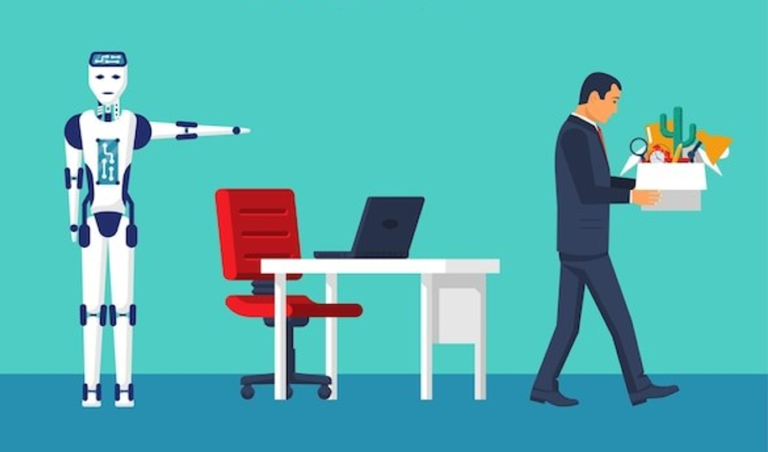
Artificial intelligence (AI) is one of the hottest topics in marketing today. Hardly a day goes by without a breathless headline about how AI is poised to transform the industry, often accompanied by predictions of mass job losses as intelligent machines take over key marketing functions.
But while there‘s no denying that AI is incredibly powerful and getting more sophisticated all the time, the notion that it will replace human marketers entirely is misguided. The same goes for the idea that AI chatbots and virtual assistants will make search engines like Google obsolete.
In reality, the future of both marketing and search is not human versus AI, but human plus AI. The most successful marketers and search experiences will be those that combine artificial intelligence with human creativity, empathy, and strategic thinking.
To get an expert perspective on this issue, I spoke with Samyutha Reddy, Head of Enterprise Marketing at Jasper, a leading AI content platform. Here are some key takeaways from our chat:
AI Is Augmenting Marketers, Not Replacing Them
One of the biggest misconceptions about AI in marketing is that its primary effect will be to automate away jobs. But that‘s not what Reddy is seeing. "I‘ve never met a content creator who has said, ‘I want to spend more time doing the rote tasks of researching a topic,‘" she told me. "AI gives marketers more time to be creative, form opinions, and incorporate more data sources into their perspectives."
In other words, rather than replacing marketers, AI is augmenting them by taking over repetitive, low-value activities and freeing up humans to focus on higher-level work. Reddy gave the example of a marketer who wants to write a blog post about SWOT analysis. Rather than spending hours reading up on the topic, they can plug a query into an AI chatbot, get a quick summary of the key points, and jump right into crafting a unique take.
This human-AI partnership is the real future of marketing. A 2022 survey by Salesforce found that high-performing marketing teams are 4.4x more likely to use AI than underperformers. But those teams aren‘t using AI to replace staff – they‘re using it to enhance their capabilities. The most common applications of marketing AI today are data analysis, personalization, and process automation – all areas where AI complements human skills rather than supplanting them.
This trend is reflected in marketing job numbers. Far from declining as AI advances, marketing employment is projected to grow 10% from 2021 to 2031, faster than the average for all occupations. As Reddy puts it, "I‘m hiring marketers every single day. I‘m not looking to replace them – I‘m looking to empower them with AI tools."
The Human Skills That AI Can‘t Replace
So why can‘t AI realize the science fiction vision of completely autonomous marketing? Because great marketing depends on several distinctly human skills that AI struggles to replicate:
-
Creativity: Marketing is a fundamentally creative endeavor. It‘s about coming up with attention-grabbing ideas, fresh turns of phrase, and original campaigns that resonate emotionally with audiences. While AI can generate endless variations on pre-existing themes, it has a hard time producing truly novel concepts. Human imagination remains the wellspring of marketing breakthroughs.
-
Empathy: At its core, marketing is about understanding and connecting with people. Great marketers put themselves in their customers‘ shoes, anticipate their needs and desires, and craft messages that speak to them on a personal level. AI can analyze behavioral data and generate personalized recommendations, but it doesn‘t experience emotions the way humans do. Sincere empathy requires a human touch.
-
Judgment: Marketing often involves making complex, context-dependent decisions based on multiple factors, some of them subtle or subjective. AI can provide valuable inputs to these decisions by crunching numbers and spotting patterns. But making the final call, and dealing with the consequences, falls to human judgment. An algorithm doesn‘t have the holistic understanding to weigh all the relevant considerations.
-
Accountability: Ultimately, someone needs to take responsibility for the outputs and impacts of AI systems. You can‘t fire an AI model if a campaign falls flat or causes a PR crisis. Human oversight and accountability will always be essential when deploying marketing AI.
These unique human strengths mean that the most effective marketing teams going forward will be those that leverage AI to enhance rather than replace human capabilities. Marketers who cultivate their creative, empathetic, and strategic skills while learning to collaborate productively with AI will be in high demand.
How Search Engines Are Evolving with AI
Just as AI is transforming marketing, it‘s also reshaping the world of search. Chatbots like ChatGPT have sparked speculation that conversational AI could replace traditional search engines as the go-to source for finding information online. After all, why bother scrolling through pages of search results when you can just ask a virtual assistant and get an instant answer?
However, search giants like Google aren‘t taking this threat lying down. They‘re rapidly incorporating AI into every aspect of the search experience, from understanding queries to ranking results to generating direct answers. The goal is not to abandon the core search paradigm, but to make it more intelligent and user-friendly.
Google executives have been vocal about their vision for an "AI-first" future of search. "We will move from a company that helps you find answers to a company that helps you get things done," said CEO Sundar Pichai in a 2023 earnings call. He emphasized that AI will power more relevant results, richer features, and multimodal experiences that combine text, images, and video.
Importantly, Google‘s AI efforts focus on enhancing the core search experience, not replacing it entirely. Features like featured snippets and knowledge panels, which provide direct answers to some queries, have been around for years and are increasingly generated by AI. But they appear alongside, not instead of, traditional organic search results.
There are good reasons for this hybrid approach. As powerful as chatbots and virtual assistants are becoming, they still can‘t match the scale, timeliness, and reliability of a full web search index. Search engines provide access to a vast range of information and perspectives that no closed knowledge base can replicate. They‘re also better at surfacing fresh content and detecting misinformation.
In the near future, we can expect search engines to become more conversational and personalized thanks to AI, while still preserving access to the open web. Users will have more ways to interact with and refine search results, but the core experience of impartially delivering relevant content from across the internet will remain central. Adoption of AI chatbots has been slower than some expected, suggesting that consumers still value traditional search.
The Way Forward for Marketers
For all its transformative potential, the rise of AI doesn‘t spell doom for human marketers. It signals opportunity. By embracing AI tools and learning to use them effectively, marketers can become more creative, productive, and valuable than ever before.
Some key priorities for marketers in the AI age:
-
Cultivate uniquely human skills: Double down on honing abilities like creativity, storytelling, empathy, and critical thinking. These are the skills that will differentiate human marketers from AI.
-
Become an AI expert: Learn the capabilities and limitations of different AI systems, how to use them effectively, and how to interpret their outputs. As Reddy advises, "Marketers should absolutely be in there getting their hands dirty, understanding how these tools work."
-
Focus on strategy over tactics: Let AI handle the repetitive, time-consuming tactical work so you can focus on big-picture goals, brand building, and cross-functional collaboration. Delegate to AI, but don‘t abdicate leadership.
-
Engage in constant learning: The AI landscape is evolving incredibly quickly. Make ongoing education a priority so you can stay on top of new tools and best practices. Curiosity and adaptability are key.
-
Prioritize human-AI collaboration: Look for ways to combine the strengths of humans and machines to achieve better outcomes than either could alone. Build processes and teams optimized for human-AI cooperation.
Conclusion
Contrary to some predictions, the rise of artificial intelligence does not herald the end of human marketers or traditional search engines. Instead, it presents an opportunity for forward-thinking professionals to augment their capabilities and deliver more value than ever.
By focusing on uniquely human skills, mastering AI tools, and pioneering new modes of human-machine collaboration, marketers can thrive in an AI-powered future. Meanwhile, search engines will harness AI to provide ever more intelligent, helpful, and personalized experiences, while preserving the openness and diversity of the web.
In both domains, success will belong to those who see AI as a partner in innovation, not a threat to their existence. As Samyutha Reddy says, "AI isn‘t replacing marketers. It‘s making them superheroes."
The road ahead won‘t always be easy, as individuals and organizations navigate the challenges of integrating AI into their work. But one thing is clear: the future belongs to marketers who embrace AI, not those who resist it. By staying curious, adaptable, and grounded in timeless human strengths, you can be a leader in shaping that future. Exciting times lie ahead.