AI World Cup: The Extraordinary Frontier of Neural Network Football Simulation
A Journey into the Future of Intelligent Sports Competition
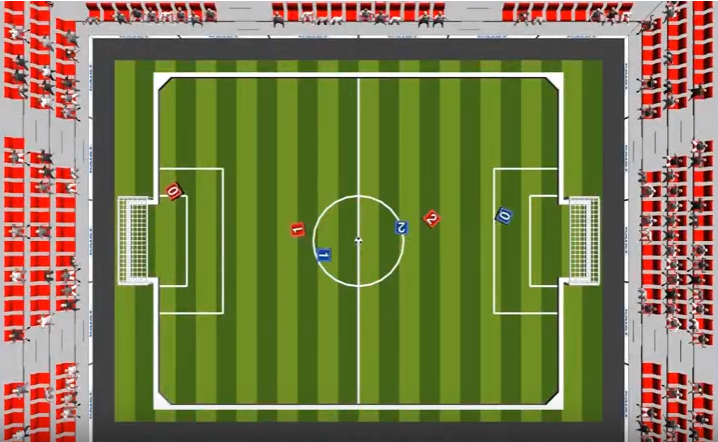
Picture this: A football field where players aren‘t flesh and blood, but intricate networks of algorithms dancing across a virtual pitch. Welcome to the AI World Cup – a revolutionary arena where machine intelligence transforms the beautiful game into a mesmerizing display of computational strategy.
The Genesis of Machine Intelligence in Sports
When we first dreamed of artificial intelligence simulating sports, it seemed like pure science fiction. Today, it‘s a breathtaking reality that‘s reshaping our understanding of intelligence, strategy, and competition.
The Neural Network: Brain of the Virtual Footballer
Imagine a player‘s brain constructed not from neurons and synapses, but from layers of mathematical algorithms. Each virtual footballer represents a complex ecosystem of decision-making processes, learning continuously and adapting in milliseconds.
Architectural Complexity of AI Players
The neural networks powering these virtual athletes are nothing short of technological marvels. Unlike traditional programming, these systems don‘t follow rigid instructions. Instead, they learn, predict, and strategize using sophisticated machine learning techniques.
Consider how a human footballer reads the field – anticipating opponent movements, calculating potential passes, and making split-second decisions. Neural networks replicate this process through intricate mathematical models that process vast amounts of data instantaneously.
Reinforcement Learning: The Training Ground
Reinforcement learning serves as the primary training methodology for these AI teams. Think of it like teaching a child to play football, but at computational speeds that defy human comprehension.
The Learning Cycle
In traditional machine learning, algorithms are trained on historical data. Reinforcement learning is different. Here, virtual players learn through continuous interaction with their environment, receiving rewards for successful actions and penalties for mistakes.
Imagine millions of simulated matches happening simultaneously, with each iteration refining the AI‘s strategy. A single virtual player might experience more gameplay scenarios in hours than a human footballer would in an entire career.
Computational Challenges and Breakthroughs
Creating a fully simulated football tournament isn‘t just about programming – it‘s about solving incredibly complex computational problems.
Processing Power and Algorithmic Efficiency
Each AI player requires immense computational resources. Modern neural networks can process billions of calculations per second, analyzing field dynamics, player positions, and potential outcomes faster than the blink of an eye.
The computational complexity is staggering. A single AI World Cup match involves:
- Real-time decision-making
- Predictive modeling
- Strategic adaptation
- Continuous learning
Beyond Simulation: Philosophical Implications
The AI World Cup isn‘t merely a technological showcase – it‘s a profound exploration of intelligence itself. What does it mean to make decisions? How do intelligent systems learn and adapt?
Machine Creativity and Strategic Thinking
One of the most fascinating aspects of these AI systems is their ability to develop strategies that humans might never conceive. They‘re not constrained by traditional thinking or ingrained biases.
Global Impact and Research Frontiers
Researchers worldwide are leveraging the AI World Cup as a testing ground for advanced machine learning techniques. Universities, tech companies, and research institutions view this tournament as a critical platform for pushing technological boundaries.
International Collaboration
The tournament represents more than a competition – it‘s a global collaborative effort to understand and advance artificial intelligence.
Ethical Considerations in AI Sports
As we marvel at these technological achievements, critical questions emerge. How do we ensure fairness? What are the ethical implications of creating increasingly intelligent systems?
Transparency and Accountability
Developing AI systems requires rigorous ethical frameworks. The AI World Cup serves as a microcosm for broader discussions about machine intelligence, accountability, and technological development.
Looking Toward the Horizon
The future of AI sports simulation is luminous with possibility. We‘re witnessing the early stages of a technological revolution that will fundamentally transform how we understand intelligence, strategy, and competition.
Potential Applications Beyond Sports
The techniques developed in the AI World Cup have implications far beyond football. From urban planning to medical diagnostics, the machine learning strategies refined in this tournament could revolutionize multiple domains.
Conclusion: A New Frontier of Intelligence
The AI World Cup represents more than a technological achievement. It‘s a testament to human creativity, our relentless pursuit of understanding intelligence, and our ability to create systems that can learn, adapt, and compete.
As neural networks continue evolving, we‘re not just watching a tournament – we‘re witnessing the emergence of a new form of intelligence that challenges our fundamental understanding of cognition and strategy.
The game has only just begun.