Facial Recognition: A Deep Dive into the World of Intelligent Visual Identification
The Human Face: A Complex Technological Frontier
Imagine walking into a museum where every portrait whispers its secrets, where technology can decode the intricate landscape of human identity with a single glance. This isn‘t science fiction—it‘s the remarkable world of facial recognition, a technological marvel that transforms how we understand human identification.
The Origin Story: From Human Perception to Machine Intelligence
Facial recognition isn‘t a sudden invention but a gradual evolution of human understanding. Our brains have always been extraordinary pattern recognition machines, capable of distinguishing faces in milliseconds. What modern technology does is replicate and exponentially enhance this natural ability.
The journey began in research laboratories where computer scientists and cognitive psychologists collaborated to understand how humans recognize faces. Early experiments revealed fascinating insights: we don‘t just see faces, we construct complex mental representations, analyzing subtle variations in geometry, color, and texture.
Technological Architecture: The Neural Networks Behind Recognition
Modern facial recognition isn‘t just software—it‘s an intricate dance of mathematical algorithms and machine learning models. Convolutional Neural Networks (CNNs) form the backbone of this technology, mimicking the human visual cortex‘s information processing.
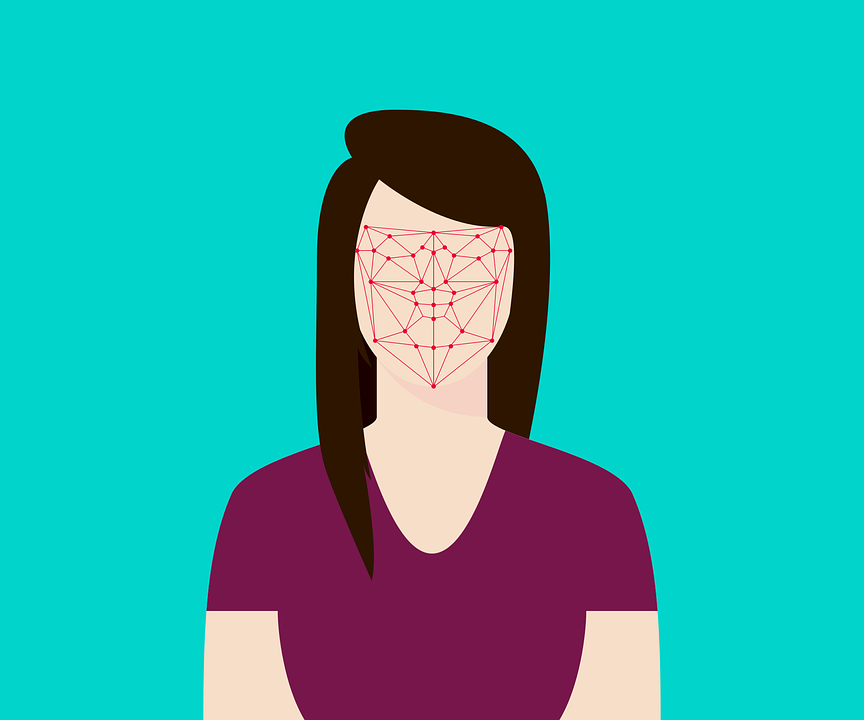
These networks don‘t just see pixels; they learn hierarchical representations. Imagine a digital detective meticulously examining facial landmarks, extracting features like distance between eyes, nose shape, and facial contours. Each layer of the neural network adds complexity, transforming raw visual data into meaningful information.
Mathematical Foundations of Facial Mapping
[F(x) = \sum_{i=1}^{n} w_i * x_i + b]This fundamental equation represents how facial recognition models assign weights to different facial features, creating a unique mathematical signature for each face. It‘s like creating a digital fingerprint, but far more complex and nuanced.
Real-World Applications: Beyond Simple Identification
Facial recognition transcends traditional security applications. In healthcare, it‘s becoming a diagnostic tool, helping detect genetic disorders by analyzing facial symmetry and characteristics. Insurance companies use it to assess risk profiles, while retailers personalize shopping experiences.
A Day in the Life of Facial Recognition Technology
Picture Sarah, a marketing executive, walking into her office. Her smartphone recognizes her instantly, unlocking with a sophisticated 3D facial map. At the building entrance, security systems validate her identity seamlessly. During a video conference, real-time emotion recognition helps her gauge team dynamics.
Ethical Considerations: Navigating the Moral Landscape
With great technological power comes significant responsibility. Facial recognition raises critical privacy concerns. How do we balance technological innovation with individual rights? The debate isn‘t just technical—it‘s fundamentally human.
Different cultures and legal frameworks approach this differently. European regulations tend to be more restrictive, emphasizing individual privacy, while some Asian countries have more permissive approaches focused on public safety.
The Global Technological Ecosystem
Facial recognition isn‘t developing in isolation. It‘s part of a broader artificial intelligence ecosystem, interconnecting with machine learning, computer vision, and data science. Each breakthrough in one domain ripples through others, creating exponential innovation potential.
Performance and Accuracy: The Continuous Challenge
No facial recognition system is perfect. Current state-of-the-art models achieve accuracy rates around 99.8% under controlled conditions. However, real-world scenarios introduce complexities like varying lighting, angles, and demographic diversity.
Future Horizons: Where Technology Meets Human Experience
The next decade will witness unprecedented facial recognition advancements. We‘re moving towards more empathetic, context-aware systems that understand not just who you are, but how you‘re feeling.
Imagine medical diagnostics that can detect early signs of neurological conditions by analyzing micro-expressions, or educational systems that adapt teaching styles based on student engagement levels detected through facial analysis.
Conclusion: A Technological Symphony
Facial recognition represents more than a technological achievement—it‘s a testament to human creativity. We‘re not just creating algorithms; we‘re expanding the boundaries of human perception and understanding.
As an artificial intelligence expert, I‘m continuously amazed by how technology mirrors and extends our natural capabilities. Facial recognition isn‘t about replacing human interaction but enriching our understanding of identity, emotion, and connection.
The future isn‘t about machines replacing humans but collaborating in ways we‘re just beginning to imagine.
Invitation to Explore
Are you ready to dive deeper into this fascinating world? The journey of facial recognition is just beginning, and every technological step reveals new wonders about human complexity.
Stay curious. Stay innovative.