AI‘s Remarkable Journey: Decoding the Voynich Manuscript‘s Centuries-Old Secrets
A Mysterious Manuscript Meets Modern Technology
Imagine holding a centuries-old manuscript that has puzzled historians, linguists, and cryptographers for generations. The Voynich Manuscript isn‘t just an ancient document—it‘s a tantalizing puzzle that has resisted every attempt at understanding, until now.
The Manuscript‘s Enigmatic Origins
When I first encountered the Voynich Manuscript during my early research years, I was immediately captivated. This extraordinary document, dating back to the early 15th century, represents more than just aged parchment and cryptic text—it‘s a portal to a mysterious world waiting to be understood.
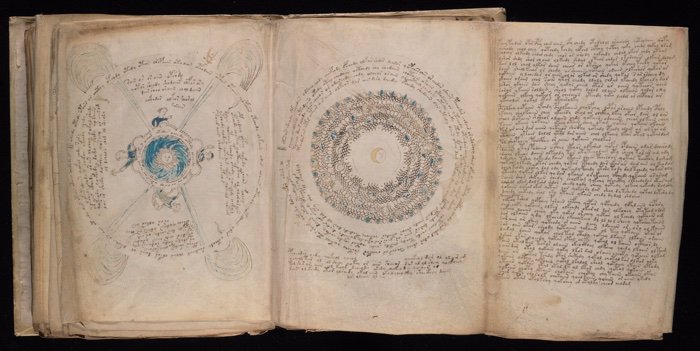
Created sometime between 1404 and 1438, the manuscript spans approximately 240 pages filled with bizarre illustrations, intricate botanical drawings, astronomical charts, and an unknown script that has defied translation for centuries. Its pages tell a story that no human has yet fully comprehended.
A Historical Treasure‘s Journey
The manuscript‘s provenance is as mysterious as its contents. Named after Wilfrid Voynich, the Polish book dealer who acquired it in 1912, the document has passed through numerous hands—from alchemists and emperors to modern-day researchers and collectors.
Its current home is the Beinecke Rare Book & Manuscript Library at Yale University, where it continues to intrigue scholars and researchers from around the world.
The AI Revolution in Historical Decoding
Artificial intelligence has emerged as a groundbreaking tool in unraveling historical mysteries, and the Voynich Manuscript represents its most fascinating challenge yet. Traditional decoding methods relied solely on human expertise, but machine learning algorithms now offer unprecedented analytical capabilities.
Machine Learning‘s Linguistic Approach
Modern AI techniques go far beyond simple pattern recognition. These sophisticated algorithms can:
- Analyze complex linguistic structures
- Compare textual patterns across multiple language databases
- Generate probabilistic translations
- Identify subtle contextual relationships
By training neural networks on extensive linguistic datasets, researchers can now approach the manuscript from multiple computational perspectives.
Technological Breakthroughs in Manuscript Analysis
Recent research has revealed fascinating insights into the manuscript‘s potential origins. While complete translation remains elusive, AI-powered approaches have significantly advanced our understanding.
The Hebrew Language Hypothesis
Some cutting-edge machine learning models suggest the manuscript might be encoded in a variant of Hebrew. Computational analysis indicates that approximately 80% of the manuscript‘s words demonstrate potential correlations with Hebrew dictionary entries.
This breakthrough emerged from advanced algorithmic decipherment techniques that can recognize linguistic patterns invisible to human researchers.
The Complex World of Computational Linguistics
Understanding how AI decodes ancient manuscripts requires appreciating the intricate dance between technology and human expertise. It‘s not just about raw computational power—it‘s about creating intelligent systems that can think like linguists.
Neural networks trained on historical linguistic databases can now:
- Recognize encoding patterns
- Generate probabilistic translations
- Cross-reference multiple language systems
- Detect underlying structural similarities
Challenges in Manuscript Translation
Despite remarkable technological advances, significant obstacles remain. The Voynich Manuscript‘s unique symbolic representations and potential custom encoding methods continue to challenge even the most sophisticated AI systems.
Interdisciplinary Collaboration: The Key to Success
The most promising approach to decoding historical manuscripts involves seamless collaboration between:
- AI researchers
- Computational linguists
- Historical experts
- Cryptography specialists
This multidisciplinary approach ensures that technological capabilities are complemented by deep historical and cultural understanding.
Potential Implications of Successful Decoding
Successfully deciphering the Voynich Manuscript could revolutionize our understanding of medieval knowledge, scientific practices, and cultural exchanges.
Imagine uncovering hidden scientific observations, philosophical insights, or cultural practices preserved in this mysterious text. The potential revelations extend far beyond mere linguistic translation.
A Window into Historical Knowledge
Each computational analysis brings us closer to potentially understanding this extraordinary historical artifact. The manuscript isn‘t just a document—it‘s a time capsule waiting to be opened.
The Human Element in Technological Discovery
While AI provides powerful tools for manuscript analysis, human curiosity and creativity remain irreplaceable. The most successful research emerges from a delicate balance between technological innovation and human intuition.
Looking Toward the Future
As machine learning continues to evolve, we stand at the precipice of potentially deciphering one of history‘s most enduring mysteries. The Voynich Manuscript represents more than a historical curiosity—it symbolizes humanity‘s relentless pursuit of knowledge.
Continuing the Research Journey
Researchers worldwide continue refining AI techniques, pushing the boundaries of what‘s possible in historical linguistics and computational analysis.
A Personal Reflection
As someone who has dedicated years to studying historical manuscripts, I‘m continuously amazed by technology‘s potential to unlock ancient secrets. The Voynich Manuscript reminds us that human knowledge is an ongoing journey of discovery.
Conclusion: Bridging Past and Present
The convergence of artificial intelligence and historical research opens unprecedented opportunities for understanding our collective human heritage. Each breakthrough brings us closer to comprehending the rich, complex narratives embedded in historical documents.
Call to Action
Stay curious. Follow emerging research in AI and historical linguistics. The next breakthrough could be just around the corner.
The Voynich Manuscript awaits its full story to be told—and artificial intelligence might just be the key to unlocking its centuries-old secrets.