Artificial Neural Networks: A Comprehensive Exploration of Computational Intelligence
The Fascinating World of Neural Networks: A Personal Journey
Imagine standing at the intersection of biology and technology, where human brain complexity meets computational innovation. As someone who has dedicated years to understanding the intricate dance of artificial intelligence, I‘ve witnessed the remarkable evolution of neural networks – a technology that continues to reshape our understanding of intelligent systems.
Neural networks aren‘t just algorithms; they‘re sophisticated computational models that mirror the remarkable complexity of biological neural systems. Their journey from theoretical concept to transformative technology represents one of the most exciting narratives in modern computer science.
Historical Roots: From Biological Inspiration to Computational Revolution
The story of neural networks begins long before modern computers. In the 1940s, Warren McCulloch and Walter Pitts first proposed a computational model of neurons, laying the groundwork for what would become a technological revolution. Their seminal work demonstrated how simple biological neurons could be mathematically modeled, creating a bridge between neuroscience and computational theory.
Early neural network models were primitive by today‘s standards. Researchers like Frank Rosenblatt‘s perceptron in 1958 represented groundbreaking attempts to create machines that could learn. However, limitations in computational power and theoretical understanding initially constrained these early efforts.
Architectural Foundations: Understanding Neural Network Structure
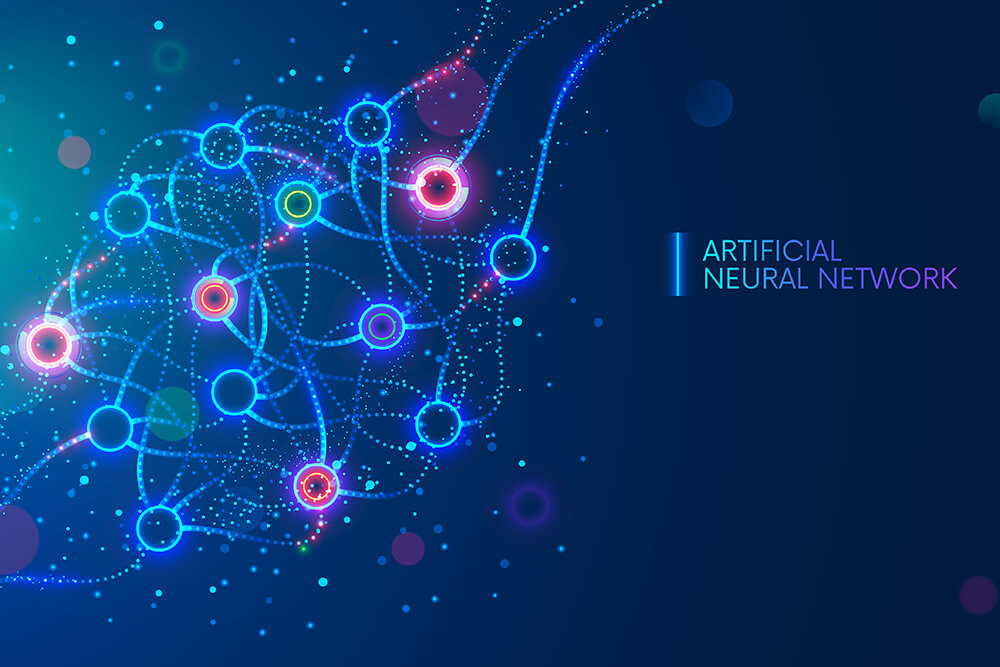
At its core, a neural network resembles a complex, interconnected system of computational nodes. Think of it like an intricate communication network where each node – analogous to a biological neuron – processes and transmits information through weighted connections.
Layers of Complexity: Input, Hidden, and Output
Neural networks typically comprise three fundamental layers:
-
Input Layer: This initial stage receives raw data, transforming external information into a format the network can process. Imagine it as the sensory receptors collecting initial signals.
-
Hidden Layers: These intermediate computational stages perform complex transformations. Multiple hidden layers enable networks to extract increasingly abstract features from input data.
-
Output Layer: The final stage generates processed results, translating complex internal computations into meaningful predictions or classifications.
Mathematical Underpinnings: The Language of Neural Computation
Mathematically, neural networks operate through sophisticated transformation functions. The fundamental equation describing neuron activation can be represented as:
[y = f(∑(w_i * x_i) + b)]Where:
- (y) represents neuron output
- (w_i) represents connection weights
- (x_i) represents input signals
- (b) represents bias term
- (f()) represents activation function
Learning Mechanisms: How Neural Networks Adapt and Evolve
Neural networks don‘t simply process information; they learn and improve through sophisticated training mechanisms. This adaptive capability distinguishes them from traditional computational models.
Training Paradigms
-
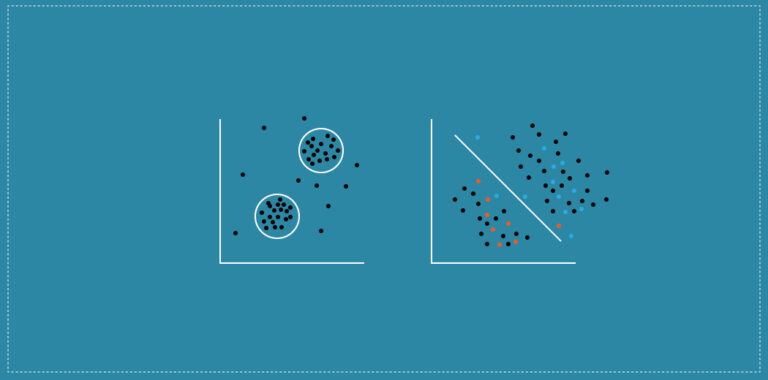
Supervised Learning: Networks learn by comparing predicted outputs with actual results, systematically adjusting internal weights to minimize prediction errors.
-
Unsupervised Learning: Networks discover inherent data patterns autonomously, clustering similar information without predefined labels.
-
Reinforcement Learning: Networks learn through interaction, receiving rewards or penalties based on computational performance.
Real-World Applications: Neural Networks Transforming Industries
Neural networks have transcended theoretical research, becoming pivotal technologies across multiple domains:
Healthcare Diagnostics
Medical imaging analysis represents a profound application of neural network technology. Convolutional neural networks can detect microscopic anomalies in radiological scans with unprecedented accuracy, potentially identifying early-stage diseases before human experts.
Financial Modeling
Complex neural network architectures now predict market trends, assess investment risks, and develop sophisticated trading strategies. Their ability to process massive datasets enables more nuanced financial decision-making.
Autonomous Systems
Self-driving vehicles rely extensively on neural networks to interpret complex environmental data, make real-time decisions, and navigate challenging scenarios.
Emerging Research Frontiers
Neuromorphic Computing
Researchers are developing computer architectures that more closely mimic biological neural systems, promising dramatically more energy-efficient computational models.
Quantum Neural Networks
Integrating quantum computing principles with neural network architectures could unlock unprecedented computational capabilities, potentially solving problems currently deemed intractable.
Ethical Considerations and Challenges
As neural networks become increasingly sophisticated, critical ethical questions emerge. How do we ensure fairness, transparency, and accountability in AI systems? Addressing potential biases and maintaining human oversight remains crucial.
Computational Limitations
Despite remarkable advances, neural networks still face significant challenges:
- High computational resource requirements
- Potential for overfitting
- Limited interpretability of complex models
Looking Toward the Future
Neural networks represent more than technological innovation; they symbolize humanity‘s ongoing quest to understand intelligence itself. As computational capabilities expand and our theoretical understanding deepens, we stand at the precipice of unprecedented technological transformation.
The journey of neural networks mirrors our own intellectual evolution – a testament to human creativity, scientific curiosity, and our remarkable ability to learn, adapt, and reimagine what‘s possible.
Conclusion: A Continuous Journey of Discovery
Neural networks aren‘t a destination but a continuous journey of exploration. Each breakthrough reveals new questions, pushing the boundaries of our computational imagination.
As we continue exploring these remarkable systems, one thing becomes clear: the most exciting discoveries lie not in what we currently understand, but in the vast, uncharted territories of computational intelligence that await our exploration.