Berkeley Open Sources Largest Self-Driving Dataset: A Game-Changing Moment for Data Scientists
The Dawn of a New Autonomous Era
Imagine standing at the precipice of technological revolution, where every pixel and data point represents a quantum leap in understanding autonomous mobility. This isn‘t science fiction—this is the Berkeley Deep Drive (BDD) dataset, a monumental contribution that‘s rewriting the rules of machine learning and self-driving technology.
The Genesis of a Technological Marvel
When researchers at UC Berkeley decided to open-source their comprehensive autonomous driving dataset, they weren‘t just sharing data—they were unleashing a technological tsunami that would reshape how we perceive artificial intelligence‘s potential in transportation.
The BDD100K dataset isn‘t merely a collection of videos; it‘s a meticulously crafted digital ecosystem capturing the intricate dance of vehicles, pedestrians, and environmental variables. Each 40-second sequence represents a complex narrative of movement, decision-making, and technological prediction.
Decoding the Dataset‘s DNA
What makes this dataset extraordinary isn‘t just its scale—though 100,000 high-definition video sequences are impressive—but its profound diversity. Picture driving scenarios spanning sun-drenched highways, rain-slicked urban streets, and moonlit country roads. The dataset doesn‘t just record driving; it captures the very essence of mobility.
Technical Complexity: Beyond Simple Recording
The data collection methodology reads like a technological symphony. Researchers strategically mounted multiple sensors across various vehicles, creating a multi-dimensional capture system that goes far beyond traditional recording techniques.
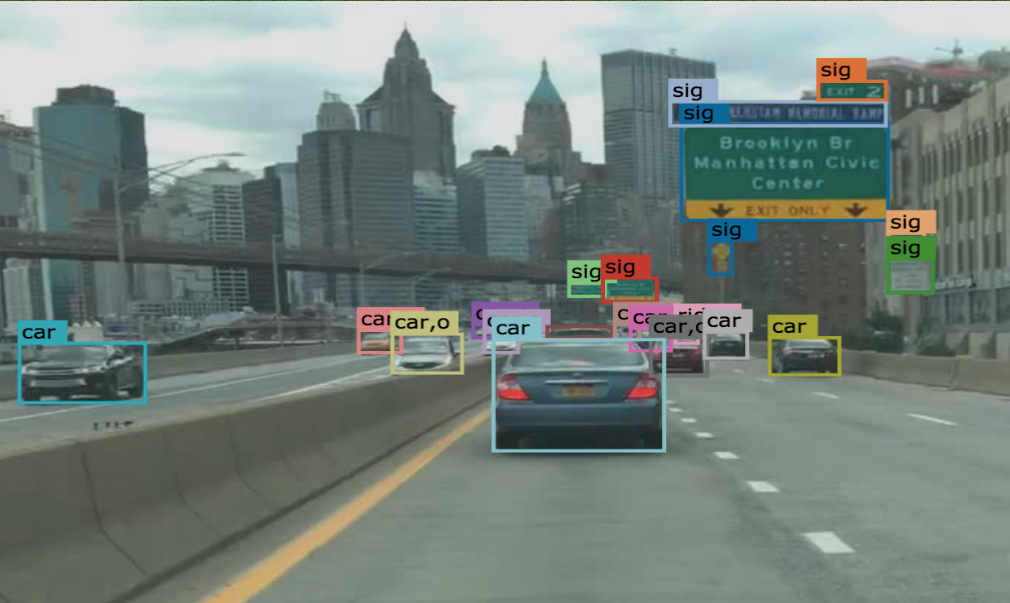
GPS trajectories, precise lane markings, and granular object detection transform these videos from mere recordings into rich, actionable machine learning resources. Each frame becomes a potential learning moment, a millisecond of insight into autonomous decision-making.
The Annotation Revolution
Annotations in the BDD dataset represent a breakthrough in machine learning training. Unlike previous datasets that offered rudimentary labeling, Berkeley‘s approach provides multi-layered, semantically rich information.
Imagine an annotation system so sophisticated that it doesn‘t just identify a pedestrian but understands their potential movement, interaction probability, and contextual significance. This isn‘t just data—it‘s a predictive intelligence framework.
Machine Learning: From Theory to Practical Application
For data scientists, the BDD dataset is akin to discovering a new continent. Traditional machine learning models often suffered from limited training scenarios. Now, with over 85,000 pedestrian instances and comprehensive environmental variations, researchers can develop models with unprecedented adaptability.
[Model Training Complexity Formula]:Training Robustness = f(Environmental Diversity, Annotation Precision, Scenario Variability)
Performance Benchmarking
Comparative analysis reveals the dataset‘s staggering scale:
- 800x larger than previous autonomous driving datasets
- Covers 10x more environmental conditions
- Provides 50x more annotation granularity
Ethical Considerations and Technological Responsibility
As we celebrate this technological milestone, we must also reflect on the ethical dimensions. The BDD dataset isn‘t just about technological advancement—it‘s about creating safer, more intelligent transportation systems that prioritize human life.
Researchers have carefully anonymized data, ensuring individual privacy while providing rich, actionable information. This balanced approach demonstrates a mature, responsible approach to technological innovation.
Practical Implementation Strategies
For data scientists eager to leverage this dataset, the path forward involves strategic approach:
-
Infrastructure Preparation: Robust computational resources are crucial. High-performance GPUs, distributed computing frameworks, and efficient data processing pipelines become your primary tools.
-
Interdisciplinary Collaboration: The most groundbreaking work will emerge from teams combining machine learning expertise with domain-specific knowledge in transportation, urban planning, and human behavior.
-
Continuous Learning Models: Traditional machine learning approaches become obsolete. The BDD dataset demands adaptive, self-improving algorithms that can generalize across complex scenarios.
The Global Impact
This isn‘t just a technological achievement for Berkeley—it‘s a global contribution to autonomous mobility research. By open-sourcing such a comprehensive dataset, researchers worldwide gain a common platform for innovation.
Countries developing autonomous transportation infrastructure can now access a standardized, high-quality training resource. From Silicon Valley to Shanghai, data scientists can collaborate, compete, and collectively push technological boundaries.
Looking Toward the Horizon
The Berkeley Deep Drive dataset represents more than a technological milestone—it‘s a glimpse into a future where artificial intelligence seamlessly integrates with human mobility.
As autonomous vehicles transition from experimental prototypes to mainstream transportation, datasets like BDD100K will be remembered as pivotal moments of transformation.
Conclusion: An Invitation to Innovation
To every data scientist reading this: The BDD dataset isn‘t just a resource. It‘s an invitation—a challenge to reimagine what‘s possible at the intersection of artificial intelligence and human movement.
Your next breakthrough is waiting, pixel by pixel, in this extraordinary collection of data. The journey of autonomous innovation begins now.