Chirp Wheel Review: My Honest Experience With the Back Pain Relief Tool That‘s All Over Social Media
Hey there! If you‘re reading this, chances are you know the struggle of back pain all too well. Whether it‘s from long hours hunched over a desk, a grueling workout routine, or just the wear and tear of daily life, back pain can seriously cramp your style (and your spine!).
If you‘ve checked out any health and wellness Instagram accounts or Facebook ads lately, you‘ve probably seen people rolling around on a funny-looking wheel contraption and raving about how it‘s changed their life. Yep, I‘m talking about the Chirp Wheel.
I‘ll admit, when I first started seeing ads for the Chirp Wheel, I was skeptical. I mean, how could this little wheel really make that big of a difference? But the more glowing reviews I read and the more people I saw posting about it, the more curious I got.
As someone who‘s no stranger to nagging upper back knots and lower back flare-ups from my desk job and intense yoga habit, I decided to take the plunge and order a Chirp Wheel for myself. And let me tell you, I‘m so glad I did!
In this in-depth review, I‘ll give you all the deets on what the Chirp Wheel actually is and how it works, the different wheel options and bundle accessories, how it stacks up to other back pain relief products, and most importantly – my honest experience using it and whether I think it‘s worth the hype and the price tag.
So buckle up, grab an ice pack for that cranky back, and let‘s dive in!
What Even Is the Chirp Wheel and How Does It Work?
So first things first, what exactly is the Chirp Wheel? In a nutshell, it‘s a wheel-shaped tool designed to relieve tension, tightness, and pain in the muscles around your spine – aka the muscles that tend to bear the brunt of our poor posture and stressful lifestyles.
The wheel comes in three different sizes – 12 inch, 10 inch, and 6 inch diameters. The largest one provides the gentlest stretch and pressure, while the smallest goes deepest and feels the most intense. Personally, I opted for the 10 inch Gentle wheel to get started.
Here‘s what sets the Chirp Wheel apart from your average foam roller or yoga wheel: it‘s got a special groove down the middle, perfectly shaped to cradle your spine while putting pressure on the muscles and fascia to either side. This "spinal canal" protects your vertebrae while also allowing you to really dig into those hard-to-reach knots.
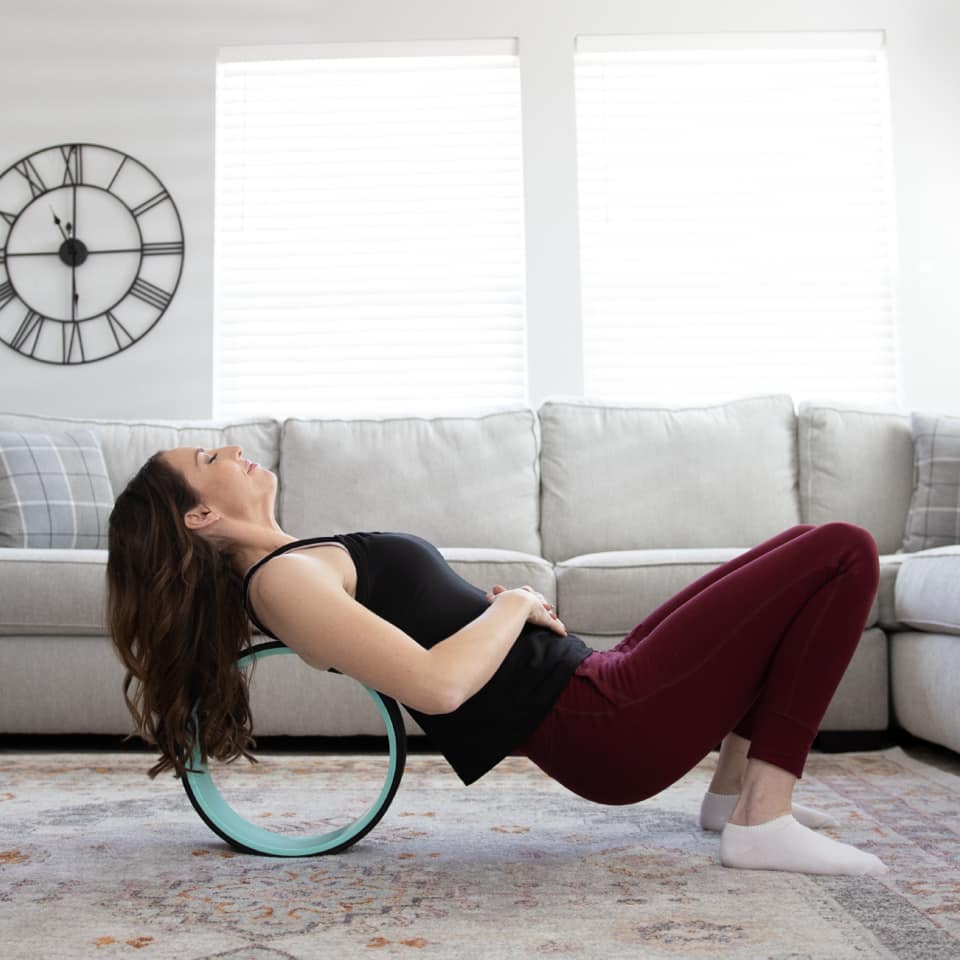
So how exactly do you use it? You simply place the wheel on the floor, lay down on top of it with the spinal canal aligned with your spine, and gently roll back and forth. You can position the wheel at different points along your spine to target different areas, like between your shoulder blades or on your lower back.
The wheel is made of an eco-friendly PVC inner tube wrapped in EVA foam padding, so it‘s got some cushion but is still firm enough to get deep into those muscles. And with a weight limit of 500 lbs, it‘s sturdy enough to support all body types.
The Science Behind the Chirp Wheel
Now I know what you might be thinking – this all sounds great, but is there any actual science to back up the claims that the Chirp Wheel can relieve back pain? As a bit of a research nerd, I dug into some studies to find out.
First of all, let‘s talk about how prevalent back pain really is. According to the American Chiropractic Association, back pain is the single leading cause of disability worldwide, with experts estimating that up to 80% of the population will experience back pain at some point in their lives. In the United States alone, back pain accounts for over 260 million lost work days per year and over $50 billion in healthcare costs. Yikes.
So what causes all this back pain? Poor posture, prolonged sitting and inactivity, repetitive motions, improper lifting, excess weight, smoking, stress, and even genetics can all contribute to a cranky back and tight muscles.
This is where the Chirp Wheel comes in. The concept is based on a combination of foam rolling or self-myofascial release and spinal traction. Foam rolling has been shown to relieve muscle tension and soreness, increase flexibility and range of motion, and improve blood flow and circulation by applying direct pressure to trigger points or knots.
Meanwhile, spinal traction involves gently stretching the spine to decompress the vertebrae and disks, which can help relieve pressure and pinched nerves. A 2014 study published in the Journal of Back and Musculoskeletal Rehabilitation found that mechanical traction was effective at reducing pain and disability in patients with chronic low back pain.
The Chirp Wheel essentially combines these two techniques by using the shape of the wheel and spinal canal to apply both pressure and traction to the muscles and spine. By regularly rolling on the wheel, the idea is that you can release tension, break up knots, realign your spine, and improve your posture over time.
Putting the Chirp Wheel to the Test
Okay, so the science seems legit – but does the Chirp Wheel actually live up to the hype IRL? I decided to find out for myself by committing to using the wheel for at least 10 minutes per day for two weeks straight.
When my beautiful teal Chirp Wheel arrived in the mail, I was stoked to unbox it and get rolling. The wheel comes fully assembled and ready to use, along with a guide with some suggested techniques and a link to video tutorials on the Chirp website.
I‘ll be real with you – my first time on the wheel felt a little awkward and even a bit painful as my spine and muscles adjusted to the pressure. It definitely took some trial and error to find the right positioning and pace of rolling that felt good for my body.
But even after just a few minutes, I could feel my upper back muscles starting to release and loosen up. There was a satisfying crack and pop here and there as the wheel worked out some kinks. And when I stood up after that first session? I felt a bit taller and definitely more relaxed.
Over the next two weeks, I experimented with using the wheel at different times of day and for different purposes. A quick 5-10 minute roll first thing in the morning helped me shake off the stiffness and get ready to tackle my day. A longer, deeper roll while watching Netflix after work was the perfect way to unwind and release the tension from hours of hunching over my laptop. And on days when I had an intense yoga class or workout? You better believe I grabbed my wheel for some sweet, sweet relief.
Here are a few of my favorite techniques I discovered:
- Positioning the wheel horizontally across my upper back/shoulder blade area and slowly rolling side to side to break up knots and improve thoracic mobility
- Placing the wheel under my sacrum/tailbone area and gently rolling to release tension in my lower back and hips
- Laying on the wheel vertically along my spine and breathing deeply into my belly to create space and traction
- Angling my body slightly sideways on the wheel to target the muscles along the sides of my spine
- Rolling slowly and holding on especially tender areas for 20-30 seconds to really let the pressure sink in
After consistently using the Chirp Wheel for a few weeks, I honestly started to notice a difference in my overall back health. My posture felt better, I had fewer flare-ups of pain and tension, and my body just generally felt more open and flexible.
I also loved having the Chirp Wheel as a tool in my back pocket (or should I say, the corner of my living room) whenever back pain did strike. Rather than immediately booking a massage or popping an ibuprofen, I could grab my wheel for some quick and easy self-care.
Of course, everyone‘s body is different, and what worked for me may not be the magic bullet for everyone. But based on my experience, I would 10/10 recommend giving the Chirp Wheel a try if you‘re looking for a convenient, affordable, and effective way to manage back pain and tension.
What Other Chirp Wheel Users Have to Say
But don‘t just take my word for it – the Chirp Wheel has racked up tons of glowing reviews and testimonials from people of all ages, body types, and levels of back pain. Here are just a few gems:
"I have a herniated disc and it‘s helped me not have to see the chiropractor as much! Also use it on my upper back/neck and it‘s been amazing." – Sarah L.
"I suffer from chronic low back pain for many years, and I‘ve tried everything. I was skeptical about this product at first, but it has definitely been a game-changer for me. I highly recommend it to anyone who suffers from back pain." – Michael S.
"I am 36 weeks pregnant and this has been such a lifesaver for my back pain! It‘s one of the only things that gives me relief. Worth every penny." – Emily K.
"I was a little scared that it would be painful, but it actually feels amazing. Like the best back crack ever x100. I can‘t believe how much it‘s helped with my posture and relieving the tension in my upper back." – Jenna P.
And if the 4.7/5 star rating and over 4,000 reviews on the Chirp website aren‘t convincing enough, the Chirp Wheel was even featured on the popular TV show Shark Tank, where founder Tate Stock scored a deal with investor Lori Greiner. Talk about a stamp of approval!
Since its debut on Shark Tank in 2020, Chirp has seen massive growth, with millions of dollars in sales and thousands of happy customers. They‘ve expanded their product line to include massage balls, posture correctors, resistance bands, and other therapeutic accessories.
But even with their skyrocketing success, Chirp remains committed to their mission of helping people find drug-free, affordable relief from back pain. In fact, for every wheel sold, Chirp donates a portion of the proceeds to the Boys and Girls Clubs of America to support youth health and wellness programs. So you can feel good knowing your purchase is making a difference.
How the Chirp Wheel Stacks Up to the Competition
Now, I know the Chirp Wheel isn‘t the only back pain relief product on the block. So how does it compare to some of the other popular options out there? Let‘s break it down:
| Product | Pros | Cons | Price |
|---|---|---|---|
| Foam roller | – Versatile – Portable – Inexpensive |
– Flat surface doesn‘t contour to spine – Can be uncomfortable on bony areas |
$10 to $50 |
| Yoga wheel | – Stretches and strengthens core and back muscles – Doubles as a yoga prop |
– Harder, less cushioned surface – No spinal canal |
$30 to $100 |
| Inversion table | – Decompresses spine using gravity – Can be used for longer periods |
– Bulky and expensive – Not practical for travel or office |
$100 to $500 |
| Massage gun | – Targets specific knots and trigger points – Variable speed and pressure |
– Can be loud and intense – Requires manual effort to use |
$50 to $400 |
As you can see, the Chirp Wheel kind of combines the best of all worlds – it‘s got the portability and affordability of a foam roller, the targeted pressure of a massage gun, and the spinal decompression of an inversion table, plus the unique design of the spinal canal.
Of course, the "best" tool for you will depend on your specific needs, preferences, and budget. But if you‘re looking for an effective, versatile, and easy to use option, the Chirp Wheel is definitely worth considering.
Tips for Getting the Most Out of Your Chirp Wheel
So you‘ve decided to give the Chirp Wheel a spin (pun intended). Yay! Here are a few tips to help you maximize the benefits and comfort of your rolling sessions:
- Start slow and listen to your body. If an area feels super tender or painful, ease off or try a different position.
- Use your breath! Take slow, deep breaths as you roll to help release tension and oxygenate your muscles.
- Experiment with different wheel sizes and pressures. You may find you prefer a gentler or deeper sensation depending on the area and your pain level that day.
- Incorporate the Chirp Wheel into a broader self-care routine along with stretching, exercise, heat or ice, etc. Consistency is key!
- Don‘t roll directly on your lower spine or neck – keep the wheel on the muscles to either side to avoid irritating the vertebrae and discs.
- Drink plenty of water after rolling to help flush out toxins and support healthy muscles and joints.
- Be patient and stick with it! Like any new habit, it may take some time to see significant results. But trust me, your back will thank you.
The Bottom Line
Phew, that was a lot of info! If you made it this far, you‘re clearly committed to taking control of your back health – go you! As someone who‘s tried countless products and treatments for my own back pain over the years, I can confidently say that the Chirp Wheel is a game changer.
Is it a magic cure-all for every back issue under the sun? No. But for those of us dealing with the daily aches, pains, and stiffness that come with the modern grind, the Chirp Wheel offers an accessible, effective, and dare I say, even enjoyable way to find some relief.
With its innovative spinal canal design, high-quality construction, and customizable pressure options, the Chirp Wheel stands out from the crowd of generic back pain gadgets. And with a 60-day money-back guarantee, free shipping, and thousands of happy customers, you can feel confident giving it a try for yourself.
So if you‘re ready to break up with back pain (and maybe your expensive massage habit), consider giving the Chirp Wheel a roll. Your spine (and your wallet) might just thank you.
Have you tried the Chirp Wheel yourself? I‘d love to hear about your experience and any tips or techniques you‘ve discovered. Leave a comment below and let‘s keep the conversation rolling (I couldn‘t resist one last pun).
Here‘s to happy, healthy, and pain-free backs!