Creating Continuous Action Bot: A Deep Dive into Reinforcement Learning Mastery
The Fascinating World of Continuous Action Reinforcement Learning
Imagine standing at the frontier of artificial intelligence, where machines learn to make decisions with human-like precision. This is the realm of continuous action reinforcement learning – a domain where algorithms transform raw data into intelligent decision-making systems.
Origins and Evolutionary Journey
Reinforcement learning didn‘t emerge overnight. Its roots trace back to psychological learning theories, where organisms adapt their behavior through interaction and feedback. Early computational models were primitive, handling only discrete action spaces. But as computational power expanded, so did our ability to model complex decision-making processes.
Mathematical Foundations
The core of continuous action reinforcement learning lies in sophisticated mathematical frameworks. At its heart, we find the Markov Decision Process (MDP), a mathematical representation of sequential decision-making scenarios.
[V(s) = \maxa {R(s,a) + \gamma \sum{s‘} P(s‘|s,a)V(s‘)]Where:
- [V(s)] represents the value of a state
- [R(s,a)] is the immediate reward
- [\gamma] represents the discount factor
- [P(s‘|s,a)] describes state transition probabilities
Deep Deterministic Policy Gradient: A Revolutionary Approach
Deep Deterministic Policy Gradient (DDPG) represents a quantum leap in continuous action space learning. Unlike traditional methods, DDPG seamlessly integrates deep neural networks with policy gradient techniques.
Architectural Complexity
DDPG‘s architecture involves two primary neural networks:
- Actor Network: Generates continuous actions
- Critic Network: Evaluates action quality
Consider a sophisticated implementation demonstrating this architectural elegance:
class DDPGNetwork(nn.Module):
    def __init__(self, state_dimensions, action_dimensions):
        super().__init__()
        self.actor_network = nn.Sequential(
            nn.Linear(state_dimensions, 400),
            nn.ReLU(),
            nn.Linear(400, 300),
            nn.ReLU(),
            nn.Linear(300, action_dimensions),
            nn.Tanh()
        )

        self.critic_network = nn.Sequential(
            nn.Linear(state_dimensions + action_dimensions, 400),
            nn.ReLU(),
            nn.Linear(400, 300),
            nn.ReLU(),
            nn.Linear(300, 1)
        )
Performance Optimization Strategies
Developing high-performance continuous action bots requires nuanced strategies beyond basic implementation. Researchers have discovered multiple techniques to enhance learning efficiency:
Adaptive Exploration Mechanisms
Traditional exploration methods often suffer from high variance. Modern approaches like parameter space noise injection provide more intelligent exploration strategies. By introducing controlled randomness, agents can discover optimal policies more effectively.
Reward Engineering
Crafting meaningful reward functions transforms raw environment interactions into purposeful learning experiences. It‘s not just about maximizing immediate rewards, but designing incentive structures that guide long-term strategic behavior.
Real-World Application Scenarios
Continuous action reinforcement learning transcends theoretical boundaries, finding applications across diverse domains:
Robotic Control Systems
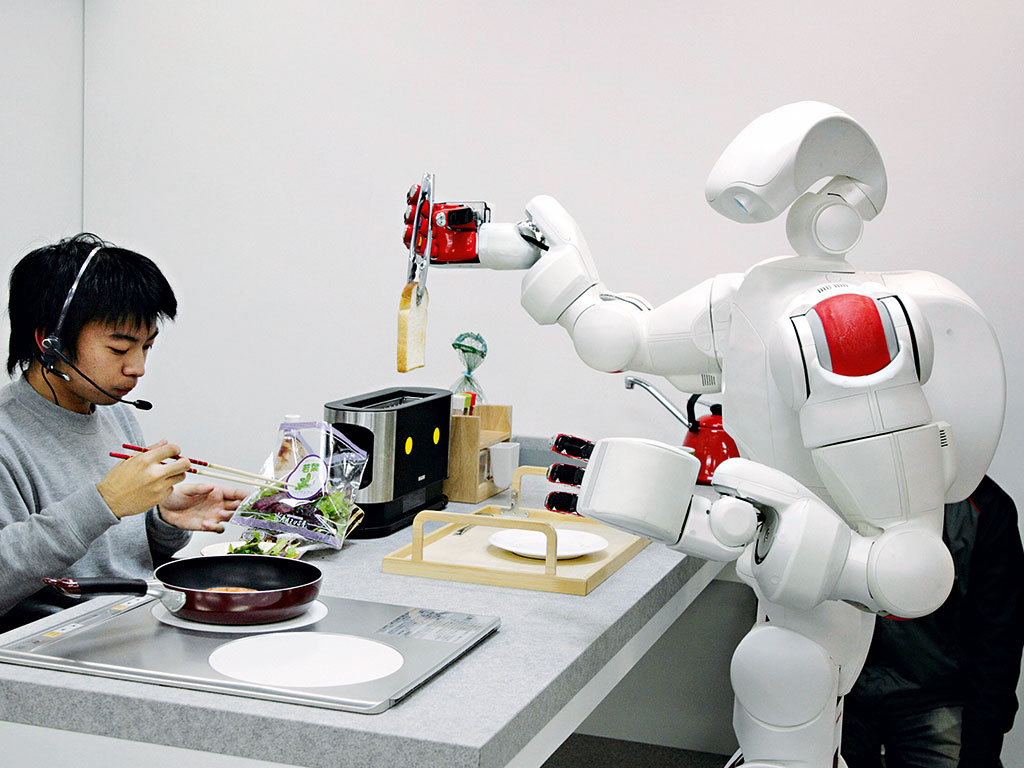
Imagine a robotic arm learning to manipulate delicate objects with human-like precision. By modeling complex physical interactions, reinforcement learning enables machines to adapt dynamically to changing environments.
Autonomous Transportation
Self-driving vehicles represent a pinnacle of continuous action learning. These systems must make split-second decisions, balancing safety, efficiency, and passenger comfort.
Computational Challenges and Solutions
Implementing continuous action reinforcement learning isn‘t without challenges. Computational complexity, sample inefficiency, and stability represent significant hurdles.
Computational Complexity Management
Advanced techniques like parallel computing and distributed training help mitigate computational bottlenecks. By leveraging GPU acceleration and efficient parallel processing, researchers can train increasingly sophisticated models.
Emerging Research Frontiers
The field continues evolving rapidly. Researchers are exploring:
- Meta-learning techniques
- Zero-shot learning capabilities
- Multi-agent coordination strategies
- Interpretable decision-making models
Ethical Considerations
As these systems become more powerful, ethical considerations become paramount. Ensuring transparency, preventing unintended behaviors, and maintaining human oversight remain critical research priorities.
Looking Forward: The Next Decade
Continuous action reinforcement learning stands at an exciting intersection of mathematics, computer science, and cognitive modeling. As computational capabilities expand and algorithmic sophistication increases, we‘re witnessing the emergence of increasingly intelligent decision-making systems.
Conclusion: A Journey of Continuous Learning
Developing continuous action bots represents more than a technical challenge – it‘s a profound exploration of intelligence itself. By understanding complex decision-making processes, we inch closer to comprehending the fundamental nature of adaptive learning.
The journey continues, with each breakthrough revealing new horizons of computational possibility.