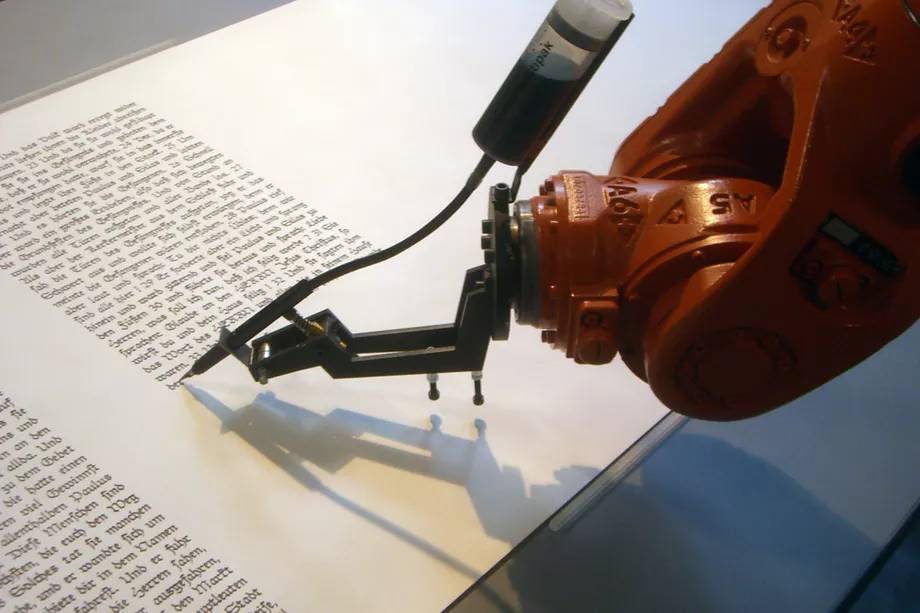
Decoding Text Generation: A Deep Dive into Bidirectional LSTM with TensorFlow
The Language of Machines: A Personal Journey
Imagine standing at the crossroads of human communication and artificial intelligence, where lines of code breathe life into digital conversations. As a machine learning researcher, I‘ve witnessed the remarkable evolution of text generation technologies, and today, I‘m excited to unravel the intricate world of Bidirectional Long Short-Term Memory (BiLSTM) networks.
The Genesis of Intelligent Text Generation
Text generation isn‘t just about stringing words together; it‘s about understanding context, nuance, and the subtle dance of language. When I first encountered BiLSTM networks, I was struck by their elegance – a technological marvel that mimics the human brain‘s ability to comprehend language from multiple perspectives.
Understanding Bidirectional LSTM: Beyond Traditional Sequence Processing
Traditional sequence models often struggled with capturing comprehensive contextual information. Imagine reading a book, but only looking at words from left to right. You‘d miss crucial context hidden in the surrounding text. Bidirectional LSTM changes this paradigm completely.
The Architectural Marvel
At its core, BiLSTM combines two LSTM layers – one processing information forward, another backward. This dual-directional approach creates a more robust understanding of sequential data. Let me break down how this works mathematically:
[h_t = [{\overrightarrow{h_t}}; {\overleftarrow{h_t}}]]Where:
- [h_t] represents the comprehensive hidden state
- [{\overrightarrow{h_t}}] captures forward-looking context
- [{\overleftarrow{h_t}}] captures backward-looking context
Practical Implementation: Walking Through the Code
Let‘s dive into a comprehensive implementation that demonstrates the power of BiLSTM in text generation using TensorFlow.
Data Preprocessing: The Foundation of Intelligent Generation
import tensorflow as tf
import numpy as np
from tensorflow.keras.preprocessing.text import Tokenizer
from tensorflow.keras.preprocessing.sequence import pad_sequences

class TextPreprocessor:
    def __init__(self, max_words=10000):
        self.tokenizer = Tokenizer(num_words=max_words)
        self.max_sequence_length = None

    def prepare_sequences(self, texts):
        # Tokenize the input texts
        self.tokenizer.fit_on_texts(texts)
        sequences = self.tokenizer.texts_to_sequences(texts)

        # Determine maximum sequence length
        self.max_sequence_length = max(len(seq) for seq in sequences)

        # Pad sequences to uniform length
        padded_sequences = pad_sequences(
            sequences,
            maxlen=self.max_sequence_length,
            padding=‘pre‘
        )

        return padded_sequences
Building the BiLSTM Model
def create_bilstm_generator(vocab_size, embedding_dim=128):
    model = tf.keras.Sequential([
        tf.keras.layers.Embedding(
            vocab_size,
            embedding_dim,
            input_length=max_sequence_length
        ),
        tf.keras.layers.Bidirectional(
            tf.keras.layers.LSTM(256, return_sequences=True)
        ),
        tf.keras.layers.Bidirectional(
            tf.keras.layers.LSTM(128)
        ),
        tf.keras.layers.Dense(vocab_size, activation=‘softmax‘)
    ])

    model.compile(
        optimizer=‘adam‘,
        loss=‘categorical_crossentropy‘,
        metrics=[‘accuracy‘]
    )

    return model
The Computational Intelligence Behind Text Generation
Text generation is more than algorithmic prediction – it‘s about understanding the intricate patterns of human communication. BiLSTM networks excel by processing information from both past and future contexts simultaneously.
Computational Complexity and Performance
The computational overhead of BiLSTM is significantly higher compared to unidirectional models. Each time step requires processing in both forward and backward directions, effectively doubling the computational complexity.
Real-World Applications and Challenges
From chatbots to content creation, BiLSTM networks are transforming how machines understand and generate text. However, challenges remain:
- Maintaining coherent long-range dependencies
- Managing computational resources
- Addressing potential bias in training data
Ethical Considerations in Text Generation
As we develop more sophisticated text generation models, ethical considerations become paramount. How do we ensure responsible AI that respects privacy, avoids harmful content, and maintains transparency?
Mitigating Potential Risks
- Implement robust content filtering mechanisms
- Develop comprehensive training data screening processes
- Create transparent model evaluation frameworks
The Future of Text Generation
Machine learning is an ever-evolving landscape. BiLSTM represents a significant milestone, but emerging technologies like transformer models and large language models continue to push boundaries.
Emerging Research Directions
Researchers are exploring hybrid architectures that combine BiLSTM with attention mechanisms, promising even more nuanced text understanding and generation capabilities.
Conclusion: A Journey of Continuous Learning
Text generation using Bidirectional LSTM is not just a technological achievement – it‘s a testament to human creativity in understanding and replicating complex communication patterns.
As we continue to explore this fascinating domain, remember that each line of code represents a step towards bridging human and machine communication.
Keep exploring, keep learning, and embrace the incredible potential of artificial intelligence.