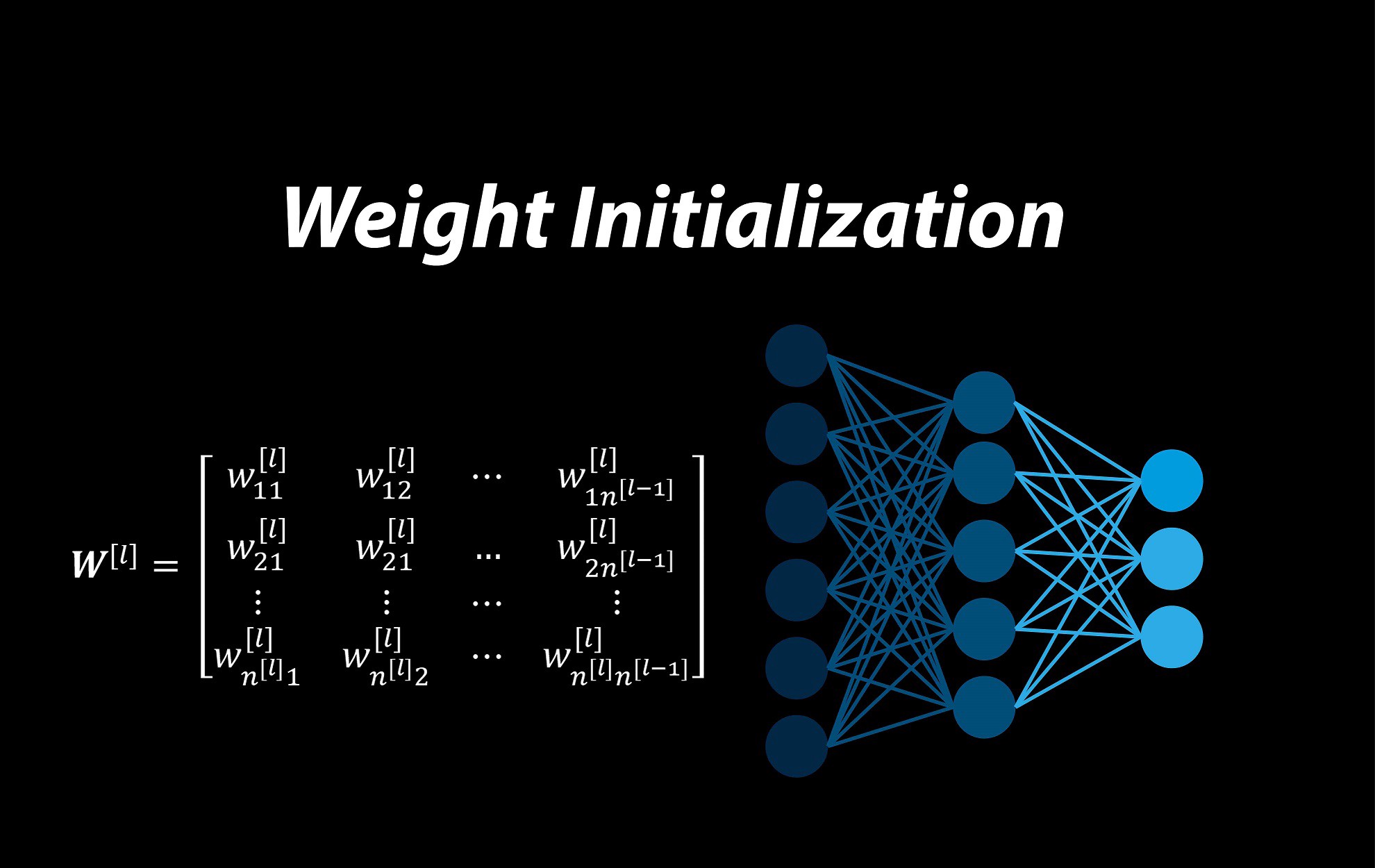
Decoding the Art and Science of Weight Initialization in Neural Networks: A Comprehensive Journey
The Genesis of Intelligent Learning: Understanding Weight Initialization
Imagine standing at the threshold of a vast neural landscape, where every connection represents a potential pathway of understanding. As an artificial intelligence researcher, I‘ve spent countless computational cycles exploring the intricate world of neural network initialization – a process that‘s far more nuanced than simply assigning random numbers.
The Philosophical Underpinnings of Neural Network Learning
Weight initialization isn‘t just a technical procedure; it‘s the philosophical foundation of machine learning. Just as a young musician must learn fundamental techniques before creating complex symphonies, neural networks require carefully crafted initial conditions to unlock their transformative potential.
A Historical Expedition: The Evolution of Weight Initialization
The story of weight initialization is a testament to human ingenuity. In the early days of neural network research, scientists approached initialization with remarkable simplicity – often setting weights to zero or generating completely random values. These primitive approaches quickly revealed fundamental limitations.
The Vanishing Gradient Revelation
Researchers discovered a critical challenge: as neural networks grew deeper, gradients would either disappear or explode, rendering learning impossible. This phenomenon was akin to trying to whisper instructions through an impossibly long telephone line, where messages become increasingly distorted.
Mathematical Foundations: Beyond Simple Randomness
Weight initialization transcends mere randomness. It‘s a sophisticated dance of mathematical precision, where each weight represents a carefully calibrated potential for learning.
The Xavier/Glorot Initialization Breakthrough
Xavier Glorot‘s groundbreaking work introduced a revolutionary concept: initialization should be strategically designed to maintain signal variance across network layers. His approach transformed initialization from a black art into a principled scientific method.
Mathematical representation:
[W \sim Uniform\left(-\sqrt{\frac{6}{n{in} + n{out}}}, \sqrt{\frac{6}{n{in} + n{out}}}\right)]
This elegant formula considers the number of input and output neurons, creating a balanced initialization strategy that prevents signal degradation.
Psychological Parallels: Neural Networks as Cognitive Systems
Interestingly, weight initialization shares profound similarities with human learning processes. Consider how humans learn – we don‘t start with perfectly formed knowledge but gradually refine our understanding through carefully structured experiences.
Neural networks mirror this process. Initial weights represent our network‘s "prior knowledge" – a starting point from which complex learning emerges.
The He Initialization Paradigm
Kaiming He‘s research introduced a specialized initialization technique for ReLU activation functions, addressing specific challenges in deep learning architectures. His method ensures that neural networks maintain signal propagation efficiency, particularly in very deep networks.
Mathematical formulation:
[W \sim Normal\left(0, \sqrt{\frac{2}{n_{in}}}\right)]
Practical Implementation: Turning Theory into Computational Magic
While mathematical elegance is crucial, practical implementation demands nuanced understanding. Different neural network architectures require tailored initialization strategies.
Convolutional Neural Networks: A Specialized Approach
Convolutional layers demand unique initialization techniques. The spatial correlation of features requires initialization methods that preserve information flow while introducing necessary randomness.
Emerging Frontiers: Beyond Traditional Initialization
Recent research explores adaptive and dynamic initialization techniques that can modify their approach based on network characteristics and training progress.
Quantum-Inspired Initialization Strategies
Emerging research draws inspiration from quantum computing principles, exploring probabilistic initialization methods that challenge traditional deterministic approaches.
Real-World Performance Implications
The choice of initialization strategy isn‘t merely academic – it directly impacts:
- Convergence speed
- Model accuracy
- Training stability
- Generalization capabilities
Practical Wisdom: Navigating Initialization Challenges
When implementing weight initialization, consider these insights:
- Match initialization technique to your activation function
- Monitor gradient statistics during initial training phases
- Experiment with multiple initialization strategies
- Understand your specific network architecture
The Human Element in Machine Learning
Despite advanced mathematical techniques, weight initialization remains part art, part science. Each neural network represents a unique learning journey, with initialization serving as the crucial first step.
Future Horizons: Where Do We Go from Here?
The field of weight initialization continues evolving. Researchers are exploring:
- Meta-learning initialization strategies
- Probabilistic initialization frameworks
- Neuromorphic computing approaches
Concluding Reflections: An Ongoing Journey of Discovery
Weight initialization represents more than a technical procedure – it‘s a profound exploration of how artificial systems can learn, adapt, and understand.
As we continue pushing computational boundaries, each carefully initialized neural network becomes a testament to human creativity and technological innovation.
The journey of understanding continues, one weight at a time.