
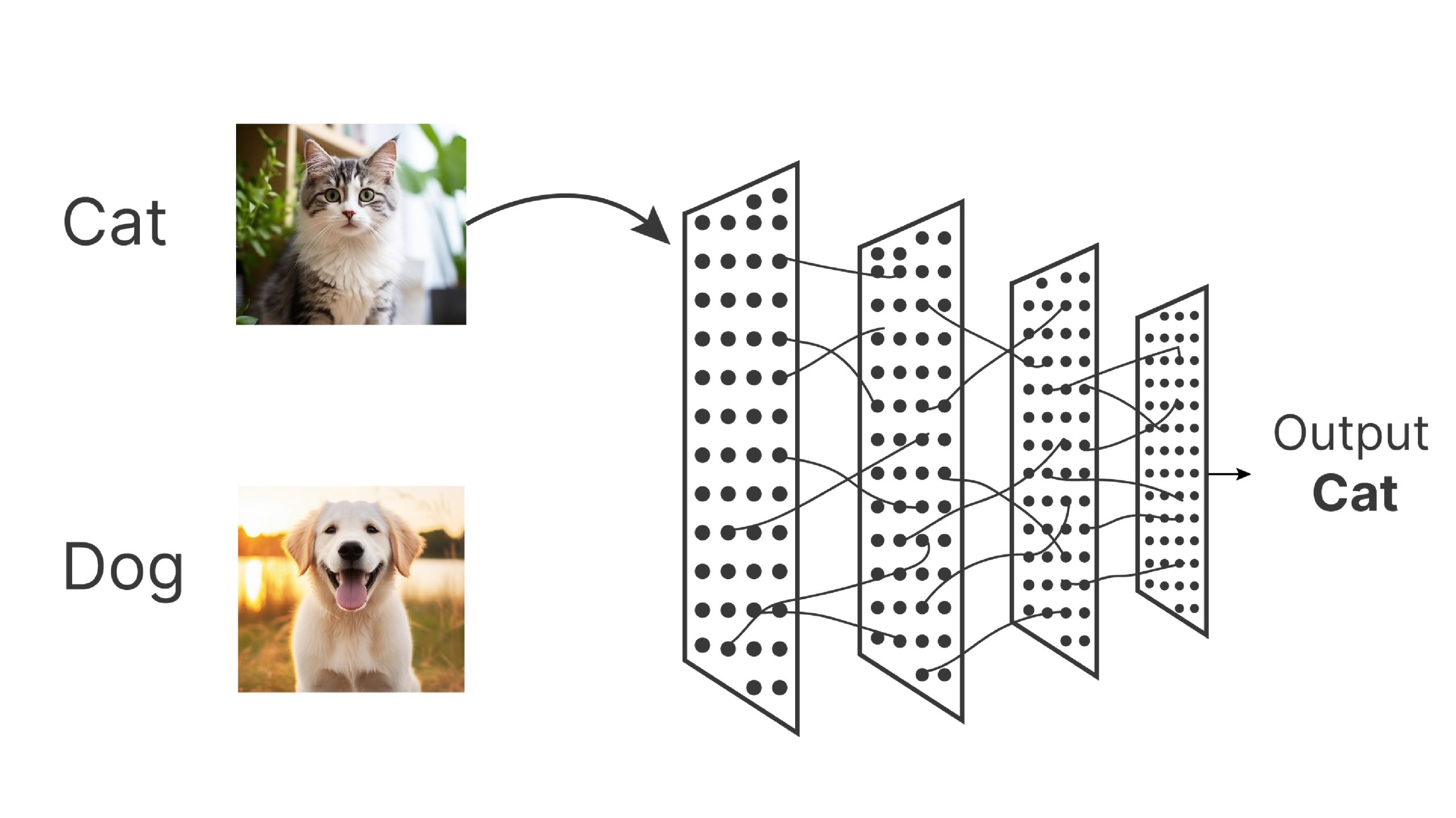
Decoding the Art of Cat and Dog Classification: A Deep Dive into Convolutional Neural Networks
The Fascinating World of Visual Intelligence
Imagine standing at the intersection of neuroscience, mathematics, and computer engineering – welcome to the mesmerizing realm of image classification. As an artificial intelligence researcher, I‘ve witnessed remarkable transformations in how machines perceive and understand visual information.
A Journey Through Visual Recognition
Our story begins with a fundamental human capability: recognizing objects. For millennia, biological systems have effortlessly distinguished between cats and dogs. Now, we‘re teaching machines to replicate this seemingly simple yet incredibly complex cognitive process.
The Mathematical Symphony of Convolutional Neural Networks
Convolutional Neural Networks (CNNs) represent a profound computational breakthrough. These sophisticated algorithms mimic the human visual cortex‘s information processing mechanisms, transforming raw pixel data into meaningful representations.
Architectural Elegance
Consider a CNN as an intricate musical composition. Each layer acts like an instrument, contributing unique characteristics to the overall performance. Convolutional layers function as primary instruments, extracting fundamental features, while pooling layers create harmonic reductions.
[Feature_Extraction = \sum_{kernel} Pixel_Intensity * Kernel_Weight]This mathematical representation reveals how CNNs transform two-dimensional image data into meaningful feature representations.
Historical Context of Image Classification
The journey of visual recognition technologies spans decades. Early computer vision systems relied on rigid rule-based approaches, requiring extensive manual feature engineering. Modern deep learning architectures have revolutionized this landscape, enabling autonomous feature discovery.
Evolutionary Milestones
- 1960s: Primitive pattern recognition algorithms
- 1980s: Introduction of neural network concepts
- 2012: AlexNet breakthrough in ImageNet competition
- Present: Sophisticated multi-layer architectures
Practical Implementation: Building Your Classification Model
Data Preparation Strategies
Successful image classification demands meticulous data preparation. Your dataset becomes the foundational learning environment for neural networks.
def prepare_image_dataset(image_directory):
    """
    Comprehensive image preprocessing pipeline
    """
    image_data = []
    labels = []

    for category in [‘cats‘, ‘dogs‘]:
        path = os.path.join(image_directory, category)
        class_label =  if category == ‘cats‘ else 1

        for image_file in os.listdir(path):
            image_path = os.path.join(path, image_file)
            processed_image = preprocess_image(image_path)

            image_data.append(processed_image)
            labels.append(class_label)

    return np.array(image_data), np.array(labels)
Advanced Model Architecture
Modern CNN architectures leverage transfer learning, utilizing pre-trained models as foundational knowledge repositories.
def create_sophisticated_classifier():
    base_model = tf.keras.applications.EfficientNetB0(
        weights=‘imagenet‘,
        include_top=False
    )

    model = tf.keras.Sequential([
        base_model,
        tf.keras.layers.GlobalAveragePooling2D(),
        tf.keras.layers.Dense(512, activation=‘relu‘),
        tf.keras.layers.Dropout(0.5),
        tf.keras.layers.Dense(2, activation=‘softmax‘)
    ])

    return model
Performance Optimization Techniques
Computational Considerations
Training complex neural networks demands sophisticated optimization strategies. Consider implementing:
- Learning rate scheduling
- Adaptive optimization algorithms
- Mixed precision training
Emerging Research Frontiers
Beyond Traditional Classification
Contemporary research explores fascinating domains:
- Few-shot learning
- Self-supervised representation learning
- Interpretable AI architectures
Ethical Dimensions of Visual Recognition Technologies
As we advance machine learning capabilities, critical ethical considerations emerge. Responsible AI development requires:
- Transparent algorithmic decision-making
- Comprehensive bias mitigation
- Privacy-preserving techniques
Practical Challenges and Solutions
Real-world image classification encounters numerous challenges:
- Handling diverse image qualities
- Managing computational resources
- Ensuring consistent performance across varied datasets
Future Perspectives
The horizon of visual intelligence continues expanding. Emerging technologies like neuromorphic computing and quantum machine learning promise unprecedented computational paradigms.
Conclusion: A Continuous Learning Journey
Classifying cats and dogs represents more than a technical exercise – it‘s a testament to human creativity and computational innovation. Each model we develop brings us closer to understanding intelligent systems.
Recommended Exploration Paths
- Experiment with diverse architectures
- Engage with open-source research communities
- Continuously challenge existing methodological boundaries
Acknowledgments
Special gratitude to researchers and practitioners pushing technological boundaries, transforming theoretical concepts into tangible innovations.
About This Exploration
This comprehensive guide emerges from years of hands-on research, bridging theoretical foundations with practical implementations.


