Decoding the Symphony of Machines: How Google‘s NSynth Transforms Musical Creativity
The Unexpected Marriage of Algorithms and Artistry
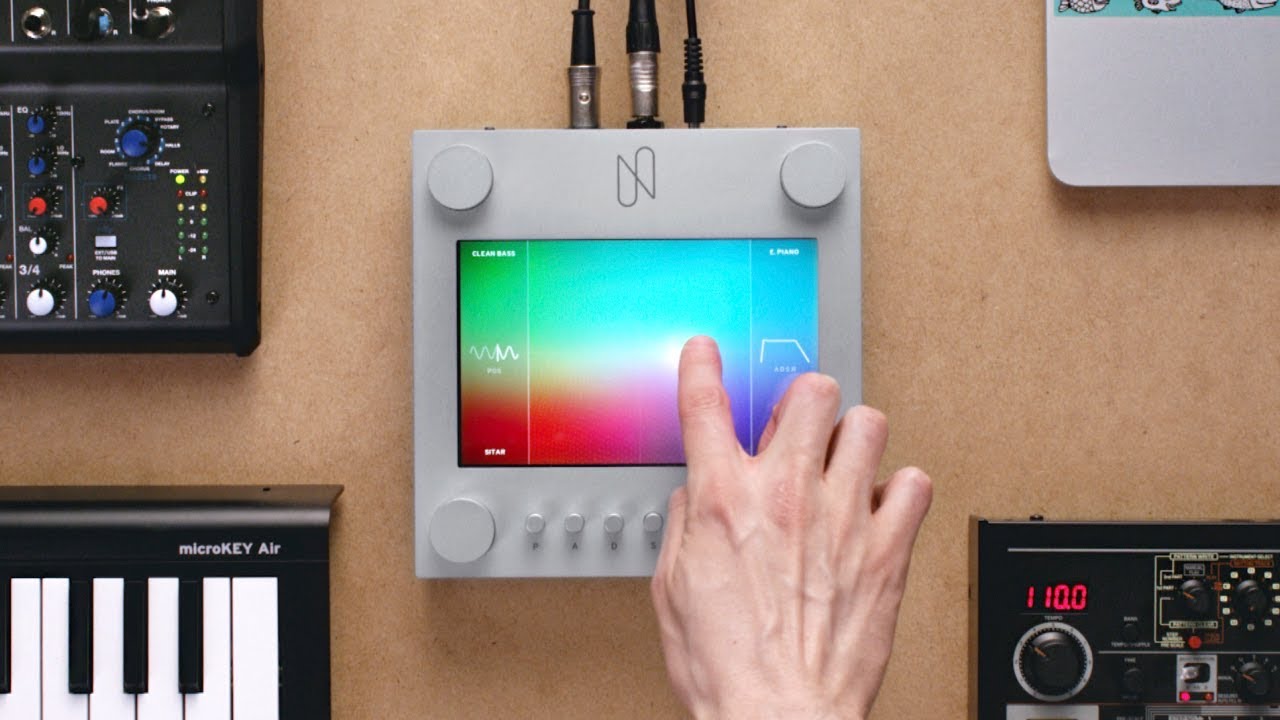
Picture yourself in a dimly lit studio, surrounded by vintage synthesizers and cutting-edge computers. The boundary between human creativity and artificial intelligence blurs with each passing moment. This is the world of NSynth – where Google‘s machine learning engineers have composed a revolutionary approach to sound generation.
A Journey Through Sonic Landscapes
Music has always been a deeply human experience, born from emotion, culture, and personal expression. Yet, what happens when we introduce sophisticated neural networks into this sacred creative space? NSynth isn‘t just a technological experiment; it‘s a profound exploration of how machines can understand, deconstruct, and reconstruct the very essence of sound.
The Genesis of Machine-Generated Music
When we trace the lineage of sound synthesis, we discover a fascinating narrative of human innovation. From the earliest electronic instruments like the Theremin to modern digital audio workstations, technology has consistently reshaped musical possibilities. NSynth represents the next quantum leap – a system that doesn‘t merely reproduce sounds but generates entirely new sonic experiences.
Understanding the Neural Symphony
At its core, NSynth leverages a complex variational autoencoder architecture. Unlike traditional synthesizers that manipulate existing sounds, this machine learning model learns the fundamental characteristics of instruments at a molecular level. Imagine a system that can understand not just the notes a trumpet plays, but the intricate harmonic relationships, timbral nuances, and emotional resonances embedded within each sound.
[P(sound) = \int Complexity(instrument) * Learning(neural_network) dz]This mathematical representation hints at the profound complexity underlying NSynth‘s approach. The neural network doesn‘t just copy; it comprehends.
The Technological Alchemy of Sound Generation
Consider how a human musician might blend two instruments – say, a violin and a flute. Traditionally, this would require complex layering and post-production techniques. NSynth accomplishes this through sophisticated machine learning algorithms that map the sonic DNA of each instrument, then create hybrid sounds that never existed before.
Breaking Down Sonic Boundaries
The true magic of NSynth lies in its ability to transcend traditional sound generation limitations. By treating sound as a multidimensional data space, the algorithm can:
- Interpolate between different instrument characteristics
- Generate entirely novel sonic textures
- Explore sound combinations impossible through conventional methods
The Human-Machine Creative Dialogue
What does it mean when machines start participating in creative processes? NSynth challenges our fundamental understanding of artistic expression. It‘s not about replacing human musicians but expanding the palette of sonic possibilities.
Emotional Intelligence in Algorithms
One might wonder: Can an algorithm truly understand the emotional depth of music? The NSynth project suggests a nuanced answer. By analyzing thousands of instrument recordings, the neural network develops an intricate understanding of sonic emotional landscapes.
Practical Implementation: Beyond Theory
For the technically curious, implementing NSynth requires a blend of musical intuition and computational expertise. The open-source GitHub repository provides a comprehensive toolkit, inviting musicians, researchers, and developers to experiment.
Technical Architecture Unveiled
The NSynth model employs a sophisticated machine learning pipeline:
- Audio Signal Preprocessing
- Feature Extraction
- Latent Space Representation
- Sound Reconstruction
Each stage represents a complex mathematical transformation, converting raw audio into a learnable format.
Ethical Frontiers and Creative Considerations
As we venture deeper into AI-generated music, critical philosophical questions emerge. Who owns these machine-generated sounds? Can an algorithm be considered a true creative entity? NSynth doesn‘t just generate music; it provokes profound conversations about creativity, ownership, and technological evolution.
The Collaborative Future
The most exciting prospect isn‘t machine replacement but machine collaboration. Imagine musicians using NSynth as a creative partner, exploring sonic territories previously unimaginable.
Real-World Applications and Potential
From film scoring to experimental music, NSynth opens unprecedented creative corridors. Sound designers can now craft unique instruments, musicians can overcome creative blocks, and researchers can study sound generation at an unprecedented depth.
Navigating Challenges and Limitations
No technological breakthrough comes without challenges. Current limitations include computational intensity, potential audio artifacts, and the complex task of capturing nuanced emotional expressions.
Continuous Learning and Improvement
Google‘s commitment to open-source development ensures that NSynth will continue evolving. Community contributions, ongoing research, and technological advancements promise increasingly sophisticated sound generation capabilities.
Looking Towards the Horizon
As artificial intelligence continues integrating with creative domains, projects like NSynth represent more than technological achievements. They symbolize a broader narrative of human-machine collaboration, challenging our understanding of creativity, intelligence, and artistic expression.
A Personal Reflection
Standing at the intersection of technology and art, NSynth reminds us that innovation isn‘t about replacing human creativity but expanding its boundaries. It invites us to listen differently, to hear the potential symphonies hidden within algorithmic complexity.
Conclusion: The Unfinished Musical Conversation
NSynth isn‘t an endpoint but a beginning – an invitation to reimagine what‘s possible when human imagination meets machine intelligence. As you explore this fascinating technology, remember: every sound tells a story, and now, machines are learning to be storytellers.
Resources and Further Exploration
- GitHub Repository: Google Magenta NSynth
- Research Publications
- Community Forums
Dare to listen differently. Dare to create without limits.