Exploring the Cosmos: How Google‘s TensorFlow AstroNet Transforms Space Discovery
A Journey Through Machine Intelligence and Stellar Exploration
Imagine peering into the vast, mysterious expanse of our universe, where countless stars and potential planetary systems await discovery. For decades, astronomers have relied on traditional observation methods, squinting through telescopes and meticulously analyzing data. But what if I told you that artificial intelligence has now become our most powerful companion in unraveling cosmic mysteries?
Google‘s recent release of the TensorFlow AstroNet code represents more than just a technological milestone—it‘s a gateway to understanding our universe through the lens of machine learning. This isn‘t just another software release; it‘s an invitation to reimagine how we explore the cosmos.
The Evolution of Astronomical Detection
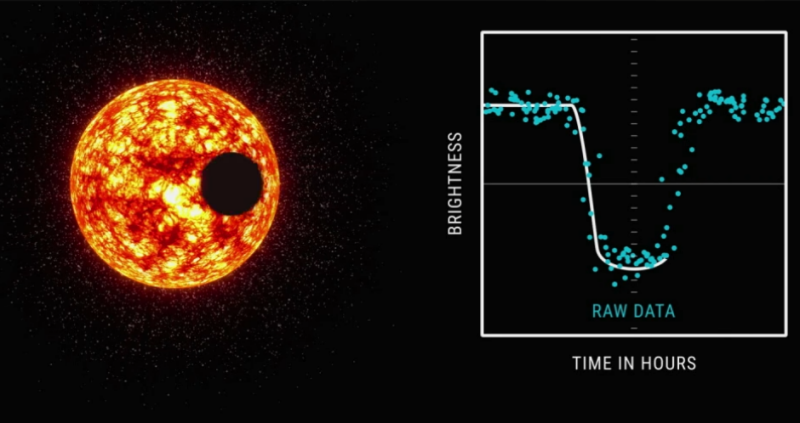
Before diving into the technical depths of AstroNet, let‘s understand the remarkable journey of astronomical research. Traditional methods involved painstaking manual observations, where researchers would spend countless hours examining stellar data, searching for minute variations that might indicate planetary transits.
The human eye, remarkable as it is, has limitations. We can miss subtle patterns, become fatigued, and struggle to process massive datasets. Machine learning algorithms, particularly neural networks like AstroNet, transcend these human constraints.
Understanding AstroNet‘s Computational Magic
At its core, AstroNet represents a sophisticated convolutional neural network (CNN) engineered specifically for astronomical data analysis. But what makes this technology so revolutionary?
Imagine a computational system that can simultaneously analyze thousands of stellar images, detecting planetary signatures with unprecedented accuracy. AstroNet doesn‘t just process data—it learns, adapts, and improves with each observation.
The Neural Network‘s Architectural Brilliance
The CNN architecture of AstroNet is designed to mimic the human visual cortex‘s pattern recognition capabilities. By creating multiple layers of computational neurons, the system can:
- Extract intricate features from astronomical images
- Recognize complex spatial patterns
- Distinguish between planetary signals and background noise
Each layer of the neural network acts like a sophisticated filter, progressively refining and understanding the input data. It‘s akin to training a highly specialized detective, teaching it to spot the most minute clues in a cosmic investigation.
Computational Challenges and Breakthroughs
Developing an AI system capable of astronomical detection isn‘t without significant challenges. The computational requirements are immense, demanding sophisticated hardware and advanced algorithmic approaches.
AstroNet must process massive datasets from sources like NASA‘s Kepler Space Telescope, which has collected decades of observations. We‘re talking about processing information from hundreds of thousands of stars, each with its unique characteristics and potential planetary systems.
Training the Cosmic Detective
Training AstroNet involves feeding it labeled datasets—essentially teaching the neural network to recognize planetary transit signals. This process is similar to how a human expert would learn, but at an exponentially faster and more comprehensive scale.
The model learns to distinguish between genuine planetary signals and statistical noise, a task that would take human researchers years to accomplish. By leveraging machine learning techniques, AstroNet can process and analyze data with remarkable efficiency.
Real-World Impact and Scientific Potential
The implications of Google‘s open-source release extend far beyond technological curiosity. By making AstroNet‘s code publicly available, they‘ve democratized advanced astronomical research.
Researchers worldwide can now access, modify, and build upon this groundbreaking technology. A graduate student in Brazil, a research team in Japan, or an independent scientist in India can now leverage the same sophisticated tools once reserved for elite research institutions.
Collaborative Scientific Discovery
This approach embodies the true spirit of scientific progress—open collaboration, shared knowledge, and collective advancement. AstroNet isn‘t just a tool; it‘s a platform for global scientific exploration.
Ethical Considerations and Future Perspectives
As we celebrate this technological marvel, it‘s crucial to reflect on the ethical dimensions of AI-driven research. Machine learning algorithms are powerful, but they‘re not infallible. They require careful validation, continuous refinement, and human oversight.
The goal isn‘t to replace human researchers but to augment their capabilities, providing insights and accelerating discovery processes that would otherwise take decades.
Looking Beyond the Horizon
What excites me most about AstroNet is not just its current capabilities but its potential for future innovation. As machine learning techniques continue evolving, we can anticipate even more sophisticated astronomical detection methods.
Imagine neural networks that can predict stellar evolution, detect exoplanets with microscopic precision, or uncover patterns in cosmic data that have eluded human comprehension for centuries.
A Personal Reflection on Machine Intelligence
As an AI enthusiast, I‘m continuously amazed by how technology bridges human curiosity with computational power. AstroNet represents more than a technological achievement—it‘s a testament to human ingenuity and our relentless pursuit of knowledge.
Every line of code, every computational layer, tells a story of human creativity and our collective desire to understand the universe around us.
Your Cosmic Journey Begins Now
To researchers, data scientists, and space enthusiasts: The universe is calling. Google‘s TensorFlow AstroNet isn‘t just a tool—it‘s an invitation to explore, discover, and push the boundaries of human knowledge.
Download the code, experiment, collaborate, and let your curiosity guide you through the infinite cosmic landscape.
The stars are waiting. Are you ready to listen?