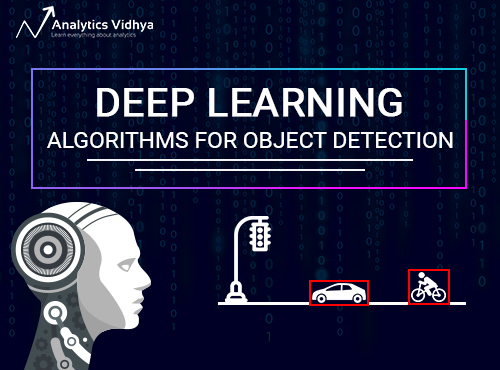
Decoding the Visual Intelligence: A Comprehensive Journey through Object Detection Algorithms
The Remarkable World of Machine Vision
Imagine standing in a bustling city street, your eyes effortlessly distinguishing between pedestrians, vehicles, traffic signals, and countless other elements. This extraordinary human capability of instantaneous visual comprehension has long fascinated scientists and engineers. Today, we‘re witnessing an extraordinary technological revolution where machines are learning to "see" with increasing sophistication.
Object detection represents the pinnacle of machine visual intelligence – a complex dance of algorithms, neural networks, and computational prowess that transforms raw pixel data into meaningful, contextual understanding. This isn‘t just technology; it‘s a profound exploration of how artificial systems can mimic and potentially surpass human perceptual capabilities.
The Genesis of Machine Perception
Our journey begins in the early days of computer vision, when researchers dreamed of teaching machines to interpret visual information. The initial approaches were rudimentary – rule-based systems that struggled with the complexity and variability of real-world imagery. These early attempts were like teaching a child to recognize shapes using rigid, predefined templates.
The breakthrough came with convolutional neural networks (CNNs), inspired by the human visual cortex. Just as our brain processes visual information through hierarchical layers of neurons, CNNs learn to extract increasingly complex features from images. This paradigm shift transformed object detection from a deterministic, rule-based process to a dynamic, learning-driven approach.
Architectural Evolution: From Simple to Sophisticated
Region-Based Convolutional Neural Networks (R-CNN)
The R-CNN family represents a pivotal moment in object detection‘s technological narrative. Imagine R-CNN as an meticulous art restorer, carefully examining each section of a painting to identify and classify its components.
In its original implementation, R-CNN would:
- Generate approximately 2,000 region proposals for each image
- Extract features from each region using a pre-trained CNN
- Classify these regions using support vector machines
- Refine bounding box coordinates through regression
While groundbreaking, this approach was computationally expensive. Processing a single image could take upwards of 40-50 seconds – impractical for real-time applications.
Fast R-CNN: Accelerating Visual Understanding
Fast R-CNN introduced a revolutionary concept: processing the entire image through a CNN just once, then deriving region features from the resulting feature map. This approach was akin to an efficient detective who surveys an entire crime scene before focusing on specific areas of interest.
The key innovations included:
- Shared computation across regions
- Integrated classification and localization
- Significantly reduced computational overhead
Faster R-CNN: The Leap to Learned Region Proposals
Faster R-CNN marked a quantum leap in object detection technology. By introducing a Region Proposal Network (RPN), the algorithm learned to generate region proposals, eliminating the need for external selective search algorithms.
Think of the RPN as an intelligent scout, dynamically identifying potentially interesting regions within an image. This learned approach dramatically improved both speed and accuracy, bringing machine vision closer to human-like perception.
Mathematical Foundations: Beyond Algorithmic Black Boxes
Object detection isn‘t just about algorithms; it‘s a sophisticated mathematical dance. The core objective function can be represented as:
[L{total} = L{classification} + \lambda \cdot L_{localization}]This elegant equation balances two critical aspects:
- Classification loss ([L_{classification}]): Determining what objects exist
- Localization loss ([L_{localization}]): Precisely defining their spatial location
The hyperparameter [\lambda] allows fine-tuning between accurate classification and precise localization.
Real-World Implications and Transformative Applications
Object detection transcends academic curiosity. Consider these profound applications:
- Autonomous Vehicles: Detecting pedestrians, vehicles, traffic signals with millisecond precision
- Medical Imaging: Identifying potential anomalies in radiological scans
- Retail Analytics: Understanding customer behavior through visual tracking
- Agricultural Technology: Monitoring crop health and identifying potential issues
- Security and Surveillance: Intelligent monitoring systems
Emerging Frontiers: Beyond Traditional Approaches
Transformer-Based Detection
Recent research introduces transformer architectures like DETR (DEtection TRansformer), which reimagine object detection as a direct set prediction problem. By eliminating manual anchor design, these models represent a paradigm shift towards more flexible, context-aware detection systems.
Few-Shot and Zero-Shot Learning
The next frontier involves developing models that can recognize objects with minimal training data – mirroring human learning capabilities. Imagine an AI system that can identify a new object after seeing just a few examples, much like a child quickly learning to recognize novel items.
Philosophical and Cognitive Perspectives
Object detection isn‘t merely a technological challenge; it‘s a profound exploration of perception itself. By developing increasingly sophisticated visual recognition systems, we‘re not just creating algorithms – we‘re gaining insights into the fundamental nature of visual comprehension.
Conclusion: The Continuous Journey of Machine Vision
As we stand at the cusp of this technological revolution, object detection algorithms represent more than computational techniques. They are windows into understanding how intelligence – artificial and biological – processes and interprets visual information.
The future promises even more remarkable developments: more efficient architectures, reduced computational complexity, and systems that can generalize across diverse visual domains.
For the curious mind, the world of object detection offers an endless frontier of exploration, innovation, and wonder.
Recommended Next Steps
- Deep dive into advanced CNN architectures
- Implement practical object detection projects
- Stay updated with cutting-edge research publications
- Explore interdisciplinary connections between AI, neuroscience, and cognitive psychology